
The Sandinistas’ Work During the 16 Years of Governing from Below Enabled them to Regain Power Don’t miss a 5-part webinar series. Many revolutions or socialist governments existed the 1970s besides Nicaragua that later lost power or abandoned their socialist ideology by the 1990s. These include Mozambique, Angola, Zimbabwe, Guinea Bissau, Guinea, Tanzania, Congo (Stanleyville), Afghanistan, Grenada, almost in El Salvador, Portugal, Spain, and Ethiopia. In addition, the Communist Soviet Union collapsed (now 15 countries), along with East Germany, Poland, Czechoslovakia, Hungary, Romania, Bulgaria, Yugoslavia, and Albania.
When the Sandinistas lost the 1990 election these other socialist leaderships were already disintegrating or had already been overturned. Only the Sandinistas continued the struggle and once again arose to retake power and implement their original program. What revolutionary lessons does this experience provide? What abilities did they possess, what practices did they employ, that make them unique among the socialist movements of these 23 countries?
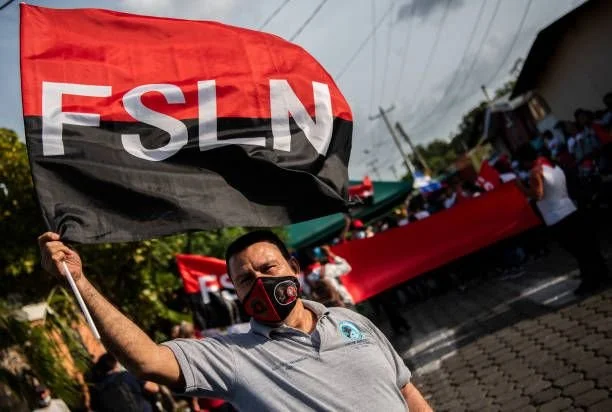
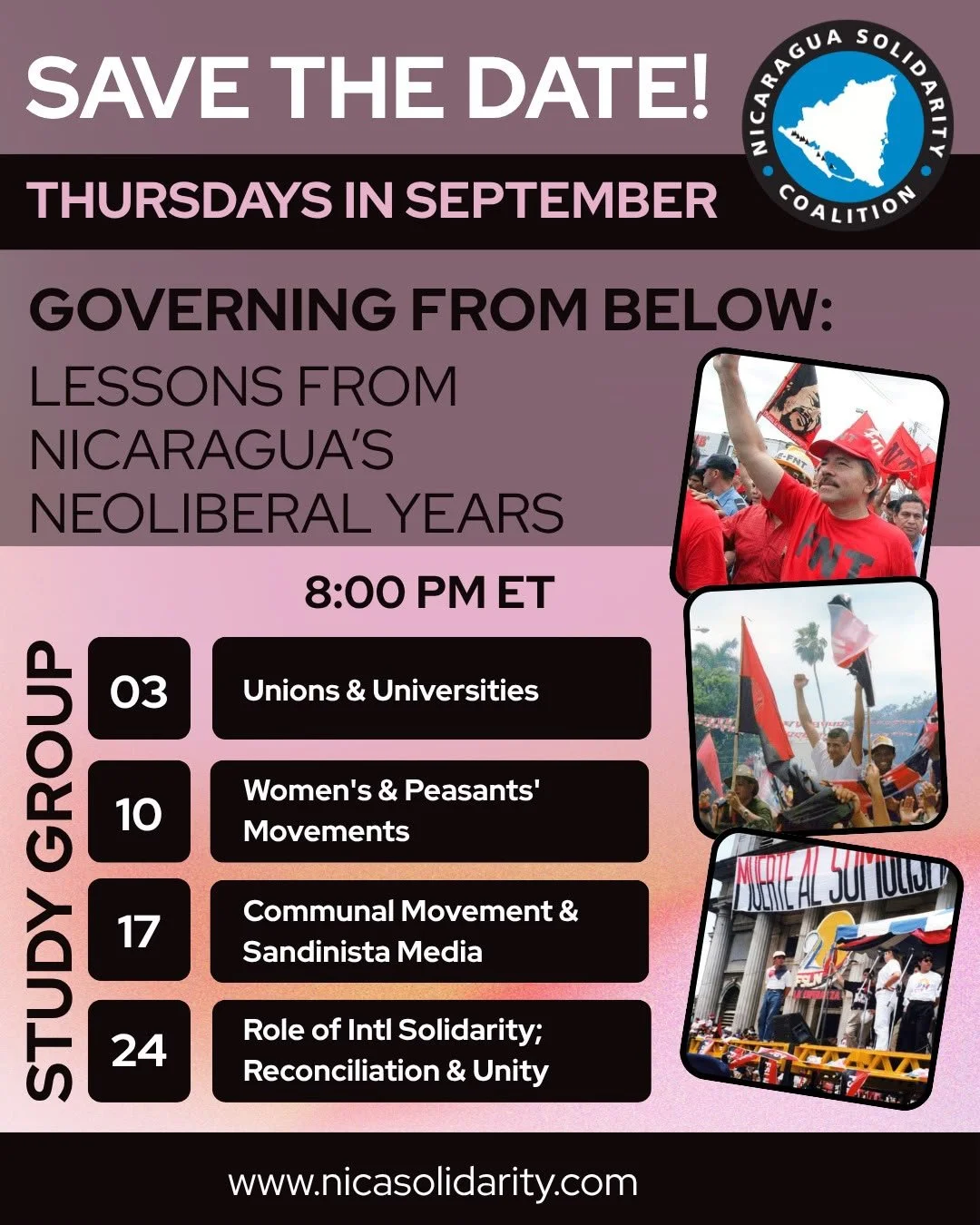
These questions will be discussed by the Nicaragua Co-Foreign Minister in an August 23 webinar to introduce a four-part webinar series in September, “Governing From Below, Lessons from Nicaragua’s Neoliberal Years, 1990-2006.” After losing the 1990 election, Nicaragua’s Frente Sandinista de Liberación Nacional (FSLN) vowed to “govern from below.” The series will delve into how the FSLN during these years worked closely with its grassroots base in unions, student groups, and women’s, peasants, and communal movements to pressure the neoliberal governments and eventually return to power.