Viewing entries in
Haiti

The Black Alliance for Peace Condemns Renewal of Neocolonial Gang Suppression Force UN Mandate in Haiti

The Black Alliance for Peace Condemns Renewal of Neocolonial Gang Suppression Force UN Mandate in Haiti


Oct 2, 2026 – The Black Alliance for Peace (BAP)  rejects the renewal of the Gang Suppression Force (GSF) mandate by the UN Security Council on September 29, 2026, and affirms that Haiti’s sovereignty cannot be renewed away. One year ago, Security Council Resolution 2793, drafted by the United States and Panama, authorized a foreign force of up to 5,500 police and soldiers to replace the Kenya-led Multinational Security Support Mission that also proved ineffective at stemming armed violence. The GSF was to conduct operations to “neutralize, isolate, and deter” armed groups independently or alongside Haitian security forces. A foreign commander and a Standing Group of participating countries shape the mission, while Haitians have little authority over its operations. The resolution also established a United Nations support office to provide the force with logistics and operational support. The mandate was renewed by 12 votes in favor, with China, Russia, and Pakistan abstaining amid concerns that an under-resourced military approach will not resolve Haiti’s deeper crisis, calling for stronger oversight, enforced arms embargo, and a Haitian-led path forward.

However, this “technical roll over” is not a temporary arrangement, but one that extends a neocolonial foreign military grip over Haiti. The GSF’s expanded roll out has yet to quell ongoing attacks, and Haiti has no elected national government. An unelected government’s request to renew the GSF is not the Haitian people’s democratic mandate for another abusive foreign occupation force. 

The anti-democratic conditions under which Prime Minister Alix Didier Fils-Aimé remains in office make that distinction clear. In January, Haiti’s Transitional Presidential Council voted to remove him. Washington publicly opposed the move and Secretary of State Marco Rubio insisted that the Council dissolve on schedule while emphasizing that Fils-Aimé should remain prime minister. The U.S. Embassy threatened violence for Haitian officials who supported a change in leadership, and the State Department revoked the visas of two Council members and their families. Before the Council’s mandate ended on February 7, the U.S. sent a warship off the coast of Port-au-Prince and without elections or an elected successor, Fils-Aimé remained the country’s executive authority. Washington used coercive political and military power to shape who would govern. The same administration that sought renewal of the GSF emerged from that imposed political arrangement.

Separately from the GSF, Haitian security forces have carried out explosive drone strikes with support from a U.S.-based private military company led by Blackwater founder Erik Prince. 1,243 people have been killed in these strikes between March 2025 and January 21, 2026, including 17 children. These operations show the civilian consequences of a security strategy built around an external force with little public accountability and how Haiti serves as a laboratory for imperialist violence in the Americas. The devastating consequences of this for the whole region are now even clearer, as U.S. assassinations in the Caribbean and Pacific continue unabated and U.S. moves MQ-9 Reaper drones from the African continent to the Caribbean and Latin America. 

Washington also bears responsibility for the conditions it claims foreign forces must solve. Firearms trafficked into Haiti originate in the southeastern U.S. At the same time, nearly 200,000 people were forcibly returned to Haiti in the first eight months of 2026, and Temporary Protected Status (TPS) was removed for over 300,000 Haitians on July 27, despite ongoing insecurity that U.S. meddling has worsened. The attacks on Haitians through TPS termination, ICE detention, surveillance, and deportation are connected to the wider policing and carceral apparatus that oppresses all African and colonized peoples in the belly of the beast. 

Ultimately, a government that helps arm the region, restricts Haitian migrants’ right to safety, and pressures Haiti’s political leadership, cannot present another externally directed security mission as an act of solidarity.

We understand this latest GSF renewal within a wider U.S. hemispheric project to reassert military and political control across Our Americas. Washington has escalated the Monroe Doctrine, organized the Shield of the Americas/Joint-Task Force Hemisphere, threatened to use “unmatched military might,” after U.S. forces abducted Venezuela’s President Nicolás Maduro and First Combatant Cilia Flores, while intensifying the blockade and military threats against Cuba. 

At the 81st UN General Assembly, Prime Minister of Barbados, Mia Mottley called for the Caribbean to remain a Zone of Peace while supporting the full deployment and renewal of the GSF in Haiti. CARICOM’s Zone of Peace language rings hollow when Haiti is treated as an exception. 

We reaffirm the call for a true Zone of Peace of Our Americas, grounded in nonintervention, national and popular sovereignty, self-determination, and resolving disputes without external force among the Community of Latin American and Caribbean member states (CELAC). A renewed GSF mandate violates the goal of a regional Zone of Peace based in  People(s) Centered-Human Rights,and deepens the contradiction by placing Haiti under another foreign command while Haitians themselves remain excluded from decisions over their future.

The Haitian people deserve safety from armed violence and a foreign force with broad powers, and an imperialist command structure (U.S. Southern Command) subverting their democratic rights. An unaccountable Haitian political authority cannot resolve this crisis of imperialism, the flow of weapons, and decades of foreign intervention. Renewal of the GSF risks making this neocolonial, imperialist intervention permanent while offering no guarantee of collective security or self-determination.

We call on: 

  • Governments to withhold personnel, funds, weapons, logistics, and operational support to a foreign GSF occupation force with no accountability to the Haitian people. 

  • The United States to stop the flow of arms into Haiti and cease its interference in Haiti’s political affairs. 

  • An end to the Core Group’s political tutelage and to the United Nations’ role in supervising Haiti’s political future. Haitian people and popular movements must be able to determine their own path through a truly sovereign process.

  • An End to deportations across Haitian communities and the right to freedom of movement and asylum.

  • Black/African organizations and communities in the United States and beyond, including the Congressional Black Caucus, to oppose the imperialist assault on Haiti and stand unequivocally with the Haitian masses in defense of popular sovereignty and self-determination.

  • Social movements, civil society, trade unions, and popular organizations across the Caribbean and Latin America to engage in anti-imperialist regional solidarity in support of people-centered movements rooted in the Haitian masses, recognizing Haiti as the first independent Black republic, whose revolution materially supported liberation struggles across the Americas.

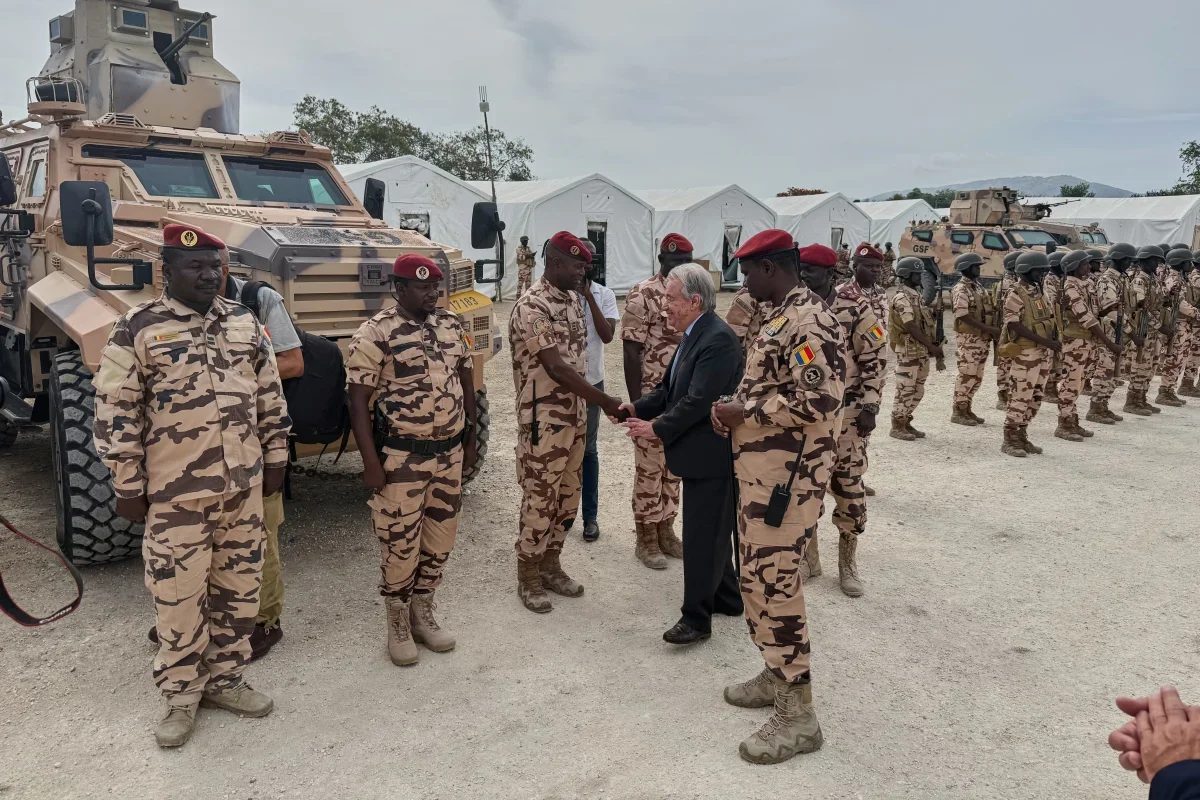
Image: UN Secretary-General Antonio Guterres greets soldiers from Chad at a base in Port-au-Prince, Haiti, Tuesday, June 16, 2026. Danica Coto/AP
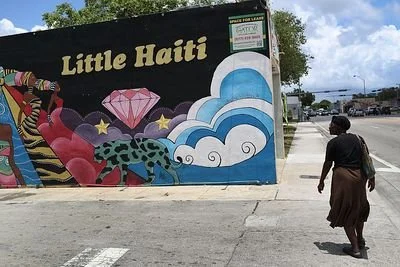
The Black Alliance for Peace condemns the U.S. Supreme Court’s TPS Decision on Haiti and Syria

The Black Alliance for Peace condemns the U.S. Supreme Court’s TPS Decision on Haiti and Syria

The Black Alliance for Peace condemns the U.S. Supreme Court’s TPS Decision on Haiti and Syria

On the July 9 National TPS Day of Action, BAP calls for a Zone of Peace in Our Americas that Confronts and Defeats US/EU/NATO Axis of Domination in the Western Hemisphere

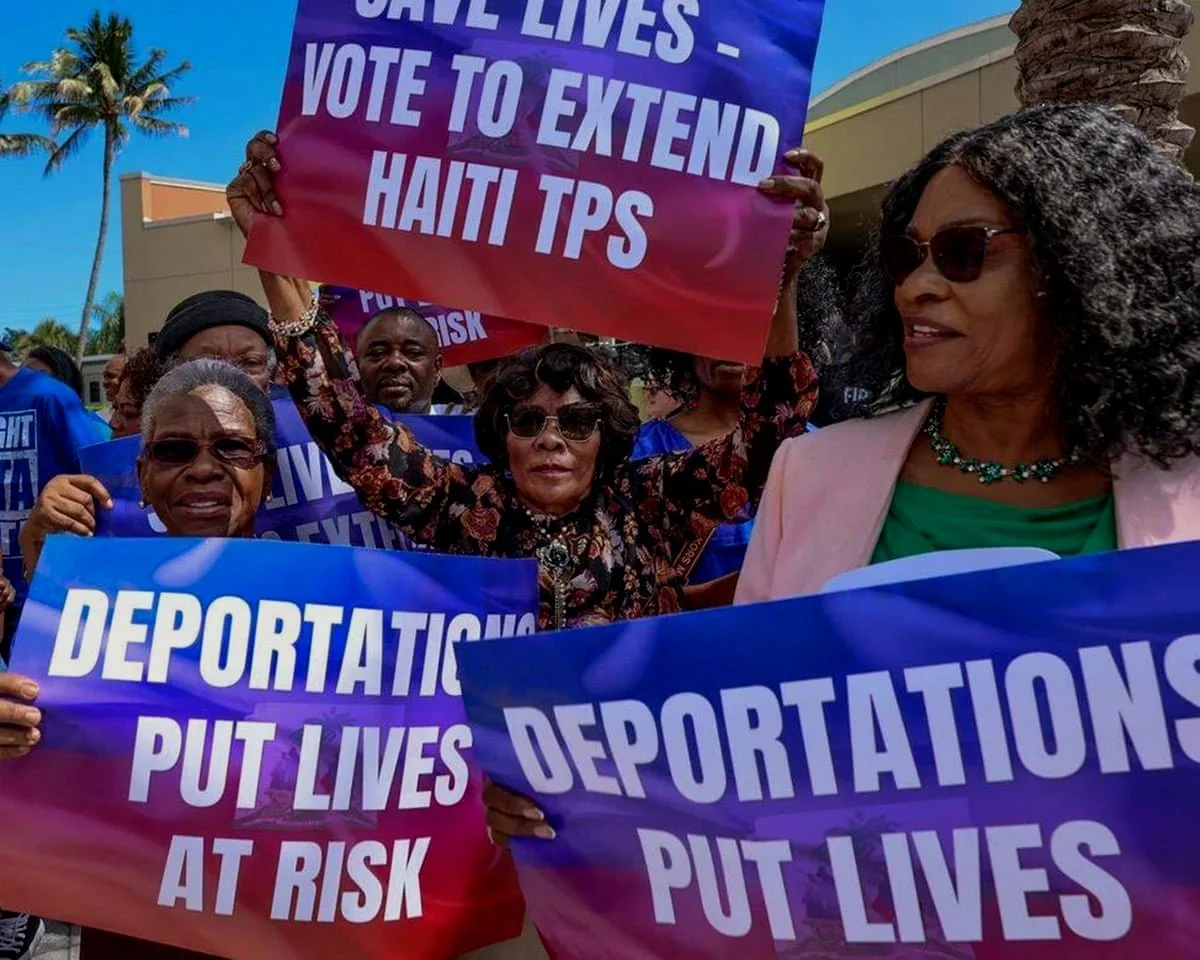
The Black Alliance for Peace Haiti/Americas Team condemns the U.S. Supreme Court’s June 25 decision allowing the Trump administration to terminate Temporary Protected Status (TPS) for Haiti and Syria. This decision clears the way for the Department of Homeland Security to begin deporting approximately 350,000 Haitian and 6,000 Syrian TPS holders while advancing the fiction that countries subjected to years of U.S.-led destabilization are now safe to return to.

Across Haitian and Syrian communities, this ruling has already created a climate of fear. Families are increasingly afraid to send their children to school, attend religious gatherings, seek medical care, go to work, or participate in public life out of fear that routine activities could expose them to detention or deportation.

However, the solution to this fear and predation cannot be running into the arms of the Democratic Party for “protection” via perpetual legal limbo. On this National TPS Day of Action, we share a reminder that what is presented as an “immigration crisis” is, in reality, what BAP has for years identified as a crisis of imperialism. The resolution of this crisis requires the defeat of U.S.-led imperialism and other structures of oppression, and the advancement of popular sovereignty based in People(s)-Centered Human Rights.

As the Haitian Popular Press Agency recently reminded the world, “TPS was not a gift from Obama to the Haitians. It was a temporary protection won amid conditions shaped by catastrophe, displacement, and decades of U.S.-led intervention.” The agency further affirmed, “the organizations that defend the rights of Haitians will continue to fight to force the racist extreme right to reconsider the TPS case.” Defending TPS is therefore not an appeal for charity from the U.S. government, but part of the ongoing struggle for Haitian and other global south people’s right to live free from violent displacement, neocolonial intervention, and imperialist domination both in the U.S. and their home countries.

Much of the armed violence concentrated in Port-au-Prince has been fueled by the trafficking of U.S.-sourced firearms, particularly through South Florida, alongside years of foreign intervention overseen by the U.S.-led Core Group, that have strengthened armed groups while undermining Haitian sovereignty.

The termination of TPS cannot be understood in isolation. It is the latest expression of a bipartisan system that first meddles in countries like Haiti and Syria through occupation, economic coercion, and foreign control, then criminalizes the very people displaced by those policies. Those contradictions are on full display as the United States hosts the FIFA World Cup while stripping humanitarian protections from Haitians, expanding deportations, and further restricting Haitian mobility. 

Even FIFA’s decision to ban Haiti’s World Cup jersey depicting the Battle of Vertières represents a long pattern in which Haitian revolutionary history is treated as something to be erased. That is why we say: Boycott the World Cup and Boycott the U.S. The concurrent denial of dignity of Haitians in the games and in the geopolitical sphere is linked, and U.S. impunity for its crimes — global and domestic — must end.

We condemn the Supreme Court’s decision in the strongest possible terms and stand with the struggle for self-determination and a People(s) Centered Human Rights. We reaffirm our call of the necessity for popular and revolutionary forces to build a Zone of Peace in Our Americas, where sovereignty, not intervention—determines the future of its peoples.

BAP Backgrounder: U.S. Racist Immigration Policy Toward Haiti Reinforces Imperialism and Weakens Popular Sovereignty

BAP Backgrounder: U.S. Racist Immigration Policy Toward Haiti Reinforces Imperialism and Weakens Popular Sovereignty

BAP Backgrounder: U.S. Racist Immigration Policy Toward Haiti Reinforces Imperialism and Weakens Popular Sovereignty

By: Black Alliance for Peace Haiti/Americas Team

U.S. immigration policy is the domestic arm of its foreign policy. The attack on Haitian migrants is a direct consequence of Washington's ongoing war on Haiti's sovereignty, making their defense a central anti-imperialist struggle.

On November 26th 2025, the Trump administration terminated Temporary Protected Status (TPS) for Haiti using nearly identical language to the TPS cancellations earlier this year for displaced Venezuelans and affecting upward of 353,000 Haitian migrants. In both cases, the Department of Homeland Security claimed that continued protections were “not in the national security or foreign policy interests of the United States,” affirming U.S. policy abuses redefine their “interests” at a whim. 

While the U.S. has long politicized displacement from leftist states like Cuba, Venezuela, and Nicaragua, casting migrants as evidence of socialism’s failure and selectively offering protections when it aligns with Washington’s broader regime-change goals, Haitian migration has been structurally and historically precarious. The 2025 TPS revocation is simply the latest chapter in a bipartisan, decades-long anti-Haitian regime, one that criminalizes the forced displacement of African/Black peoples while actively producing the conditions of displacement through coups, occupation, IMF prescriptions, Core Group dictates, and externally imposed “security” interventions that deny the Haitian masses true political sovereignty.

Moreover, Haitian migration has been criminalized longer and more intensely than any other migrant flow in the Western hemisphere. Haitians face the harshest, most racialized exclusions within the U.S. immigration system and across the Americas, in particular in the Dominican Republic where state targeting and  violence against Haitians, descendants of Haitian migrants, and AfroDominicans are routine. Haitian migrants are routinely denied political meaning, stripped of historic context, dehumanized, and subjected to abrupt TPS revocation alongside mass deportations under Republican and Democratic administrations alike, regardless of materially worsening conditions on the ground driven by U.S. imperial meddling. The recent news of Haitians, along with citizens of 18 other countries, showing up to take their oath for citizenship, getting plucked out of line and told they couldn’t proceed due to their country of origin, highlights the precarity and anti-Haitian racism that many face. 

Thus, the latest TPS decision must be understood as a function of both historic  white supremacist domestic policy and ongoing imperial aggression toward Haiti itself, including the collapse of the U.S. designed Kenya-led Multinational Security Support Mission (MSS) and the emergence of the rebranded hyper-militarized occupation, called the “Gang Suppression Force.” This is a continuation of the  denial of popular sovereignty in Haiti that forces Haitians to migrate under extremely dangerous and dire conditions must be connected to the global white supremacist, colonial, capitalist order of the U.S./EU/NATO Axis of Domination that seeks to maintain hegemonic power in Our Americas. The crisis of Haiti, much like the broader crisis of “immigration” in the U.S., is in fact a crisis of imperialism steeped in anti-Haitian racism.

A History of Policing Haitian Migration

For over forty years, Haitians have been detained at higher rates, deported at faster speeds, and granted asylum at historically low levels (4–5%). Moreover, the U.S. has a long history of strengthening penalties to limit their asylum access. In 1981, the Reagan administration signed an agreement with the repressive pro-Western ‘Baby Doc’ Duvalier regime to interdict any vessel suspected of transporting migrants from Haiti for immediate return, and between 1981-1990 the Immigration Naturalization Service approved only 11 Haitian requests for asylum with some estimates as low as 6. Rather than “refugees,” the Reagan administration characterized Haitian asylum seekers as largely “economic migrants” and “boat people” who were abandoning “one of the poorest countries in the world.”

Following the 1991 U.S.-backed military coup against the democratically elected President Jean-Bertrand Aristide, thousands of Haitian asylum seekers were interdicted at sea and detained at Guantánamo Bay, Cuba where under the Clinton administration, the camps were expanded and Haitians were held without access to asylum protections, legal counsel and subjected to invasive mandatory HIV screening. This extraterritorial system of racialized detention reinforced the U.S.’s broader imperial strategy of punishing Haitians and pathologizing their displacement in the aftermath of U.S.-backed political destabilization.

That Haitians were later carved out of the 1997 Nicaraguan Adjustment and Central American Relief Act and forced to wait a year for the more restrictive Haitian Refugee Immigration Fairness Act follows this trend. Even in moments of so-called humanitarian relief, African/Black migrants are excluded, over-scrutinized, and systematically denied the protections freely extended to others. This exclusion cannot be separated from the broader neocolonial context because just years after the 1991 coup and Aristide’s conditional reinstatement under an IMF-imposed austerity regime, Haitian displacement was criminalized rather than politically recognized, reinforcing a racialized logic of punishment for asserting sovereignty. This, as well as the infamous Clinton-orchestrated rice importation scheme that devastated the Haitian rice industry and destroyed national food sovereignty, is an example of how the centuries-long campaign of economic warfare against the Haitian people has fed into the ongoing imperialist crises of forced and coerced migration.

Maritime interdictions, Guantánamo detention camps, fast-track removals, and dehumanizing racially-coded language about “chaos,” “instability” and “boat people” have all served to justify anti-Haitian exclusion. Neither party has deviated from such anti-Black logic and state practices against Haiti and Haitians, which is predicated on a broader system of domination through white supremacist colonialism that is the method through which the U.S. maintains hegemony in the region. As such, bipartisan anti-Haitian racism is key to wider U.S. aims of full-spectrum dominance in the Western Hemisphere and fascistic social control domestically.

U.S. foreign policy creates Haitian displacement then criminalizes Haitians for fleeing

What is happening in Haiti in 2025 is not organic instability. It is the predictable outcome of years-long U.S.-backed coups, externally imposed political arrangements, IMF-engineered dependencies hollowing out of the Haitian state, loose flow of arms, and Washington’s support for un-elected leaders against popular will while enforcing foreign police interventions presented as “security reforms.” 

Haitians do not flee Haiti because Haiti is a failed state. They flee because U.S.-led imperialism – with key support by Canada, the EU, NATO allies, and others – ensures Haiti is denied the sovereignty required to build a safe, sustainable environment and future. The paramilitary armed groups (so-called “gangs”) that have for years now wreaked violence against the Haitian people, destroyed neighborhoods that are the foundation of popular movements, and heightened social instability are a direct result and tool of U.S.-led imperialism’s war on Haitian sovereignty, and they are reinforced by neocolonial oligarchs and comprador political elites whose interests oppose popular sovereignty. This brings us directly to the current “security” interventions designed to fail.

The MSS occupation designed and championed by the U.S. collapsed under the weight of its own contradictions. Destabilization was the strategy, so the paramilitary violence raging in the capital is not halted because it functions as justification for further occupation and a weapon against popular sovereignty. The new GSF, while presented as a fresh mandate, is simply the MSS intensified. A senior UN peace operation official Jack Christofides brings the same doctrinal and paternalistic peacekeeping framework that has historically failed in Haiti, Iraq, and elsewhere. This is not “new expertise” but continuity with a model of imperial governance that expands foreign control while eroding Haitian self-determination.

Supporting Haitian self-determination and people(s)-centered human rights means understanding the connections between U.S. “domestic” immigration policies. This means fighting to build an authentic Zone of Peace in the hemisphere, which does not fall prey to anti-Haitian racism and colonial logics with regard to migration. 

Temporary Protected Status has always meant the least for Haitians because Haitians have always been held to the most punitive, white supremacist standard in the U.S. immigration system. The 2025 Trump revocation is not a break from the past, but a continuation of a bipartisan architecture that destabilizes Haiti through endless imperial intervention, criminalizes Haitian migration, and denies refuge to those fleeing crises the U.S. itself produces. Until U.S. imperialism is confronted and Haitian popular sovereignty restored, TPS revocations, mass deportations, and militarized foreign interventions will continue to operate together as the bipartisan machinery of white supremacist, anti-Haitian rule.

Instead of falling back on failed imperialist, neocolonial models that only exacerbate the root causes of forced and coerced migration, we must understand resolving challenges of migration as an integral part of fulfilling the call for a Zone of Peace in Our Americas. Struggling for this Zone of Peace requires upholding and supporting Haitian self-determination as central to the liberation of the region, through the bottom-up, mass-based, popular struggle in coordination with grassroots struggles throughout the region. Along these lines, the U.S./NATO Out of Our Americas Network is building out a structure for the masses of our peoples to successfully expel the U.S./EU/NATO Axis of Domination from our hemisphere, and open up the space for alternative systems and institutions that can end the imperialist crises of forced and coerced migration of Haitians and all peoples of Our Americas.

Hands Off Haiti!

Shut Down ICE!

Make Our Americas A Zone of Peace!