The MSJ Unequivocally Condemns the US Military Buildup in the Southern Caribbean.

The MSJ Unequivocally Condemns the US Military Buildup in the Southern Caribbean.

The Movement for Social Justice (MSJ) meeting in Executive Committee last evening mandated that the Party issue a statement unequivocally condemning the US military buildup in the southern Caribbean, which is targeted at the Bolivarian Republic of Venezuela. We totally reject the so-called pretext for this unprecedented assembly of naval and other military assets and personnel as being one to “deal with narco-trafficking”.

Statement from ELAPRE (Space for Revolutionary Struggle and Action)

Statement from ELAPRE (Space for Revolutionary Struggle and Action)

The following statement from ELAPRE (a Haiti-based sibling organization to Black Alliance for Peace member organization, MOLEGHAF) makes clear that the crisis in Haiti continues to be one of U.S.-led imperialism. With unflinching clarity, ELAPRE explains how the current crisis is causing deep insecurity among the people of Haiti and exposes the hypocrisy of claims of “revolution” by those who are, in fact, terrorizing the masses. ELAPRE calls for the revolutionary left to unite and seize power from the criminal ruling class, placing it in the hands of the masses. We fully support this vision and the struggle for a self-determining Haitian people, free from the scourge of imperialism - capitalism's highest stage. We salute our Haitian comrades for their unyielding commitment to build a free and democratic society. 

From COINTELPRO to Project Esther: The evolution of domestic counterinsurgency in the U.S.

From COINTELPRO to Project Esther: The evolution of domestic counterinsurgency in the U.S.

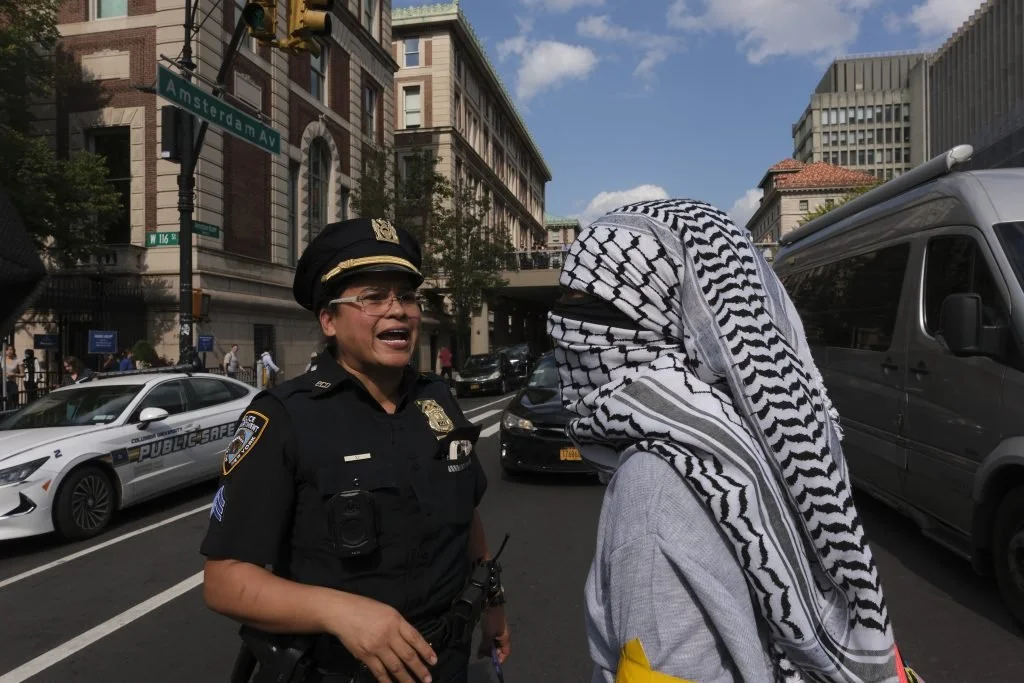
By the time DHS agents showed up at Mahmoud Khalil’s door, a full-spectrum campaign had already marked him as a target. Columbia professor Shai Davidai had posted Khalil’s name and image online, called him a terrorist, and urged Secretary of State Marco Rubio to deport him. The smear was picked up by a network of doxxing accounts like “Documenting Jew Hatred on Campus,” which publicly lobbied for the revocation of Khalil’s visa. Rubio repeated the call, Khalil received death threats, and the university stayed silent. Then, federal agents arrived. A professor’s tweet had become a trigger for federal enforcement. A tweet, a tag, a dossier — these were the new informant files. This time, professors, NGOs, and anonymous social media accounts were the new operators.

Friends Of The Hague Group Launches To Support Anti-Imperialist Models Of Multilateralism

Friends Of The Hague Group Launches To Support Anti-Imperialist Models Of Multilateralism

Bogota, Colombia – Representatives of major international organizations will convene to launch the Friends of The Hague Group (FOTHG) in Bogota as The Hague Group (THG) holds an emergency ministerial meeting on Palestine at the Ministry of Foreign Affairs on July 15 and 16. The Hague Group was established in January of this year in The Hague, Netherlands by the Plurinational State of Bolivia, the Republic of Colombia (current co-chair), the Republic of Cuba, the Republic of Honduras, Malaysia, the Republic of Namibia, the Republic of Senegal and the Republic of South Africa (current co-chair) so that states could work collaboratively using diplomatic and legal measures to enforce international law, specifically regarding Israel’s ongoing genocide of Palestinians and the failure of current international institutions to hold those countries and leaders who are committing war crimes accountable.

Black Alliance for Peace Launches Petition Drive Calling on the U.S. and Israel to be Excluded from All International Sporting Events for Crimes Against Humanity and Domestic Repression

Black Alliance for Peace Launches Petition Drive Calling on the U.S. and Israel to be Excluded from All International Sporting Events for Crimes Against Humanity and Domestic Repression

Black Alliance for Peace Launches Petition Drive Calling on the U.S. and Israel to be Excluded from All International Sporting Events for Crimes Against Humanity and Domestic Repression

[en español abajo]

June 30, 2025 - The Black Alliance for Peace (BAP) calls for the Fédération Internationale de Football Association (FIFA) and the International Olympic Committee (IOC) to withdraw the invitations for the United States to host the World Cup in 2026 and the International Olympics in 2028. Ajamu Baraka, the director of BAP’s North-South Project for People(s)-Centered Human Rights, states:

“There are two factors that make this call imperative. The environment of fear and political repression in the United States directed toward individual travelers to the U.S. and even those in transit to other nations has resulted in a number of nations issuing travel advisories against travel to the U.S. The other factor that is even more egregious is the lawlessness of the U.S. and Israel, who are engaged in an ongoing genocide against the occupied Palestinian population of Gaza.”  

With tens of thousands of people from around the world who would like to attend the World Cup and the Olympic Games, the U.S. has become a dangerous place to visit, especially for people of color. But as the petition points out, “anyone suspected of residing in and/or visiting the United States with or without “proper” documentation, including U.S. citizens, are being harassed, questioned about their political beliefs and even detained without due process.”

But the fact that the U.S. and Israel continue to operate as rogue states completely rejecting all of the normal constraints on lawless international behavior by engaging in unprovoked attacks on sovereign nations such as Lebanon and Iran and a barbaric slaughter of occupied Palestinians in Gaza and the murder of thousands in the West Bank by settlers and the Israeli Army, disqualifies both nations of hosting and participating in events involving the community of civilized nations.

Both FIFA and the IOC have previously denied hosting of, and participation in, international events for nations and governments that have acted in ways they deemed antithetical to their stated core values of human rights and anti-discrimination.  

There is no more horrific example of the violation of FIFA, IOC, and civilized values than what the world is witnessing today in Gaza.

FIFA and the IOC must be consistent. There must be accountability with one human rights standard for all!  Ban the U.S. and Israel, withdraw the invitations to host these events in the U.S.

Sign the Petition Here!

Alianza Negra por la Paz lanza campaña de petición para excluir a EE.UU. e Israel de todos los eventos deportivos internacionales por crímenes contra la humanidad y represión doméstica

30 de junio, 2025 - La Alianza Negra por la Paz (BAP, por sus siglas en inglés) exige que la Fédération Internationale de Football Association (FIFA) y el Comité Olímpico Internacional (COI) retiren las invitaciones a Estados Unidos para albergar la Copa Mundial en 2026 y los Juegos Olímpicos en 2028. Ajamu Baraka, director del Proyecto Norte-Sur de la BAP por los Derechos Humanos Centrados en los Pueblos, declara:

“Hay dos factores que hacen imperativo este llamado. Primero, el ambiente de miedo y represión política en Estados Unidos dirigido hacia viajeros que ingresan al país, e incluso hacia quienes están en tránsito hacia otras naciones, lo que ha llevado a varios países a emitir advertencias de viaje contra los EE.UU. El otro factor, aún más grave, es la impunidad de Estados Unidos e Israel, que están cometiendo un genocidio continuo contra la población palestina ocupada en Gaza.”

Con decenas de miles de personas de todo el mundo que desean asistir al Mundial y a los Juegos Olímpicos, Estados Unidos se ha convertido en un lugar peligroso para visitar, especialmente para las personas de color. Pero, como señala la petición, "cualquier persona sospechosa de residir y/o visitar Estados Unidos, con o sin documentación 'apropiada', incluidos ciudadanos estadounidenses, está siendo hostigada, interrogada sobre sus creencias políticas e incluso detenida sin debido proceso".

Pero el hecho de que Estados Unidos e Israel sigan actuando como estados fuera de la ley —rechazando por completo las restricciones normales contra comportamientos internacionales ilegítimos al llevar a cabo ataques no provocados contra naciones soberanas como Líbano e Irán, además de la masacre bárbara contra palestinos ocupados en Gaza y el asesinato de miles en Cisjordania por parte de colonos y el ejército israelí— descalifica a ambas naciones tanto para albergar como para participar en eventos que involucren a la comunidad de naciones civilizadas.  

Tanto la FIFA como el COI han negado anteriormente la sede y la participación en eventos internacionales a naciones y gobiernos cuyas acciones consideraron contrarias a sus valores fundamentales declarados de derechos humanos y no discriminación.

No existe ejemplo más horroroso de la violación a los valores de la FIFA, el COI y la civilización que lo que el mundo está presenciando hoy en Gaza.

¡La FIFA y el COI deben ser coherentes! Debe haber rendición de cuentas con un mismo estándar de derechos humanos para todos.

¡Prohíban a Estados Unidos e Israel, retiren las invitaciones para albergar estos eventos en EE.UU.!

Firme aquí la petición!

We Stand With Iran - Statement by the All-African People's Revolutionary Party

We Stand With Iran - Statement by the All-African People's Revolutionary Party

We Stand With Iran

19 June 2025 By A-APRP

The illegal zionist state of Israel started bombing Iran on Friday, June 13th, 2025. The aerial bombing coincided with the assassination of a number of scientists, generals and civilians. This unprovoked, criminal assault was accompanied by sabotage of government facilities, drone attacks on civilian infrastructure and the unleashing of internal cells loyal to the west, determined to dismantle the Iranian state. Taken as a whole the military assault is eerily reminiscent of the 2011 attack on Libya that killed Muammar Gaddafi and devastated Africa’s most progressive nation state.

This is all done to insure US dominance in the region under the pretext of stopping Iran from developing nuclear weapons. The capitalist mainstream media, the US Government, and Israel are claiming Israel is protecting itself from a powerful nuclear neighbor. But a careful analysis reveals a quite different reality. Firstly, Israel is the state that possesses nuclear weapons. They are aggressors claiming to be victims. Secondly Israel is nothing more than a proxy of US led imperialism, which wants to economically and militarily dominate the region. This is part of the imperialist plan to dominate the world.

The zionist state of Israel was created to serve the interests of imperialism by establishing an imperialist fortress in Western Asia. The US provides its zionist outpost with diplomatic cover, military aid, finances and intelligence, and in exchange Israel serves as the front line of Western aggression in the region. Iran is sanctioned and labeled a state sponsor of terrorism, while Israel operates as a living terrorist state, with impunity.

Israel’s strikes on Iran pursues broader imperialist interests by destroying its nuclear program, sabotaging civilian infrastructure (churches, schools, roads, and power grids) and reducing its ability to provide support for legitimate liberation organizations like Hezbollah and Hamas.

Since the 1979 revolution that overthrew the illegally installed puppet Shah of Iran, Mohammad Reza Pahlavi, imperialism has targeted Iran for destruction. Through the use of sanctions, proxy conflicts, and the promotion of alliances between Israel and Gulf states, the US limits Iran’s power and weakens their regional influence. Whether the US rhetorically calls for “de-escalation” or wages a proxy war through Israel, the goal is the same; controlled conflict and prevention of genuine peace. This is a pattern consistent with decades of US policy in the region. Saving Israel is not the end goal; saving imperialist dominance is.

Imperialism’s Strategic Objective is Full Spectrum Dominance

The US, European Union and North Atlantic Treaty Organization (US/EU/NATO) make up a gang of three called the Axis of Evil. Together they are engaged in a coordinated, continuous, long term, geo-strategic plan to dominate the planet. Imperialism targeted Russia, by embroiling her in military hostilities with Ukraine that limits its capacity to support its allies militarily. This has been followed by a strategic assault on Western Asia that includes the genocidal campaign against Palestinians in Gaza. Once the genocide was well underway the west, through its Israeli partner, attacked Syria, Lebanon, and Yemen to destroy the “Axis of Resistance,” an alliance that grew around the Palestinian resistance with the support of Iran. All of these actions are enforced through a ring of US military bases in Qatar, Bahrain, UAE, Saudi Arabia, Iraq and Syria, that surround Iran and provide rapid response capabilities. All of Israel’s military actions against Iran must be understood and viewed within this broader geopolitical context.

Since the first imperialist World War, the west has maintained an increasingly significant military, geopolitical, and economic presence in Western Asia (commonly, but incorrectly referred to as the Middle East). This presence is driven by “vital interests,” mainly securing oil and natural gas supplies. Located at the crossroads of Africa, Asia and Europe, imperialism dominates trade routes, and is strategically placed to militarily counter any challenge to its domination. The vast oil, natural gas, and other resources along with its position as a global transit hub have made this region a focal point of US led imperialist foreign policy. And make no mistake, nothing that we’re witnessing is new or spontaneous.

Western Dominance

We rarely hear about the extent to which the US-led imperialist system is seeking to shape a future global economic order that keeps Western dominance firmly at the helm. This is accomplished through control of energy markets, labor, financial systems, and military/technological supremacy. In short, they safeguard the profits of monopoly capital, using all available means.

One of the primary resources employed to safeguard Western interest is the terrorist state of zionist Israel. Israel’s economy is based on war and plunder. It is number seven in the world in military arms production and number four worldwide in arms sales. The plunder and theft of the world’s natural resources is most clearly demonstrated by their near total control of the world’s diamond industry. In spite of the fact that there are no diamond mines in occupied Palestine, Israel exports 70% of the world’s processed diamonds that are largely mined in Africa and makes up 12% of the settler state’s GDP. The arms manufactured in Israel and supplied by the U.S. assure them military supremacy over all the other states in the region. Through these and other nefarious arrangements Israel is sustained and their assault on humanity continues unabated.

Petro Dollars

In addition to military domination of the region and, ultimately, the world, imperialists also seek to maintain financial hegemony and safeguard the US Dollar as the global financial instrument. They will do anything to ensure that global oil trade remains dominated by the dollar, a key requirement to sustaining US financial hegemony. Imperialism tolerates no threats to this domination. They enforce dollar hegemony through diplomatic pressure, financial coercion, sanctions, and military interventions. Any nation attempting to bypass the dollar faces economic warfare, psychological warfare and military regime-change. Imperialism resorts to the complete destruction of” states that refuse to bow down and surrender their sovereignty. We have witnessed this in both Iraq and Libya.

The rise of BRICS, digital currencies, and de-dollarization trends, have led to even more aggressive financial tactics. This is what Iran is facing, but we have seen these tactics before. Iraq’s announcement that they would sell oil in euros instead of dollars, Libya’s announcement that they would introduce a Pan-African currency, and Yugoslavia’s move away from the dollar in trading in Europe, resulted in all being subjected to US invasions and overthrow of their governments.

When Iran tried to bypass dollar-based trade (e.g., selling oil in euros, yuan, or cryptocurrencies). The US responded with severe sanctions, partially cutting Iran off from SWIFT, (the global dollar-based messaging system) and pressuring other countries to avoid non-dollar transactions with Iran. When Venezuela launched the oil-backed “Petro” cryptocurrency in 2018 to evade US sanctions, the US banned their citizens from trading it and pressured other countries to reject it.

After the formation of BRICS and the 2014 US sanctions against Russia over Crimea, Russia developed its own alternative payment system, System for Financial Messaging, (SPFS) and promoted de-dollarization. The U.S. has since escalated sanctions, frozen Russian reserves, and pressured allies to limit Russian access to alternative currencies.

Additionally, the US has suppressed digital and cryptocurrency development that could challenge US dominance in Africa and Asia, stopping China’s Digital Yuan expansion and pressuring its allies to reject China’s digital yuan in cross-border trade. The US understands that a Chinese digital Yuan would weaken dollar dominance in Africa and Asia. And while the U.S. has pressured allies to reject rival currencies, it has weaponized SWIFT (imperialism’s global dollar-based messaging system) by restricting Iran and Russia, and punishing foreign banks that facilitate non-dollar trade with sanctioned states.

Understanding Dollarism and Resistance Against it

So why is Iran a target? Iran is labeled a threat to the US and Israel. But the real threat is economic, and understanding the concept of dollarism helps to make this clear. The US dollars’ dominance in the global financial system (often called “dollarism”) is a cornerstone of the United State’s economic and geopolitical power. Maintaining this system provides enormous benefits but also comes with risks if it were to weaken.

Here’s a breakdown of why this is crucial for the US, the economic advantages, and what’s at stake.The US enforces a worldwide system where certain commodities, such as oil, can only be traded using the dollar, thus forcing other countries to maintain vast reserves of US dollars. The US literally “prints money” that the world relies on, earning vast profits from currency circulation outside the US. The dollar system and the Central Banking System provides a massive financial and geopolitical advantage to the US economy, including lowering borrowing costs, enabling sanctions, and sustaining US economic supremacy. If this system erodes, the US would face higher debt costs, inflation, and weakened global influence and coercive power.

Iranian attempts to bypass dollar sanctions through a variety of means, including the China-Iran 25-Year Cooperation Agreement (2021) undermine dollar dominance. Israel’s current attacks on Iran’s nuclear and military infrastructure disrupts these alternative economic networks, reinforcing US leverage.

But perhaps of greatest significance are major geopolitical acts of resistance to imperialism. These include, the BRICS Initiative, Venezuela’s Bolivarian Revolution, Iran’s Gas Pipelines, and Increasing challenges to Neo-Colonialism in Africa.

The BRICS Initiative represents a real challenge to Western economic dominance. BRICS is a block of countries which includes Brazil, Russia, India, China, South Africa, Egypt, Ethiopia, Iran, Saudi Arabia, and the UAE, representing 45% of the world’s population and 36% of global GDP. An additional thirty nations have either formally or informally expressed an interest to join.

The establishment of alternative payment systems and mechanisms capable of eliminating reliance on Western-dominated financial networks, pose a serious challenge to the present economic order.

The US continually threatens countries against joining any BRICS initiatives that promote non-dollar trade. Iran’s pipeline Initiatives represent attempts to funnel its natural gas to the world market outside the ambit of imperialist control. Initially the Iran-Iraq-Syria Pipeline (IIP) was designed to supply those nations plus Europe. The US imperialist war against Iraq, along with sanctions against Iran halted the project. The Iran-Pakistan-India (IPI) “Peace Pipeline” was again stopped because of US sanctions on Iran. These pipelines would have brought 60 billion dollars into Iran’s economy annually, and up to 100 billion without the sanctions. This is the reason the US has attacked Syria and overthrew the government—to block pipeline construction. This is the real reason that Iran is portrayed as a pariah, as dangerous, as an enemy of humanity; not because of anything they’ve done to harm the US or Israel, but because of the threat of unseating imperialism’s global economic dominance.

Venezuela is a key player in this equation, possessing the largest oil reserves in the world. Following the victory of the Bolivarian Revolution, US imperialism imposed stifling economic embargoes and sanctions, severely damaging the economy and all social networks. As a result, 90% of the oil engineers fled Venezuela due to the economic crisis created by the US actions, further damaging the oil industry and causing enormous hardships to the Venezuelan people and the entire region that shared Venezuelan oil resources through the ALBA agreements instituted by Hugo Chavez and the United Socialist Party of Venezuela (PSUV).

Last Gasp Of A Dying Monster (The Imperialist Military Assault)

Imperialism (through the zionist entity in Israel) instituted regime change in Syria, and executed genocide in Gaza and the West Bank. Iran supports the Palestinians with arms, money, training and material. Iran is now being targeted for regime change.

We must also take note that these Imperialist/zionist forces are not confining their military activity to one country or region. While a new war rages in Iran, imperialism creates ongoing conflicts of various types in the Western Sahara, Eritrea, Zimbabwe, DRC, Sudan, Guinea Bissau, the Alliance For Sahelian States (which includes Mali, Niger, and Burkina Faso), Venezuela, Nicaraqua, Cuba, North Korea, Haiti, Russia, China and other places throughout the world. This is in fact an imperialist policy of Full Spectrum Domination.

The U.S. has at least 45 military bases surrounding Iran and the US has already threatened Iran declaring,“If Iran attacks any U.S. military bases we will bomb Iran with the likes they have never seen”. After lying about their involvement in the attacks on Iran by Israelis the US president went on to say, “We gave them a chance to negotiate a peace agreement and they wouldn’t agree to our terms.” So, now they will have to come to the negotiation table and agree to our terms.”

This is how the dying capitalists/imperialists act in their last stage of existence. They engage in multiple wars, terrorism and genocide as they are declining. They try to kill, terrorize as many people and nations as possible. But, they have been losing militarily, economically and politically everywhere. Including losing the propaganda war around the world.

An increasing number of the people are seeing the contradictions more clearly as the U.S./E.U./NATO/zionist axis attacks, kills and destroys more people. The underpinning of colonialism, settler colonialism and neo-colonialism is violence They are losing everywhere on many different fronts all over the world including Europe, Asia, Latin America, Africa and especially Palestine.

We know the masses of the people will win and destroy capitalism and imperialism. Because we know nothing can stop the will of the people especially when they are organized into a fighting force on a global scale.

The Significance of Pan-Africanism

A new wave of anti-neo colonial resistance that is sweeping Africa is reshaping oil and gas politics, challenging imperialist dominance, and aligning with the BRICS led push to “de-dollarize” the world’s economy. This movement is driven by youth uprisings, military coups, formation of alliances, and rising ideological awareness that imperialism is the enemy of humanity. As a result, Western oil companies which have long exploited Africa, are losing their grip while Russia, China, and Iran are viewed as more trusted partners. As this momentum spreads, African resources are increasingly being used for Africa and African people. Additionally, China, Russia and Iran could be granted greater access to Africa’s resources locking out the US and Western Europe. And every time Africa trades in a currency other than dollars, the grip of the dollar weakens. So Africa is the real battleground for control of oil, gas, and critical minerals such as cobalt and lithium. We know that when imperialism thinks it has weakened Africa’s allies, they will not hesitate to militarily attack Africa. We must resist the trap of neo-colonialism and fight to maintain the gains that we’ve made. We must ensure that imperialism and capitalism will find their graves in Africa!

We Stand With Iran

The flagrant violation of human rights, the trampling over the sovereignty of nations that resist, the blatant racist domestic policies, police brutality, and military threats, are all examples of the lengths to which imperialism will go to survive. Capitalism cannot be reformed or humanely applied. The only solution to the problem is the total destruction of the US-led capitalist system and its twin, global imperialism.

Imperialist wars will only increase, but people in general and Africans in particular, must not be misled into fighting for, or sending our sons and daughters to fight in any imperialist or neo-colonialist militaries. We must reject the racist, capitalist narrative that always frames the US and the Global North as the “good” while framing those who resist oppression as “evil”. Liberation requires a clear mind. We cannot afford to be deceived. Iran is not our enemy, the US and EU imperialism and zionism are our enemies. The institutions such as NATO, AFRICOM, the IMF, the World Bank, etc. are our enemies; designed to exploit our labor, maintain our oppression, steal our resources and land, and dominate our economies. Whether we live inside or outside of Africa, we must unite, across borders, to fight against capitalism, neocolonialism, zionism, imperialism and all forms of injustice. We must study, and understand the world so that we can clearly distinguish our friends from our enemies.

We encourage Africans everywhere to join organizations that are wedded to our people’s collective interests. As individuals we are weak and easily defeated, but history has demonstrated that the people united can never be defeated.

The AAPRP calls for the permanent coordination of our fighting forces, in the framework of an All African Committee for Political Coordination (AACPC). Given the global nature of African domination we must merge all the revolutionary Pan-African political parties in Africa, and its diaspora under an international strategy to defeat imperialism.

Africans must unite under the banner of Pan-Africanism–the total liberation and unification of Africa under scientific socialism.

The All-African People’s Revolutionary Party condemns in the strongest terms Israel’s unprovoked, indiscriminate, illegal, terrorist attacks against the peoples of Iran, Lebanon, Syria, Yemen. We condemn zionism’s inhumane, genocidal slaughter being waged against the Palestinian people, and the deplorable silence or complicity of much of the world. We condemn the forced displacement of peoples that result from immoral and illegal sanctions and blockades, and theft of resources, which drive people from their homelands. We stand in unity with the people of Iran, the people of Palestine and all peoples who are fighting for their liberation and sovereignty against US led imperialism.

ORGINAL SOURCE

Community Movement Builders-Newark Statement on the Delaney Hall Uprising

Community Movement Builders-Newark Statement on the Delaney Hall Uprising

CMB Newark Statement on the Delaney Hall Uprising

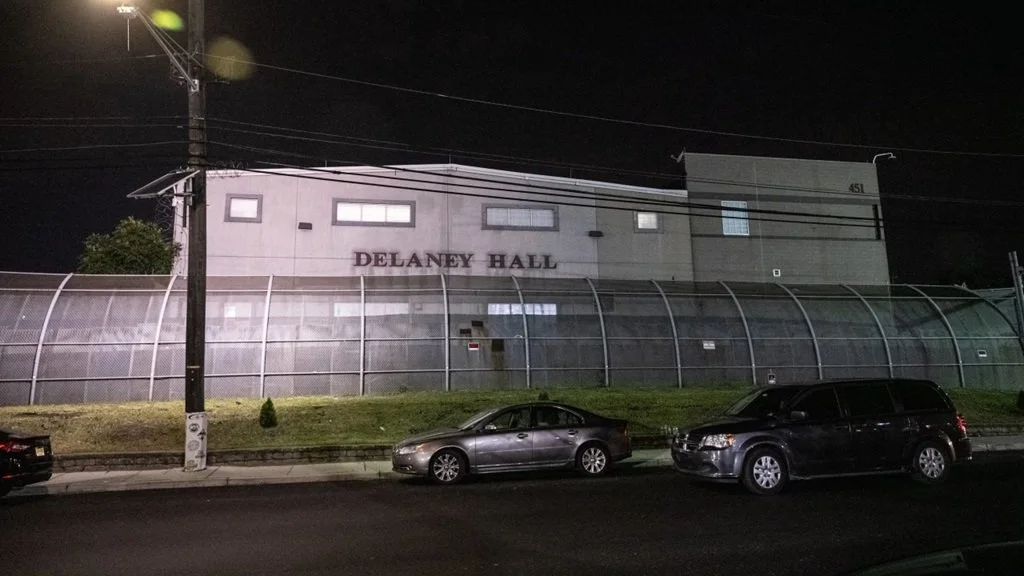
On Thursday, June 12th, 50 kidnapped immigrants revolted against their inhumane conditions at Delaney Hall, a private detention facility operated by GEO Group in Newark. By the time the tear gas settled, captives had torn down a wall, family visitation was cancelled, and protestors mobilized to interrupt facility operations from the outside. At least four captives successfully liberated themselves from their unjust detention. At the time of this writing, the actions of those inside, supported by solidarity actions on the outside, have increased the urgency in calls to shut Delaney down.

Guided by our values of Humanity and Solidarity, Community Movement Builders-Newark stands unequivocally in solidarity and support with the captives still inside, those already transferred since the rebellion, and those who escaped. We see all those who have been targeted and captured by the federal government’s reactionary and fascist campaign against immigrants as prisoners of war. Accordingly…

Read Full Statement...

Resisting Dependency: U.S. Hegemony, China’s Rise, and the Geopolitical Stakes in the Caribbean

Resisting Dependency: U.S. Hegemony, China’s Rise, and the Geopolitical Stakes in the Caribbean

Resisting Dependency: U.S. Hegemony, China’s Rise, and the Geopolitical Stakes in the Caribbean

By Tamanisha J. John

Introduction

The Caribbean region is an important geostrategic location for the United States, not only due to regional proximity, but also due to the continued importance of securing sea routes for trade and military purposes. It is the geostrategic location of the Caribbean that has historically made the region a target for domineering empires and states. As both geopolitical site and geostrategic location, U.S. foreign policy articulations of Caribbean people and the region have been effectively contradictory, but the contradiction has allowed the U.S. to maintain its hegemonic position: Caribbean peoples in U.S. foreign policy are rendered backwards, unstable, and dangerous or targets of xenophobic harassment; while the physical region is rendered as a place where U.S. foreign policy must maintain one-sided power relations, lest these sites come under the influence of other states that the U.S. views as impinging upon its sphere of influence. One can most readily look to Haiti to see these contradictory dynamics at play. Haiti has not had democratic elections for two decades and instead has been under United Nations (UN) sanctioned “tutelage” or occupation via the CORE group, of which the U.S. is a part.[i] Over the past two decades, Haiti has been subject to a massive influx of U.S. manufactured weapons that fuel gun violence and murder in the country.[ii] Meanwhile those Haitians fleeing this violence to the U.S. have been met with whips at the U.S.-Mexico border, deportation flights from the U.S., and dehumanizing mythological hysteria accusing Hatians of  “eating pets.”[iii]

Given the domineering impact of the U.S. and its allies in Canada and Europe in the Caribbean region, states in the region remain deeply dependent on foreign investment and tourism from these powers. ‘Foreignization’ of Caribbean economies makes it hard for the peoples of the region to make a living. Many Caribbean governments, neoliberal in orientation, willingly support this dependent development scheme by promoting migration for remittances, service industries for tourism, and temporary foreign worker schemes abroad due to lack of worthwhile opportunities at home. A large part of what maintains this dependent relationship—that many would find to be demeaning in most circumstances—is the securitization of the Caribbean region by the U.S. and its allies, as well as the invocation of “shared cultures,” rooted in colonial histories which continue to impose multiple hierarchies of domination on Caribbean peoples.

Washington’s aim of permanent hegemony in the region is being challenged by an increasingly multipolar world, and this accounts for the US attempt to limit China’s influence in the Caribbean. For example, U.S. tariff assaults on the People’s Republic of China (PRC) stems from U.S. insecurities about China’s economic growth alongside its manufacturing and technological developments.[iv] China’s extension of infrastructural, technological, and other tangible material developments to states lower down on the global value chain, and at smaller costs to them is referred to by the U.S. and other western policy makers as “China’s growing influence.” This includes states in the Caribbean, which have not only become consumers of products from China but have also increased their exports to China since the 2010s. Unsurprisingly, the U.S. fears that China is gaining too much influence in the Caribbean given its developmental hand there. Although the U.S. is not directly competing with China on development initiatives, Washington’s reluctance to support meaningful progress in the Caribbean—where U.S. corporations continue to profit from structural underdevelopment—has led it to pursue strong-arm diplomacy as a symbolic stand against China instead.

China’s alternative to dependent development challenges Western Hegemony in the Caribbean

Western capitalist modernity, as an ideological, political, and socioeconomic project, is threatened by improvements to the global value chain. The issue at hand is that the U.S. and the Western-led capitalist system have long relegated states of the ‘Global South’ to lower positions on the global value chain. This has rendered development elusive for many states, to the sole benefit of Western corporations and their allies. Lack of development in places like the Caribbean, Africa, Asia, and Latin America actually benefits capitalist enterprises headquartered in the ‘Global North’ which extract surplus value by exploiting cheap natural resources, labor, and land in these regions. China’s accelerated advancement within the global value chain—alongside the rise of other partner states positioned lower on that chain—has not depended on economic or political subordination to the west. This trajectory is actively interpreted as eroding Western hegemonic dominance—even as the improved developments of states like China within the global value chain, have expanded global capitalism. Since 2018, the U.S. tariff assault on China, which has intensified under the second Trump administration, is a direct response to China’s economic growth propelled by China’s added value to the global value chain. In essence, the fear is China’s rise, while not reliant on the west, has made the West more reliant on importing cheap products and manufactured goods from China.

After the global 2007/8 financial crisis, China’s expressed strategy was to diversify its exports and import markets through helping other states improve their own conditions in the global trade value system. This of course, was due to the negative impacts felt by China in its export markets from the 2008 global financial crisis. Since then, China has increased the internal demand within China for Chinese goods, which also saw the purchasing power of Chinese citizens rise. This helped the growth of a middle class in China, and also allowed the Communist Party of China (CPC) to think more broadly about its continued growth strategy. By the early 2010s China sought to develop a wider external market that was not dependent on the U.S. and the other Western states. As China began formulating a broader development strategy, the growing purchasing power of Chinese citizens made the U.S. and other Western countries increase demands on China to have unfettered access to China’s internal market. The 2010s thus became rife with false accusations by Western commentators of China manipulating its currency to amass reserve wealth, and maintain competitive exports[v] – which helped to spark Trump’s trade assault on China in 2018, and again during the second Trump administration in 2025.

While conversations in the West hinged on conspiracy, the CPC acknowledged that neither internal consumption nor reliance on the U.S. and Western markets would promote long-term sustainable development and growth of China’s economy. Greater emphasis was placed on increasing and improving relations with other developing states. In essence, helping the development of states lower down on the global value chain would be necessary—in order to make them consumers (thus importers)—of products from China. This became part of China’s long-term strategy to diversify its import and export markets. Thus, after the 2008 global financial crisis and especially after 2010, China’s investment in places like the Caribbean had a marked and noticeable increase. A decade later, this strategy has proven beneficial to China’s growth and development – as well as to growth and development of other developing countries in Africa, Asia, Latin America and the Caribbean with more states engaging in, and pursuing trade and other relations with, China.

The impact of U.S. tariffs and fees on the Caribbean

Despite growing U.S. security concerns over China’s engagement in the Caribbean, the region remains largely dependent on the United States, and Caribbean states consistently run trade deficits in favor of the U.S. These trade deficits usually come at the expense of local Caribbean growers, producers, and artisans. According to Sir Ronald Sanders, Antigua and Barbuda’s Ambassador to the United States: “In 2024, the United States ran a $5.8 billion trade surplus with CARICOM as a whole. For a tangible illustration, Antigua and Barbuda’s imports from the U.S. exceeded $570 million, while its exports in return were a mere fraction of that total.”[vi] Given Caribbean regional economic dependence on the U.S., Canada and Europe, many Caribbean people seeking employment and/or asylum opportunities typically see the U.S. as a destination of choice, contributing to the large Caribbean diasporic communities in North America and Europe. These Caribbean diasporic communities not only send remittances and goods back to their home countries to support family, friends, and communities – but also facilitate Caribbean state’s exports into the U.S. It is important to underscore these dynamics, as the longstanding U.S.-Caribbean relationship—rooted in dependency—remains firmly entrenched, despite growing investments in the region from China.

The U.S. tariff assault on China extended into a wider tariff assault by the U.S. against multiple countries, including states in the Caribbean. By April 3, 2025 the U.S. had imposed tariffs on 24 Caribbean countries: a 10% tariff on 23 of them,[vii] and a 38% tariff on Guyana[viii]—a Caribbean nation with extensive relations with China[ix]—excluding its exports of oil (dominated by U.S. and other foreign corporations), gold, and bauxite. The U.S. tariffs on Caribbean states—levied amid fragile post-pandemic recovery and lingering hurricane damage—underscores a troubling, though not surprising indifference to the region’s economic vulnerability and ongoing efforts toward stabilization and renewal.[x] During this time, the U.S. introduced a series of tariff increases on China, peaking at a 145% tariff after April 10, 2025, before settling on a 10% rate through an agreement reached on May 13, 2025.[xi] In addition to the tariffs that Washington placed on China, the U.S. also announced that it would issue port fees on Chinese built ships entering U.S. ports. In all, these tariffs and fees being imposed by the U.S. meant that there would likely be negative impacts borne by Caribbean states that import U.S. goods, and Caribbean states that export goods to China. The overall impact of the tariffs and fees would be two-fold: First, U.S. consumers of goods imported from the Caribbean would have to pay more to access those goods. Second, increased costs accrued to Caribbean state’s importing U.S. goods due to port fees, would make it more cost effective for those Caribbean states to import more goods directly from China. However, in the immediate term, Sino-Caribbean trade, lacking established relationships on a wide range of import products, has the potential to lead to import shortages – particularly of food and other essential imports from the U.S.—in the Caribbean. Given global backlash from the shipping industry, the U.S. revised and changed its decision regarding port fees a week later,[xii] and three weeks later, on April 28, it reduced the tariff on Guyana to 10%.

Political commentators recognize, contrary to the denials by the Guyanese government, that the initially high tariffs placed on Guyana were motivated by U.S. tensions with China. According to former Guyanese diplomat, Dr. Shamir Ally,[xiii] and Guyanese political commentator, Francis Bailey, Guyana “is caught in a geopolitical battle between the US and China. Or more specifically – Washington objects to Beijing’s “very strong foothold” in Guyana.”[xiv] This was made clear, when prior to the Trump administration’s announcement of the tariff’s on Guyana, Guyanese President, Irfaan Ali, pledged that the U.S. would “have some different and preferential treatment” from Guyana[xv]— given a shared stance between the two countries in relation to Venezuela.[xvi] This pledge by Guyana’s president took place within the context of the U.S. Secretary of State Marco Rubio’s visit to the Caribbean, during which Rubio chastised the construction of infrastructure in Guyana that he deemed subpar, and alleged must have been built by China, even though it was not.[xvii] These kinds of geopolitical posturing by Washington stoke antagonisms, ignoring the negative impacts of Caribbean dependency, including that of Guyana. Caribbean economic dependency on the U.S. (Europe and Canada) will not be completely ameliorated by China, and neither will China be able to fill the role of the West for Caribbean exporters who, given histories of enslavement, indentureship, and colonialism, rely on diasporic taste and preferences for ‘niche’ exports (e.g., artisan goods, arts, entertainment). Given the high degree of U.S., Canadian, and European ownership in the Caribbean’s industrial and manufacturing sectors, the region’s capacity to produce “finished products” on an exportable scale remains limited. Despite the continued dependency relation of Caribbean states on U.S. markets, however, China can positively impact Caribbean economies by helping to diversify their trading partners, and by increasing local opportunities for people within Caribbean states, based on the kinds of new (or improved) infrastructure typically developed in partnerships with China.

Though on the rise, the trade relationship between China and states in the Caribbean is still quite limited. Caribbean states that are a part of the Caribbean Community (CARICOM) saw a notable increase in their exports to China, from less than 1% of their total exports in the 1990s and 2000s, to between 1% and 6 % of exports going to China after the 2010s.[xviii] The majority of exports from the Caribbean to China from the 2010s forward have been agricultural and mineral in nature. Alongside the growing export potential of CARICOM states to China since the 2010s, there has also been an increase in Caribbean states importing Chinese goods. States such as Antigua and Barbuda, Dominica, Guyana, Jamaica, and Suriname import about 10% of their goods from China. On the other hand, states like the Bahamas, Barbados, Grenada, Trinidad and Tobago import less than 10% of their goods from China. The overall trend, then, is that CARICOM states have added some diversification to their trading partners since the 2010s but continue to remain firmly within the Western trading bloc. Given the structured dependency of Caribbean economies, they tend to import more from their trading partners than they export to them. However, as political analyst Daniel Morales Ruvalcaba points out, as a trading partner, China’s commitment to South-South partnerships has meant that trading disparities between itself and CARICOM states are “offset by investments flowing from China to the Caribbean […] broadly categorized into three key sectors: port infrastructure development, resource extraction, and the tourism industry.”[xix] This way of tending to the trade disparity has had beneficial impacts—that can also be seen very visibly by those who live and visit states in the Caribbean. Additionally, China’s investments have not been limited to CARICOM states, or to states that recognize China and not Taiwan. For instance, China invests in Belize, Haiti, St. Lucia, St. Kitts and Nevis, St. Vincent and the Grenadines—these are Caribbean states that recognize Taiwan.[xx]

While China does not play a dominant import-export role in the Caribbean, given the system of dependency into which the Caribbean is already integrated, it also does not pose a security threat to the Caribbean region, despite Washington’s portrayal of China as a “bad actor.” The PRCs commitment to non-interference makes it extremely unlikely that China would use the Caribbean as a springboard for a security confrontation with Washington and its NATO allies. China does, however, have a strategic partnership with Venezuela, largely limited to a defensive posture given its relations with other states in the region, including the Caribbean. Further, with the large security presence of the U.S. and its allies in the Caribbean, China would have nothing to gain from an offensive military posture in the region. Though self-evident, this explains why the U.S has chosen to frame China’s presence in the Caribbean not in economic terms, but as a technological and geopolitical “threat”—going so far, on multiple occasions, as to allege that China is constructing covert surveillance facilities in Cuba to conduct espionage on the U.S.[xxi]

The China-Caribbean “threat” from the U.S. Perspective

In 2018, Washington signaled its intent to limit Chinese investments in infrastructure, energy, and technology abroad; by 2023, U.S. Southern Command identified the Caribbean as a key region where China’s growing economic footprint should be restrained. In its effort to push China out of the Caribbean tech sector, the U.S. has allowed U.S. and other Western companies to develop 5G networks in Jamaica at virtually no cost in the short term—effectively subsidizing the infrastructure to block Chinese involvement and investments in the sector. This campaign has gone so far as to include veiled threats of sanctions toward Jamaica and other regional nations should they pursue connectivity projects with China.[xxii] Since the 1940s, the U.S. has viewed government-controlled economies as threats to the Western capitalist order—a label that readily applies to China. In 2025, the trade offensive against China is markedly more severe, driven by Washington’s explicit goal of curbing the spread and stalling the advancement of China’s high-tech industries—an effort aimed at preserving U.S. dominance in the sector, which is increasingly seen as under threat. The trade war, which began openly during Trump’s first term, has only intensified in his second—driven in part by the growing influence of high-tech capitalists closely aligned with his administration. China’s advances in artificial intelligence, seen with the public release of DeepSeek AI, has only accelerated the U.S. assault.

According to  U.S. and other pro-Western security analysts who view China as a “threat” in the Caribbean, this threat manifests in three primary ways. First, they point to China’s development of internet-based infrastructure in Caribbean nations which they claim enables Chinese espionage operations that target the U.S. from within the region. Second, they highlight the fact that most Caribbean states recognize the People’s Republic of China, rather than Taiwan, under the One-China policy—a position they attribute to questionable dealings with Beijing, rather than to the exercise of Caribbean political agency in matters of state recognition. And lastly, the Belt and Road Initiative (BRI) is portrayed as a nefarious development scheme that allows China to assert its influence globally. Notably, these accusations that form the “threat” narrative amongst U.S. and other pro-Western security advocates don’t hold up against the slightest scrutiny.

First, there is no evidence that there are “Chinese spy bases” in Cuba or in any other country in the Caribbean—despite these accusations being levied by both Trump White Houses, and various U.S. Republican politicians in Florida.[xxiii] Second, the PRC does invest in, and maintain diplomatic relations with, Caribbean states that recognize Taiwan.[xxiv]  This suggests that the PRC does not force a One-China policy on states in the Caribbean with which it has cooperative relations. Commenting on Sino-Caribbean relations, Caribbean leaders themselves often note that the recognition of China and not Taiwan is due to support for China safeguarding its sovereignty and territorial integrity, of which they include national reunification.[xxv] Ultimately, the alleged “nefarious” nature of the Belt and Road Initiative stems from its core premise: that developing countries receive meaningful support from China to pursue their own development goals. Such efforts inevitably draw scrutiny from the U.S. and the Westbroadly, as genuine development in the ‘Global South’ is often perceived as a challenge to Western capital and hegemony. The BRI also encourages signatory states to build greater regional relationships with their Caribbean neighbors. It reflects a highly agentic approach, in stark contrast to the traditional way U.S. and other Western initiatives are typically implemented.

Ultimately, the BRI is seen as a threat by Western policymakers because they would prefer China not pursue its own global initiatives. Given that the BRI also supports states in developing technological infrastructure and other advancements—with backing from China—these efforts are viewed by the U.S. as a strategic threat, ensuring the initiative will remain a target of sustained opposition. In the Caribbean, the U.S. push to end their tech relations with China comes off as brash, given that U.S. technology investments in the region have declined since the mid-1990s, while China technology investments have increased.[xxvi] In fact, the U.S. (and its Western allies) seem to only understand China’s investments, including the BRI, as lost market share. In essence, Washington and its Western allies seek to control economic development in the region. Two years ago for COHA, John (2023) argued that the U.S. and its allies were increasing their “diplomatic” presence in the Caribbean to maintain geostrategic influence, given China’s growing economic investments there.[xxvii] John maintained that the dismal track record of capitalism—led first by the Western European powers and later by the United States—has entrenched Caribbean states in a position of structural dependency within the global capitalist system. Key features of this dependency include persistently high levels of unemployment, underemployment, poverty, and a heavy reliance on labor exportation. This dependence made the region very receptive to Chinese investment.

John (2023) concluded that influence is gained only where it aligns with local interests—and that investments from the PRC stood in stark contrast to Western strategies, which for decades have indebted Caribbean states, privatized their economies in ways that deepened foreign control, and consistently disregarded regional calls for reparations. This track record, it was argued, would only lead to increased militarization in the Caribbean by the U.S. and its Western allies, who have no tangible goal of helping Caribbean states to develop—but want confrontation with China. Two years later and the concluding remarks still stand.

Concluding Remarks: Dependent Development is the price of Western Capitalism in the Caribbean

In the Caribbean, the U.S. and its Western allies have long profited from—and perpetuated—the notion that foreignization is the norm. This extends beyond economic structures to encompass both domestic and foreign policies that effectively surrender the state, and its people, to massive  exploitation by foreigners. Some governments and local elites have been brought on as “shareholders” to maintain this backwards dependent status. That is because imperialism, especially in the Caribbean, has always been intent on establishing what Cheddi Jagan called “a reactionary axis in the Caribbean.”[xxviii] U.S. ‘influence in the Caribbean region has historically centered around controlling the “backwardness” and “unstableness” of its people, in order to keep U.S. geostrategic and geopolitical interests intact. This is done in conjunction with Caribbean political elites, who subject their own Caribbean populations in perpetual servitude to Western capital. Caribbean neoliberal states have a disregard for the rights of their citizens (and diaspora), favoring almost exclusively (and predominantly) Western foreign corporations and wealthy individuals. Cuba, however, stands out as an exception to this trend, and this is why it has been under relentless attack by Washington for more than 62 years.  It is important to point this out, given that some in the Caribbean political elite classes also share the same regressive rhetoric from the Westabout the “threat of China” to produce reactionary mindsets and views amongst large swaths of Caribbean people— so that their hand in maintaining Caribbean dependency is not critiqued.

Caribbean people struggling to improve their societies for the better are continuously warned by the U.S. and its Western and Caribbean allies that they must maintain themselves in a dependent position. The truth is: So long as the majority of individual Caribbean states are importing finished products and agricultural goods from the U.S., Canada, and Europe—and to a smaller extent now China—the Caribbean will never have trade surpluses with these states. Lack of local businesses and the foreignization of Caribbean economies compound this contradiction that is perpetuated by the entrenched Western-led economic system. Political elites in the Caribbean frequently disregard local protests and locally developed alternatives that could threaten Western foreign corporations and investment. There is a real need for enhanced regional integration for Caribbean people, not only states, to improve their lot within the prevailing system. People will continuously be let down by formations like CARICOM, so long as these associations are dominated by Western development frameworks and have individual member states who care more about aligning their security interests with the West instead of their own region. While neoliberalism in the Caribbean is often attributed to structural constraints and the limited capacity of states to regulate foreign capital, such explanations fail to account for the extent to which Caribbean governments have themselves normalized and actively advanced neoliberal policy frameworks. The promotion of neoliberal policies both prolongs, and makes systemic, foreign dependence and domination.

U.S. fear mongering about China in the Caribbean is propaganda. It only serves to prevent people from questioning why Caribbean states are dependent and why there is rampant foreignization of Caribbean economies. Who owns these corporate entities that make life hard in the Caribbean? The “threats” from the U.S. perspective boil down to the fact that China, in the Caribbean, is taking advantage of Western policies that make the Caribbean exploitable. It is often noted—and indeed observable—that China imports its own labor for development projects in the Caribbean. However, this practice is neither new nor unique; countries such as the United States, Canada, and various European powers have long employed similar strategies. Understandably, this reliance on imported labor has generated frustration among Caribbean populations, particularly given the region’s high levels of unemployment and underemployment. Many local workers are both willing and able to acquire the necessary skills and trades to work on infrastructure and development projects that come to the region. Local Caribbean firms and entrepreneurs would also seize the opportunity to participate in these projects—including local sourcing of materials. But this beneficial type of development is not presently feasible given how Western capitalists have integrated Caribbean states into the global capitalist system.

The efforts of the Trump administration to cast China as a security threat in the Caribbean and to portray doing business with China as a security risk, have largely been unsuccessful. In the Caribbean, China simply takes advantage of Western policies that have made the region highly favorable and open to foreign investment, foreign entrepreneurs, and government dealings—in the form of Memorandums of Understanding (MOU) and Letters of Agreement (LOA)—with other states and corporations. The acceptance of these MOUs and LOAs receive minimal, to no input from Caribbean citizens. Debt traps have been normalized in the Caribbean by the Western capitalist system, making the Caribbean one of the most highly indebted regions in the world. Today, propagandists tend to invoke the myth of the  “Chinese debt-trap” to attribute to China this false label of being engaged in “debt trap diplomacy”—a term popularized in 2018 during the first trade assault against China.[xxix] In response to this myth, progressive commentators tend to highlight that China forgives a lot of debt, and has even helped Caribbean states to restructure debts owed to various financial institutions.[xxx] However, the biggest elephant in the room is that even if China ceased to exist in the Caribbean region, the region would still be one of the most indebted within the Western capitalist system. The debt-trap narrative not only deflects attention from the significant role Western powers have played in producing Caribbean indebtedness, but also unjustly shifts the burden onto China to forgive obligations for which Western capital is responsible.[xxxi] Lack of transparency in investment agreements and investor tax benefits, including profit repatriation, in the Caribbean has been normalized by laws first written by various European empires and later by Western capitalists that crafted structural adjustment policies. Yet, such arrangements, historically established by U.S. and Canadian capital interests, are often rebranded as evidence of corruption within the China–Caribbean relationship. Those concerned with the persistence of Caribbean dependency should critically engage with its structural causes and actively challenge Western propaganda regardless of the source from which it emanates.

Endnotes

[i] Pierre, Jemima. 2020. “Haiti: An Archive of Occupation, 2004-.” Transforming Anthropology 28(1): 3–23. doi: https://doi.org/10.1111/traa.12174.

[ii] Kestler-D’Amours, Jillian. “‘A Criminal Economy’: How US Arms Fuel Deadly Gang Violence in Haiti.” Al Jazeera, March 25, 2024. web: https://www.aljazeera.com/news/longform/2024/3/25/a-criminal-economy-how-us-arms-fuel-deadly-gang-violence-in-haiti.

[iii] Mack, Willie. Haitians at the Border: The Nativist State and Anti-Blackness. Carr-Ryan Commentary. Harvard Kennedy School, 2025. web: https://www.hks.harvard.edu/centers/carr-ryan/our-work/carr-ryan-commentary/haitians-border-nativist-state-and-anti-blackness.

[iv] Ziye, Chen, and Bin Li. “Escaping Dependency and Trade War: China and the US.” China Economist 18, no. 1 (2023): 36–44.

[v] Wiseman, Paul. “Fact Check: Does China Manipulate Its Currency?” PBS News, December 29, 2016. https://www.pbs.org/newshour/world/fact-check-china-manipulate-currency.

[vi] Loop News. “More Caribbean Countries Respond to New US Tariffs,” April 4, 2025, sec. World News. https://www.loopnews.com/content/more-caribbean-countries-respond-to-new-us-tariffs/.

[vii] TEMPO Networks. “Here Are All The Caribbean Countries Hit By Trump’s New Tariffs.” Tempo Networks, April 3, 2025, sec. News. https://www.temponetworks.com/2025/04/03/here-are-all-the-caribbean-countries-hit-by-trumps-new-tariffs/.

[viii] Grannum, Milton. “Oil, Bauxite, Gold Exempt from US Tariff.” Stabroek News, April 4, 2025, sec. Guyana News. https://www.stabroeknews.com/2025/04/04/news/guyana/oil-bauxite-gold-exempt-from-us-tariff/.

[ix] Handy, Gemma. “Was China the Reason Guyana Faced Higher Trump Tariff?” BBC, April 28, 2025. https://www.bbc.com/news/articles/cjeww5zq88no.

[x] John, Tamanisha J. 2024. “Hurricane Unpreparedness in the Caribbean, Disaster by Imperial Design.” Council on Hemispheric Affairs (COHA). The Caribbean. https://coha.org/hurricane-unpreparedness-in-the-caribbean-disaster-by-imperial-design/.

[xi] Grantham-Philips, Wyatte. “A Timeline of Trump’s Tariff Actions so Far.” PBS News, April 10, 2025, sec. Economy. https://www.pbs.org/newshour/economy/a-timeline-of-trumps-tariff-actions-so-far.

[xii] Saul, Jonathan, Lisa Baertlein, David Lawder, and Andrea Shalal. “United States Eases Port Fees on China-Built Ships after Industry Backlash.” Reuters, April 17, 2025, sec. Markets. https://www.reuters.com/markets/global-shippers-await-word-us-plan-hit-china-linked-vessels-with-port-fees-2025-04-17/.

[xiii] Credible Sources interview on February 26, 2025. Guyana in U.S.-China Crossfire? Ex-Diplomat Weighs In, 2025. https://www.youtube.com/watch?v=UtCNBiKdj-0

[xiv] Handy, Gemma. “Was China the reason Guyana faced higher Trump tariff?” BBC, April 28, 2025. https://www.bbc.com/news/articles/cjeww5zq88no.

[xv] Chabrol, Denis. “Guyana Pledges ‘Preferential’ Treatment to US.” Demerara Waves, March 27, 2025, sec. Business, Defence, Diplomacy. https://demerarawaves.com/2025/03/27/guyana-pledges-preferential-treatment-to-us/.

[xvi] John, Tamanisha J. “Guyana, Beware the Western Proxy-State Trap.” Stabroek News, December 25, 2023, sec. In The Diaspora. https://www.stabroeknews.com/2023/12/25/features/in-the-diaspora/guyana-beware-the-Western-proxy-state-trap/.

[xvii] Foreign Ministry Spokesperson Guo Jiakun’s Regular Press Conference on April 3, 2025. Beijing Says That Road in Guyana Criticised by Rubio Is Not Built by China, 2025. https://youtu.be/6gljwDyW1qk?si=2QXhDUythljBsIcJ.

[xviii] Morales Ruvalcaba, Daniel. 2025. “National Power in Sino-Caribbean Relations: CARICOM in the Geopolitics of the Belt and Road Initiative.” Chinese Political Science Review 10: 28–48. doi: https://link.springer.com/article/10.1007/s41111-024-00252-4.

[xix] Ibid.

[xx] Ibid. 

[xxi] Qi, Wang. “Hyping Chinese ‘spy Bases’ in Cuba Slander; Shows US’ Hysteria: Expert.” Global Times, July 3, 2024. https://www.globaltimes.cn/page/202407/1315376.shtml.

[xxii] Pate, Durrant. “US Warns Jamaica against Chinese 5g.” Jamaica Observer, October 25, 2020. https://www.jamaicaobserver.com/2020/10/25/us-warns-jamaica-against-chinese-5g/.

[xxiii] Belly of the Beast. Investigative Report. May 30, 2025. Big Headlines, No Proof: Inside the Hype Over “Chinese Spy Bases”  https://www.youtube.com/watch?v=CF87JJp8WIo

[xxiv] Bayona Velásquez, Etna. “Chinese Economic Presence in the Greater Caribbean, 2000-2020.” In Chinese Presence in the Greater Caribbean: Yesterday and Today, 599–661. Santo Domingo, Dominican Republic: Centro de Estudios Caribeños (PUCMM), 2022.

[xxv] Loop news. “T&T, Caribbean countries pledge support for One China policy.” May 6, 2022. https://www.loopnews.com/content/tt-caribbean-countries-pledge-support-for-one-china-policy/

[xxvi] Ricart Jorge, Raquel. “China’s Digital Silk Road in Latin America and the Caribbean.” Real Instituto Elcano, April 21, 2021, sec. Latin America. https://www.realinstitutoelcano.org/en/commentaries/chinas-digital-silk-road-in-latin-america-and-the-caribbean/.

[xxvii] John, Tamanisha J. 2023. “US Moves to Curtail China’s Economic Investment in the Caribbean.” Council on Hemispheric Affairs (COHA). https://coha.org/us-moves-to-curtail-chinas-economic-investment-in-the-caribbean/.

[xxviii] Jagan, Cheddi. “Alternative Models of Caribbean Economic Development and Industrialisation.” In Caribbean Economic Development and Industrialisation, 3 (1):1–23. Hungary: Development and Peace, 1980. https://jagan.org/CJ%20Articles/In%20Opposition/Images/3014.pdf.

[xxix] Chandran, Rama. “The Chinese “Debt Trap” Is a Myth.” China Focus, August 26, 2022,  http://www.cnfocus.com/the-chinese-debt-trap-is-a-myth/

[xxx] Hancock, Tom. “China renegotiated $50bn in loans to developing countries: Study challenges ‘debt-trap’ narrative surrounding Beijin’s lending.” Financial Times, April 29, 2019, https://www.ft.com/content/0b207552-6977-11e9-80c7-60ee53e6681d

[xxxi] Kaiwei, Zhang and Xian Jiangnan. “So-called “debt trap” a Western rhetorical trap.” China International Communications Group (CN) , September 14, 2024, https://en.people.cn/n3/2024/0914/c90000-20219659.html

Featured image: Chinese Foreign Minister Wang Yi (centre) poses for a group photograph with representatives from the Caribbean countries that share diplomatic relations with China, May 12, 2025, at the Diaoyutai State Guesthouse, Beijing
(Source: Chinese State Media)

Tamanisha J. John is an assistant professor in the Department of Politics at York University and a member of the US/NATO out of Our Americas Network zoneofpeace.org/
The Black Alliance for Peace Calls for Resistance Against the Accelerating Imperialist War on Black/African Peoples in Our Americas

The Black Alliance for Peace Calls for Resistance Against the Accelerating Imperialist War on Black/African Peoples in Our Americas

The Black Alliance for Peace Calls for Resistance Against the Accelerating Imperialist War on Black/African Peoples in Our Americas

(Español)
(Português)
(Kreyòl Ayisyen)

The Haiti/Americas Team of the Black Alliance for Peace condemns the increasing militarist aggression by U.S. imperialists in Our Americas that targets Africans, indigenous peoples and poor communities and calls for regional pan Africanist strategy and anti imperialist unity to defeat the war on Africans and colonized people at home and abroad. The increase of violence in the region, whether in Haiti, Ecuador or the Caribbean, through armed paramilitary groups often with ties to neo colonial puppets and the US/West, is used as a justification to expand U.S./NATO militarism, economic domination, and interventionism in the region to guarantee full spectrum dominance.

African peoples, along with indigenous communities, across Our Americas bear the brunt of U.S.-led militarism, often with deadly interactions between state forces and armed groups in poor neighborhoods leading to fatal consequences for the masses, as part of a broader effort to expand militarism in the region. This must be framed as an escalation of war on Africans, colonized and poor communities at large by US imperialist forces to maintain its hegemony over the region, particularly against what it sees as threats to its interests from Russia and China.

The State Department’s recent designation of armed paramilitary groups in Haiti as both Foreign Terrorist Organizations and Specially Designated Global Terrorists to use as the justification to continue violating the sovereignty of the Haitian people, clear out and occupy land, and operate with even more impunity. The  U.S.-orchestrated Multinational Security Service Mission (MSS) in Haiti that has only further degraded safety and violated national sovereignty has not slowed down any of this violence, in fact it has increased. Now, declaring Haitian armed paramilitary groups as terrorists will only serve as justification for further militarized assaults on the nation and its people, with little regard for their wellbeing. Amidst a three month long teachers strike, the Executive Board of National Union of Haitian Educators (UNNOH ) wrote, “in the current context of cynically manufactured chaos—orchestrated by powerful international criminals and their local collaborators—” and call for international mobilization amid a “silent genocide.”

Looking at another assault on Africans in Our Americas, on April 13 in Ecuador, Daniel Noboa declared himself president in a still contested run off election amidst heavy militarization at the polls, which the Revolución Ciudadana opposing candidate Luisa Gonzalez has publicly denounced.  Despite attempts to limit international observers , the North South Project for People(s)-Centered Human Rights, in partnership with Movimiento Afrodescendiente Nacional Ecuatoriano and Global Black, were able to observe intentional oppressive tactics by Ecuadorian state forces leading up to and throughout the electoral process that have not subsided post-election.

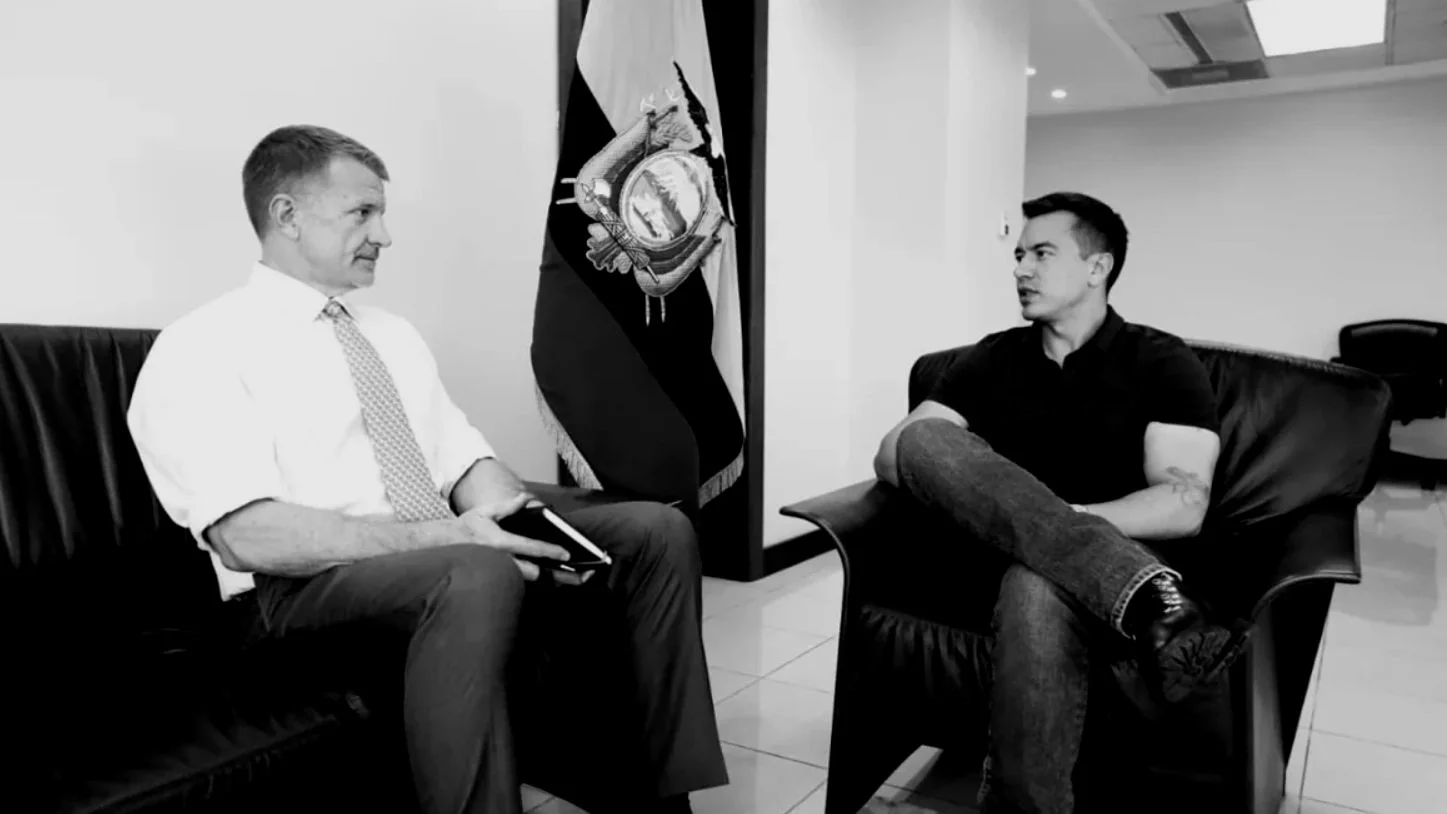
Furthermore, cases like the Guayaquil Four become all too normalized as the war on poor African communities in Ecuador intensifies through US-led militarism as President Noboa changes the constitution to allow foreign military bases, along with reaching a “strategic alliance” with private mercenary Blackwater’s Erik Prince to “fight organized crime.” Prince also negotiated contracts in Haiti last month to provide attack drones and training for an anti-gang unit. The increase in violence in the region also means profits for the private mercenaries, not to actually address violence against African peoples throughout the region, including in the United States, but to use as a proxy to intervene and support their geopolitical and imperialist interests.

The expanding role of SOUTHCOM not just in Haiti, Ecuador or the Caribbean but throughout the region, particularly through joint military exercises such as Operation Tradewinds with militaries in the region under the command of the US and NATO and increased military bases, from the Panama Canal down the Pacific Coast, is not unrelated to this expanding crisis of violence throughout the region. The war on crime, war on drugs and war on terror have exposed the parallels behind the use of state violence as a trojan horse for resource extraction whether in West Asia, including the genocidal onslaught in Palestine, violence against Yemen, Lebanon and the people of Syria, or the expanding use of violence in Trinidad and Tobago, Guyana or Suriname for resource extraction of fossil fuels. US imperialism is using the same playbook to justify its presence, expansion and full spectrum dominance.

While member states of the Community of Latin American and Caribbean States (CELAC) have condemned the intervention in Haiti, they do so while also upholding the Kingston Declaration , continuing a historic trend in the region of supporting neocolonialism in Haiti led by Brazil. Whether officially sanctioned as a UN mission or not, Western interventions have never been the answer for the Haitian people. More importantly, the lack of solidarity with Haiti undermines the sovereignty of all nations as Haiti is used as a laboratory for the rest of the region. It was precisely the lack of solidarity with Haiti that Nicaragua highlighted as to why they did not sign the Tegucigalpa Declaration - “[the text must] reject the extortions against and express unequivocal solidarity with the brotherly people of Haiti without external interventions.”

BAP invites organizations and individuals to join the U.S./NATO Out of Our Americas Network as a platform to collectively develop regional Pan-Africanist strategy to oppose intervention in Haiti, a core demand of the Zone of Peace campaign, through mass based popular struggle. As Haitian Flag Day approaches on May 18th, we call for renewed and strengthened solidarity with the people of Haiti, in connection with all African peoples, oppressed peoples, and popular movements of Our Americas struggling to free our region of US military and economic dictates.

The Black Alliance for Peace asserts the right of African/Black peoples across Our Americas to self defense and organized resistance in response to this escalating imperialist war against the masses of our people, whether in Port au Prince, Guayaquil, or Los Angeles. No compromise, no retreat!


Banner photo: An image of Erik Prince meeting with Ecuadorian President Daniel Noboa shared on Noboa's official X account. Daniel Noboa/X

Black Alliance for Peace and MANE Reflect on Ecuadorian Elections

Black Alliance for Peace and MANE Reflect on Ecuadorian Elections

PRESS RELEASE

Media Contact
communications@blackallianceforpeace.com
(201) 292-4591 


Black Alliance for Peace and MANE Reflect on Ecuadorian Elections

April 14, 2025 - The Black Alliance for Peace and Movimiento Afrodescendiente Nacional Ecuatoriano (MANE) reported back on the Ecuadorian presidential elections held on Sunday, April 13, 2025. Despite the fact the current president, Daniel Noboa, issued a last-minute decree (Decree 597) that sealed the northern and southern borders, intending to deny entry to international observers, the election team for the Black Alliance for Peace (BAP) was able to enter and observe the elections on the ground.

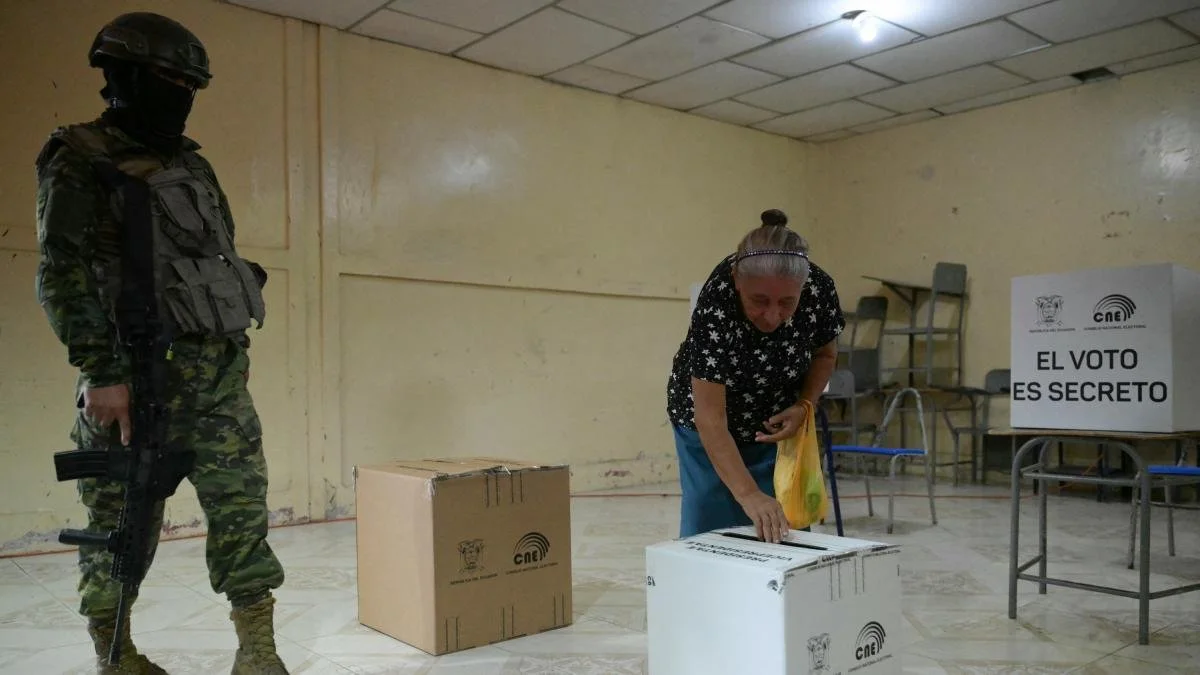
The National Electoral Council (Consejo Nacional Electoral) has declared Daniel Noboa the winner of the second round of elections, with over an 11-point lead. With this win, it is certain that Noboa’s declared “internal armed struggle” will continue to negatively and disproportionately impact Ecuador’s poor and AfroEcuadorian communities. While the election process ostensibly adhered to international standards, BAP observed several troubling elements, including an excessive military presence, particularly at polling stations located in predominantly AfroEcuadorian precincts. This is precisely why MANE invited an election observation delegation from the BAPs North South Project for People(s)- Centered Human Rights to monitor the situation in those majority African precincts in Guayaquil. It is also reflective of the ongoing human rights issues AfroEcuadorians continue to face since the illegal kidnapping and vicious murder of four AfroEcuadorian youth by Ecuadorian military officials nearly one month ago. These murders are indicative of the human rights crisis Ecuadorians, but particularly AfroEcuadorians, are facing due to the current government’s heavy-handed approach to the phony “War on Drugs.”

BAP’s delegation met with the families of the latest egregious violations to, and systemic dehumanizing of AfroEcuadorians who police snipers shot during an apparent raid on a Black community in a Guayaquil barrio. One died from the attack, and another is now permanently disabled, while a third teenager remains hospitalized and permanently paralyzed. All of these victims’ main crimes are that they are Black and poor.

These conditions directly connect to the situation in the region of Esmeraldas, which is more than 70% AfroEcuadorians, that was recently devastated by an oil spill after a pipeline operated by the state-owned petroleum company PetroEcuador ruptured and released approximately 25,000 barrels of oil.  Roughly 300,000 of the region’s 500,000 people and the livelihoods of fishermen, farmers, and others are facing dire conditions. The inadequate response to the devastation by the Ecuadorian government, as well as the global environmental community, showcases the environmental racism experienced by AfroEcuadorians in Esmeralda, which is endemic of environmental injustice shouldered by all oppressed Africans from Cancer Alley in the U.S. to Port Au Prince in the Revolutionary Republic of Haiti. BAP affirms the axiomatic nexus between increasing militarism and an increasing climate crisis that disproportionately impacts Africans and Indigenous peoples the world over.  

With Noboa’s win, these conditions will certainly deteriorate further. BAP’s concerns are highlighted by the very real danger of the fulfillment of ongoing efforts to expand the U.S. military’s presence in Ecuador as part of a larger conquest of South America’s Pacific coast. This, in turn, will exacerbate the existing militarized presence in Ecuador under the guise of security, already subjecting Afro, Indigenous, and poor Ecuadorians to daily human rights violations. The development of an independent, national AfroEcuadorian politics is even more urgent than before to not only counter U.S. and Ecuadorian reactionary right-wing forces but to ensure the human rights of AfroEcuadorians through the power of the people and popular mass movements.

To this end, BAP will continue to support MANE in developing an independent national AfroEcuadorian formation that will be able to identify and defend the fundamental human rights of the AfroEcuadorian people. The last nine months of collaboration between BAP and MANE exemplify this development and commitment to a popular process.

No Compromise 

No Retreat 


Banner photo: A woman votes at a polling station in Manabí, one of the provinces where changes were made to the polling stations for the presidential runoff, April 13, 2025 (Courtesy Photo AFP).