Viewing entries tagged
Latin America

The Caribbean People’s Debt to Cuba

The Caribbean People’s Debt to Cuba

The Caribbean People’s Debt to Cuba

By: Tamanisha J. John and Kevin Edmonds for Black Agenda Report.

Caribbean governments are betraying Cuba through silence and compliance with U.S. empire. The only way to challenge this failure of leadership is for the people to build an anti-imperialist movement.

Introduction

What we are seeing across the Caribbean in 2025-2026 is a total absence of political and moral leadership, specifically in regards to the failure of elected officials and prominent regional organizations like the Caribbean Community (CARICOM), to speak out against the criminal blockade and embargo of Cuba, and the imperialist attacks against Venezuela – which includes the violation of Venezuela’s sovereignty that resulted in the kidnapping of the Venezuelan President, Nicolás Maduro, and First Lady, Cilia Flores by the United States (US). 

We heed Tennyson Joseph’s (2025) warning:

Given the apparent weaknesses of Caribbean leaders in the face of US power, it is necessary for the Caribbean people, academia, civil society organizations to put pressure on their governments to resist the isolation of Cuba, or to themselves directly amplify their voices and their actions in direct support of Cuba and its people. The Caribbean simply cannot allow Cuba to fall. If Cuba fails, Caribbean sovereignty will come to an end.[1] 

We also echo Norman Girvan’s (2008) statement that the debt owed to Cuba is unpayable (“la deuda es impagable”)[2] and, as Horace Campbell (2025) writes, this debt is “not quantified in monetary terms.”[3] Instead, the debt owed to Cuba – by Caribbean people especially – is in real solidaristic terms. It is our duty to uplift regional unity against imperialist visions for domination in our region, given the sacrifices and solidarity of Cuba and its people to us. Cuba’s solidarity to the Caribbean region has brought progressive developments – including independence. Without the Cuban Revolution of 1959, the colonial pretense that island states could not be self governing – unless neocolonial governors were installed – was shattered. While anti-colonial movements shifted to neocolonial governments in the Caribbean, which garnered many of them US support (such as the US-supported dictatorship of François “Papa Doc” Duvalier), Cuba’s Revolution rejected that shift. 

The US imperialist vision for our region includes the denial of state sovereignties, and directing our external and internal policies so that foreign capital and the global capitalist system continue to sustain our underdevelopment. The US imperialist attacks on Cuba have only been emboldened by the lack of regional response to the imperialist attacks against Haiti and  Venezuela. Going beyond the issue of solidarity, as we will explain, the Cuban and Venezuelan Revolution have arguably been the biggest contributors of progressive development to the region – in terms of material support – for the past 60 and 20 years respectively. The silence amidst the imperialist attacks on Haiti and Venezuela cannot be allowed against Cuba. On this question of the unpayable debt of real solidarity, it “belongs to those who have benefited from Cuban solidarity and have yet to respond in kind” (Pambuzaka News Editors, 2025). While our focus here is on Caribbean states that have benefitted from Cuban (and Venezuelan) solidarity, Cuban internationalism has been global.

Though imperial narratives often frame Cuban aid and development assistance in a negative light, convincing large swaths of people internationally that Cuba’s extension of development assistance is “harmful,” we provide facts to correct this record. The new articulation of the “Monroe Doctrine,” which includes the “Trump corollary,” demonstrates the continuation of US imperialist strategy in the Western Hemisphere that directly forces compliance from the states in the region.

A Brief Note on the Importance of Revolution for the Caribbean

As far as the Caribbean is concerned, there are three countries that notably structurally transformed the region and regional dynamics in the 18th and 19th centuries. Those countries are Haiti, Cuba, and Grenada – in that order. The Haitian Revolution (1791-1804) rendered slavery structurally untenable in the Caribbean – forcing the first permanent abolition of slavery and rendered direct colonial control untenable.[4] The Cuban Revolution (1953-1959) continued the project of making US direct colonial (and legal) control structurally untenable, and asserted the Caribbean region's anti-imperialist right to sovereignty and self- determination. In real terms, the Cuban Revolution’s example provided Caribbean independence fighters and leaders with a model, or a small state being able to self-govern without territorial status or “association” designation, which had almost been “pre-determined” for the Caribbean, based on colonial histories.”[5] Nevertheless, numerous US regimes (and their proxies) denied Cuba’s revolutionary transformation, claiming instead that the island was simply a geopolitical proxy of the Union of Soviet Socialist Republics (USSR). 

The same could not be said for Grenada. The Grenada Revolution (1979-1983), picking up on this understanding of the Caribbean state’s anti-imperialist right to sovereignty and self- determination successfully took popular power. The Cuban example and its revolutionary aid to Grenada created the first regional project not tied to – or seriously supported by – the USSR, which was always a longstanding critique against the Cuban model. Previously led by dictator Eric Gairy, who was regarded as “democratic” given his ability to please the foreign capitalists and Western imperialists,[6]  revolutionary Grenada was able to pursue a Caribbean oriented, non-aligned path of development that challenged foreign control over a Caribbean economy. For the first time in the Caribbean region, an English-speaking Caribbean state was able to advocate ideas of ideological and developmental paths that did not align with imperialism, worker exploitation, or foreign ownership and exploitation of one’s economy and resources.[7] 

The World Bank was even forced to admit in its 1982 report that despite inheriting a deteriorating economy from the former dictator Eric Gairy, the policies and platform of the PRG were turning Grenada’s economy around. Grenada was one of the few countries in the Western hemisphere to see sustained, multi-year growth during a global economic downturn.[8] By 1983, 37% of the national budget was being spent on education and health, unemployment dropped to 14%, and the percentage of food imports dropped from over 40% to 28% at a time when market prices for agricultural products were collapsing worldwide. The short lived example of the Grenada Revolution proves that the people of the Caribbean have a material interest in being anti-imperialists. 

Cuban Internationalism, Net Benefit to the Caribbean (and The World)

On January 29th, 2026 the US President, Donald Trump, issued Executive Order 14380  escalating US imperialist strategy and economic warfare against Cuba and those that trade with the island –  by threatening  to tariff all of Cuba’s trading partners that directly or indirectly provide the island with oil.[9] The executive order (EO) went on to state that the US President had the power to modify the order in the event that Cuba and its trading partners found ways to sidestep US “national security and foreign policy objectives,”[10] directly signaling the intent of the EO to control states behavior and external relations. Paired alongside statements made by the US President that the US had effectively “taken control of Venezuelan oil”[11] and now had the power to “starve Cuba of oil”[12] – while threatening Mexico for sending oil to Cuba[13] – the new US attempt to destabilize Cuba for the purpose of eradicating the political institutions in Cuba and further undermining the Cuban government – to destroy the Revolution – was (and is) in full effect. The outcry against the EO by organizations and civil society in the Caribbean, and globally, was swift – even as many of the governments in the region, and abroad, that have benefitted from Cuban internationalism and anti-imperialist politics, were quiet. 

Many argue that leaders of Caribbean states are afraid of the overwhelming strength of the US military and the threats by the US Trump regime, to enact unilateral sanctions and tariffs. Nevertheless, this is no excuse for cowardice and complicity. We need only point to its unilateral actions against Cuba for 60+ years or the 1915 occupation of Haiti. And yet still, history shows courage – not cowardice – at opposing this US bully intent on directing the internal and external affairs of our Caribbean states. This is true even during the founding of the CARICOM by the leading independent states – Barbados, Guyana, Jamaica, and Trinidad and Tobago – in 1972, who opposed imperialist attempts to isolate Cuba in the Caribbean region. CARICOM rejected the isolation of Cuba by establishing formal diplomatic ties with the nation, paving the way for solidarity projects in technical cooperation, health, and education.[14]

Across the Caribbean today, various states' current and former Prime Ministers and Presidents partially owe their political successes to the infrastructure, social services and programs that directly come from, or received assistance from, states like Cuba. For instance, Venezuela’s PetroCaribe initiative and program – which provided discounted oil to the region to aid regional economic development – kept the Caribbean region afloat during a time of massive debt and declined investments. We need only see the dire consequences of the forced ending of projects such as PetroCaribe – through US sanctions and insistence – wherein it led to the fall in the standards of living for Caribbean people and increased regional debt and dependence. It is not a big leap, therefore, to suggest that abolishing medical and educational programs that Caribbean governments have with Cuba – again given US pressures and threats of sanctions or tariffs – will also have dire consequences for Caribbean peoples.

These destabilization campaigns by the US are not new to the Caribbean region. For instance, unable to paint the Grenada Revolution as a USSR proxy, US destabilization propaganda painted all positive developments in Grenada as nefariously planned “Cuban expansionism” into the country. Given that the Grenada Revolution highlighted that Caribbean people had a material interest in being anti-imperialists, public opinion was consistently constructed through US and Western propaganda with two purposes: (1) garner Caribbean support for Western models of development, and/or  (2) make populations more amenable via fear – through the prospect of use of force or sanction – to support Western imperialism and development models. 

This, the Grenada Revolutionaries themselves pointed out, was a successful strategy, given:

the substantial influence, and in some cases, control, which US imperialism and its allies in the industrial developed world, still exercise[d] over events in the Caribbean and in particular over some of the region's leaders.” [This was buttressed] “by threats of naval blockades, US military maneuvers in Caribbean waters, increased US military presence in Florida, Guantanamo Bay [, today in Puerto Rico and Haiti as well], the involvement of American ships in murderous plots to overthrow [revolutionary and/or progressive leaders], and the refusal of [US allied] countries” to sell revolutionary/progressive governments necessary military equipments to defend their sovereignty. Though these same countries sell to “fascist governments in South Africa [today, Israel and the UAE] to kill [Palestinian and African] black people.”[15]

Today, we see these same tactics in play: imperialist propaganda framing Cuban aid and development assistance to countries – in the form of education and or medical aid – as “terroristic” and “human trafficking,” alongside wider condemnations, by leaders, of communism. This is supported, however implicitly– by a wider turn of cowardice and complicity by Caribbean governments. This is why it is imperative that we correct the record on Cuban internationalism.

Cuban Medical and Education Support in the Caribbean

Today, imperialist counter-narratives are working hard to obscure Cuban internationalism. For us, it is important that we not assume that these counter-narratives by US imperialism will be outright rejected – given the current climate of cowardice and fear. The truth is, that since the 1970s, Cuba has offered life changing opportunities in the form of scholarships to train tens of thousands of Caribbean nationals to be doctors, nurses, technicians, engineers, agronomists, teachers and other professions, at no cost. For example, a total of 14 Cuban doctors, nurses and technicians came to Jamaica in 1976 to support the staff and community served by the Savannah-la-Mar Public General Hospital.[16] This was extremely important at the time, given structural adjustment policies in the Caribbean, including Jamaica, which cut the social services that could be accessed by Caribbean populations. Fast forward 30+ years later, and in 2025, the Jamaican government announced that 88 Cuban doctors, 199 nurses and another 100 technicians were working across the country in the Cuban Medical Cooperation Program.[17] For countries across the region still grappling with the consequences of IMF structural adjustment and a host of underdeveloped public service sectors that it produced, we cannot underestimate how important Cuban assistance has been to Caribbean health and education sectors. 

Jamaica as an example is instructive, because it has one of the harshest austerity budgets in the world – mandated to run a budget surplus of 7.5%.[18] This program necessitated drastic cuts to government spending in order to pay down debt, resulting from following US/IMF led budgets over the past 40+ years. It is within this context, where Cuban medical assistance has acted as a safety valve, helping to offset personnel shortages and service gaps that are magnified by the systemic brain drain as underpaid and overworked healthcare workers have been under a wage freeze and thus seek higher salaries elsewhere, often in the US. This is why during the initial push for states to rid themselves of medical cooperation with Cuba, Caribbean leaders had such a strong reaction towards the US efforts to undermine these programs and label them as human trafficking. On top of the personnel, Cuba has also helped to establish long running programs to refurbish medical equipment, and the Jamaica/Cuba Eye Care Programme has undertaken thousands of sight-saving surgeries across Jamaica for free.[19] In fact, between 2004 and 2019 the Cuba-Venezuela program, Operación Milagro, restored the vision of 4 million people across 34 countries in the Caribbean and Latin America, for free, by providing eye surgeries to low-income communities and people.[20] 

Though the economic contribution of Cuba’s medical assistance to the Caribbean has not been broken down by individual countries, it can be reliably valued in the billions of dollars. Contrast this with the fact that a country like Jamaica has paid more than $19 billion to the IMF and World Bank during the decades of structural adjustment, money that could have gone to help build and maintain a public healthcare system, Cuba’s medical solidarity is truly unmatched.[21] Cuba’s internationalism is only threatened by US and Western imperialism, seeking to cut communities off from healthcare given their vision of Caribbean lives as disposable. Jamaica, like other Caribbean governments, must reject this from happening. 

PetroCaribe

PetroCaribe was a preferential energy alliance started by Venezuela in 2005 with Cuba also a founding member of the oil initiative. It offered countries in the region the ability to purchase oil at preferential terms, paid for below market rates (of 1 - 2 percent), with due dates ranging between 15 - 20 years. This stood in stark contrast to traditional oil purchases which required full payments in 90 days, and typically required states in the Caribbean and Latin America to borrow money (at 5 -15 percent) to pay the oil companies directly. The preferential terms of PetroCaribe allowed cash strapped governments from across the Caribbean to redirect money that would have otherwise gone towards oil related debt payments, into infrastructure and social service provisions. It has been estimated that PetroCaribe cost the Venezuelan government between 6 - 8 billion USD per year until it ended in 2019. 

For Caribbean countries like Guyana that benefitted from PetroCaribe, it paid up to $3 billion of its oil debt in the form of goods – like rice exports to Venezuela.[22] This is important to highlight given that PetroCaribe repayments by Caribbean countries did not necessarily happen on monetary terms, but in this spirit of regional solidarity. Through separate agreements with embargoed Cuba, Venezuela – again in this spirit of solidarity – sent Cuba about 100,000 barrels of oil per day.[23] 

What this means is that Cuba and Venezuela were, at the VERY LEAST, larger donors to the Caribbean over the past 20 years far surpassing that of the US and its Western allies. Yet, today, both Cuba and Venezuela are being discarded in favor of the US who engages with the region through threats of military intervention, economic blackmail, and travel bans. This is important, as it turns the argument that Caribbean governments must maintain – not just friendly relations with the US, but to take a downright subservient position vis a vis the US given development and monetary ties, all the more ludicrous. It is true that the US is the richest country on the planet, and it is also true that the US has instead been the biggest saboteur of Caribbean development projects and progressive programming – given its ideological disdain of solidarity, whether it be from Cuba, Venezuela, (and today, China).

To put Cuban and Venezuelan support in context, reports from the Congressional Research Service, USAID and ForeignAssistance.gov have highlighted that from 2010 to 2024, the US has contributed between $7.5 - 9 billion to the Caribbean IN TOTAL, with the majority of that funding going to the ongoing occupation and failed “reconstruction” of Haiti – enriching US institutions, NGOs, and military contractors.[24] This is also not conjecture. Forensic reporting by the Centre for Economic and Policy Research (CEPR) broke this down further, revealing that Haitian reconstruction efforts were largely a money laundering exercise, with 92 percent of USAID funding going to DC area firms, and less than 1 percent to Haitians and the government.[25] In contrast to US thievery, after the 2010 earthquake, Venezuela cancelled Haiti’s outstanding PetroCaribe debt, with Hugo Chavez stating “Haiti has no debt with Venezuela…on the contrary, it is Venezuela that is historically indebted to that nation.”[26] 

At the same time as Venezuela announced the debt forgiveness, the puppet government of Michel Martelly would be installed by Hillary Clinton in a rigged election, and would eventually be accused of stealing an estimated $3.8 billion in PetroCaribe funds. Because that stolen money came from Venezuela, and not US oil companies, Martelly was able to live the high life in Florida, rather than face justice for his crimes which led to ongoing collapse of both the Haitian state and later assisted in the bankrupting of the PetroCaribe program given large losses amidst US sanctions on Venezuela.

None of this had to happen, but was made to happen. Dumbfoundedly, Caribbean leaders are consistent in their position that they cannot afford to alienate the US government – who they claim is their largest patron, customer, investor and supporter. We must be clear that US foreign investment has yet to build a hospital or train doctors – but has fractured regional unity while siphoning billions out of the region through the treadmill of debt repayment and economic policies which discriminate against domestic production and regional trade. 

“Donroe Doctrine,” Down with Sovereignty: An Imperialist Tool of Forced Compliance

Only anti-imperialist solidarity can push back US bullyism in our region. After invading, bombing, and violating Venezuela's sovereignty – Trump proclaimed US “dominance in the Western Hemisphere will never be questioned again,” noting that “they call this the “Donroe Doctrine.””[27] 

Under US President Trump’s tenure, the “Donroe Doctrine” is only the recent iteration of US imperialist strategy to downplay state sovereignty through economic warfare, psychological warfare, and violent military violations of sovereignty via bombings, invasions, kidnappings, assassinations, extrajudicial murders, and weapons testing. 

The forced policy compliance of states thus far, in this new “Donroe Doctrine,” have been specifically done in ways that help to enrich individual members of the Trump regime, his friends, and the US military industrial complex seeking new ways to accrue profit outside of West Asia (commonly referred to as the “Middle East”). These blatant violations and conflicts of interests, while manifested through the Trump regime, is tolerated amongst a large swath of US government officials and the US state apparatus given an overall agreement with the Trump regime’s attempt to (re)assert US hegemony in the Western Hemisphere amidst perceived challenges posed by China, Russia, Iran, Hezbollah, and Hamas (all states and names that the administration has thrown around). 

As various Prime Ministers talk about pressures from the US government to cut medical and educational ties with Cuba, as well as pressures from the US government to install various kinds of military equipment to surveil states like Cuba and Venezuela, as well as US threats of sanctions and travel and visa bans for not complying with US policy – we must be very clear about US imperialism being the primary contradiction and the destabilizing force in the region.

It is not by accident that the US has extrajudicially murdered 140+ Caribbean and Latin American nationals in our countries territorial waters. It is not by accident that after kidnapping the President and First Lady of Venezuela, the US claimed to own and control Venezuelan oil and land. It is not by accident that the US has threatened to sanction Mexico, Cuba’s largest oil trading partner as of 2024 given the sanctions against Venezuela, if it sends oil to Cuba. It is not by accident that Cambridge Analytica helped to usher in, in Trinidad and Tobago one of the most hostile Prime Ministers seeking to actively undermine Caribbean unity in favor of US Trumpism. It is not by accident that US President Trump talked about new technologies used to invade and bomb Venezuela, resulting in the deaths and injuries of hundreds, only to then brag about similar technologies being used in Gaza. It is not by accident that US mercenaries are now freely operating drones in Haiti, yet again contributing to the overwhelming death toll by US weapons in the region. 

In 2025, three out of four of the leading CARICOM states  – Guyana, Jamaica, and Trinidad and Tobago – refused to align with the Community of Latin American and Caribbean States (CELAC) to oppose growing US militarism in the region.[28] These states consented and complied with US militarism, and have been notably silent on US war crimes committed in the region and against Caribbean people – except for Trinidad and Tobago, which has done nothing but extol and grant numerous praises on the US capacity, intent, ability, and actions of killing Caribbean and Latin America people.[29] Amidst this fact, Guyana’s silence has been accompanied by increased security collaborations with the US[30]; Jamaica’s silence has been accompanied by quiet dismissals of Cuba’s medical programs[31] – it does not take a genius to surmise where those two governments also stand in relation to the “Donroe Doctrine.”

Conclusion 

The collapse of the Grenada Revolution and the role that Caribbean leaders played in undermining it continues to traumatize the region to this day. Given these facts, the concern regarding Caribbean collaborators enabling the destruction of the Bolivarian Revolution in Venezuela, and the Cuban Revolution in Cuba, is concerning for all Caribbean people who care about justice, fairness, progressive development, and the sovereignty of our sisters and brothers in the region. 

Today, Cuba’s humanitarian crisis is sparked by direct imperialist aggression against it and its revolution faces a critical point given US military might amassed in the region – that has already been deployed against Venezuela. US imperial hubris has long targeted Cuba via assassination attempts, biological, chemical, commercial, financial, medical and agricultural warfare – as well as the wider Caribbean region by committing one of the deadliest terrorist attacks in 1976 against Cubana Airlines Flight 455.[32] This is only surpassed by the ongoing US terror campaign of extrajudicial murder in our region targeting boats of fisherpeople – whose death toll of 145+ has yet to stop, and at the time of this writing, rises weekly. The January 3rd, 2026 attack on Venezuela has only emboldened US violence in our Caribbean region, and Isaac Saney (2026) provides us with some insight, as to what an attack on Cuba and its Revolution would mean:

The crushing of the Cuban Revolution would embolden imperial aggression everywhere. It would reinforce the doctrine that no country, however principled its aspirations, can defy the dictates of global capital and survive. It would deepen cynicism and despair among oppressed peoples and movements struggling for emancipation, sending a chilling message that resistance is futile and alternatives are illusions.”[33] 

In other words, just as we have yet to address where the Grenadian Revolution left off – that is building up anti-imperialist movements and states that can weaken the dictatorship of foreign capital in our region not determined, or capped, by US and Western foreign interests – a blow to the Cuban Revolution would mean erasing those gains that it made for us, namely: making US direct colonial and legal control of Caribbean states untenable. If we acknowledge that the “Donroe Doctrine” seeks to undermine sovereignty in favor of states being forced to comply with the policy interests of the US in ways that enrich the Trump regime, its allies, and the US military industrial complex – then not engaging in struggle with Cuba against US imperialist aggression means throwing out the red carpet for US direct control over Caribbean people and resources.

We believe that it is our duty to be in real solidarity with Cuba by opposing imperialism in our region and fighting alongside them in their struggle against continued US imperialist aggression in the Caribbean and elsewhere. It is our duty to remind the world that the Caribbean people have a material interest in being anti-imperialist and it is for this reason that the US has targeted Cuba for decades, as they shine as a bright beacon reminding us of that fact.


[1] Tennyson S.D., Joseph. ”Cuba and Caribbean Sovereignty: An Unpayable Debt.” February 20, 2026, Pambuzakahttps://www.pambazuka.org/Cuba-and-Caribbean-Sovereignty

[2] Norman, Girvan. 2008. ”The Debt is Unpayable, La Deuda es Impagable.” February 20, 2026, Pambuzaka, https://www.pambazuka.org/Debt-is-Unpayable

[3] Campbell, Horace. ”Quito Cuanavale and the break from Western Capitalist and Racist Domination: Africa’s Debt to Cuba” February 20, 2026, Pambuzaka, https://www.pambazuka.org/Cuito-Cuanavale-Africa-Debt-to-Cuba

[4] Knox, Robert. 2016. ”Valuing Race? Stretched Marxism and the Logic of Imperialism.” London Review of International Law 4(1), 81-126

https://law.unimelb.edu.au/__data/assets/pdf_file/0007/2356018/Knox,-Valuing-Race-Stretched-Marxism-and-the-logic-of-imperialism.pdf

[5] Ibid.

[6] Bishop, Maurice. [post humous]. “Appendix 1: Fascism: A Caribbean Reality?” in In Nobody's Backyard: Maurice Bishop's Speeches, 1979–1983. Pgs. 243-250, https://static1.squarespace.com/static/5c48e799d274cb651051c404/t/698b90a208a1855ff6424e8d/1770754210401/In+Nobodys+Backyard.pdf

[7] Bishop, Maurice. [post humous]. “Appendix 2: We have the Right to Build Our Own Country in Our Own Likeness ” in In Nobody's Backyard: Maurice Bishop's Speeches, 1979–1983. Pgs. 243-250, https://static1.squarespace.com/static/5c48e799d274cb651051c404/t/698b90a208a1855ff6424e8d/1770754210401/In+Nobodys+Backyard.pdf

[8] World Bank Country Study. 1985. Grenada Economic Report https://documents1.worldbank.org/curated/en/771531468030608851/text/759380PUB0Box30nada0Economic0Report.txt

[9] White House. “Addressing Threats to the United States by the Government of Cuba.” January 29, 2026 https://www.whitehouse.gov/presidential-actions/2026/01/addressing-threats-to-the-united-states-by-the-government-of-cuba/

[10] Ibid

[11] Donald J. Trump. “I am pleased to announce that…” January 6, 2026, Truth Social

https://truthsocial.com/@realDonaldTrump/posts/115850817778602689

[12] Donald J. Trump. “Cuba lived, for many years, on large amounts of OIL and MONEY from Venezuela…” January 11, 2026, Truth Social

https://truthsocial.com/@realDonaldTrump/posts/115876460615555838

[13] Barrera, Jorge and Tania Miranda Perez. “”Trump Blindsided Mexico with Cuba Oil Export Tariff Threat, says Mexican President.” January 30, 2026 CBC News https://www.cbc.ca/news/world/mexico-cuba-trump-oil-tariff-9.7069046

[14] Antillean Media Group. “1972: How Four Caribbean Countries Led the Collapse of the Cuban Embargo in the Americas.” AMG, https://www.antillean.org/1972-caribbean-leaders-led-collapse-cuban-embargo-americas/#:~:text=The%20decision%20these%20leaders%20took,diplomatic%20relations%20with%20160%20countries%E2%80%9D.

[15] Free WestIndian Editorial. “Of Yard Fowls, Uncle Toms and Political Crapouds of Hypocrisy, Spite and Intimidation.” December 8, 1979.

[16] Lewis, Anthony. “Cuba Marks 60 Years of Medical Mission — 47 Years Service to Jamaica.” May 28, 2023, Jamaica Observer https://www.jamaicaobserver.com/2023/05/28/cuba-marks-60-years-of-medical-mission-47-years-service-to-jamaica/

[17] Linton, Latonya. “Partnership with Cuba Will Continue — Health Minister.” June 11, 2025, Jamaica Information Service (JIS) https://jis.gov.jm/partnership-with-cuba-will-continue-health-minister/

[18] Johnston, Jake. Partners in austerity: Jamaica, the United States and the international monetary fund. No. 2015-09. Center for Economic and Policy Research (CEPR), 2015. https://cepr.net/publications/partners-in-austerity-jamaica-the-united-states-and-the-international-monetary-fund/

[19] Ministry of Health and Wellness. “The Jamaica-Cuba Eye Care Programme.” October 22, 2023, Jamaica Information Service (JIS)  https://jis.gov.jm/information/get-the-facts/the-jamaica-cuba-eye-care-programme/

[20] Gorry, Conner. 2019. “Six Decades of Cuban Global Health Cooperation.” MEDICC Review 21 (4): 83-92

https://mediccreview.org/wp-content/uploads/2019/09/MediccReview-October2019.pdf

[21] Johnston, Jake, and Juan A. Montecino. 2012. Update on the Jamaican economy. Washington DC: Center for Economic and Policy Research. https://cepr.net/publications/update-on-the-jamaican-economy/

[22] Thomas, Clive. “PetroCaribe and the Affliction of ‘Pathological Altruism’.” March 15, 2015, Stabroek News https://www.stabroeknews.com/2015/03/15/features/petrocaribe-and-the-affliction-of-pathological-altruism/#google_vignette

[23] Ibid.

[24] Meyer, Peter J. 2023. U.S. Foreign Assistance to Latin America and the Caribbean: FY2023 Appropriations. CRS Report No. R47344. Washington, DC: Congressional Research Service. https://www.congress.gov/crs-product/R47331;

U.S. Agency for International Development and U.S. Department of State. "Foreign Assistance Data Dashboard: Caribbean Region (2010–2025)." ForeignAssistance.gov.;

U.S. Agency for International Development. "U.S. Overseas Loans and Grants: Greenbook." USAID Explorer. https://explorer.usaid.gov/aid-trends.

[25] Johnson, Jake. 2018. “Where Does the Money Go? Eight Years of USAID Funding in Haiti.” Center for Economic and Policy Research (CEPR), https://cepr.net/publications/where-does-the-money-go-eight-years-of-usaid-funding-in-haiti/

[26] Schepers, Emile. 2010. “Venezuela Cancels Haiti’s Debt.” People’s World, https://www.peoplesworld.org/article/venezuela-cancels-haiti-s-debt/

[27] Este, Johnathan. 2026. “Greenland, Venezuela and the ‘Donroe Doctrine’.” The Conversation, https://theconversation.com/greenland-venezuela-and-the-donroe-doctrine-273041

[28] Watts, Jay. “CELAC Unity Shattered by Minority Siding with US Imperialism.” Mexico Solidarity Media September 4, 2025, https://mexicosolidarity.com/celac-unity-shattered-by-minority-siding-with-us-imperialism/

[29] Associated Press. “Trinidad and Tobago Leader Praises Strike and Says US Should Kill All Drug Traffickers ‘Violently’.” CNN, September 3, 2025, https://www.cnn.com/2025/09/03/americas/trinidad-tobago-caribbean-us-venezuela-strike-intl-latam

[30] News Room Guyana. “”Guyana Supports Democratic Transition in Venezuela and Maintenance of Region as Zone of Peace - President Ali.” NewsRoomGY, January 3, 2026, https://newsroom.gy/2026/01/03/guyana-supports-democratic-transition-in-venezuela-and-maintenance-of-region-as-zone-of-peace-president-ali/

[31] Ciber Cuba Editorial Team. “Jamaica’s Minister says they are Renegotiating the Medical Program with Cuba under Pressure from the United States.” February 17, 2026, CiberCuba, https://en.cibercuba.com/noticias/2026-02-17-u1-e208933-s27061-nid321094-ministro-jamaica-dice-renegocian-programa-medico#google_vignette

[32] Pambuzaka News Editors. 2026.  “The Debt is Ours: Cuba, Solidarity, and the Obligation of the World.” Pambuzakahttps://www.pambazuka.org/Debt-is-Ours-Cuba-Solidarity 

[33] Saney, I. “Cuba Must Not Fall - Its Revolution Matters to the Whole World.” Morning Star February 13, 2026. https://www.morningstaronline.co.uk/article/cuba-must-not-fall-its-revolution-matters-whole-world

Tamanisha John is an Assistant Professor at York University. She is a member of the Black Alliance for Peace (BAP), Caribbean Solidarity Network (CSN), and the Anti-Imperialist Scholars Collective (AISC). @tamanishajohn (Twitter and Instagram)

Kevin Edmonds (@kevin_edmonds) is a member of the Toronto-based Caribbean Solidarity Network  (CSN), an organization committed to the principles of Caribbean Liberation and Unity across the region as well as throughout the Diaspora. He is also an assistant professor in the Caribbean Studies Program at the University of Toronto.
The Popular Steering Committee for a Zone of Peace in Our Americas Welcomes the Reaffirmation of Our Region as a Zone of Peace

The Popular Steering Committee for a Zone of Peace in Our Americas Welcomes the Reaffirmation of Our Region as a Zone of Peace

Calls on the Grassroots Organization of the Masses of the Peoples of Our America to Unify Our Struggles Against the Common Enemy

PRESS RELEASE

Media Contact
zonadepaz@protonmail.com 

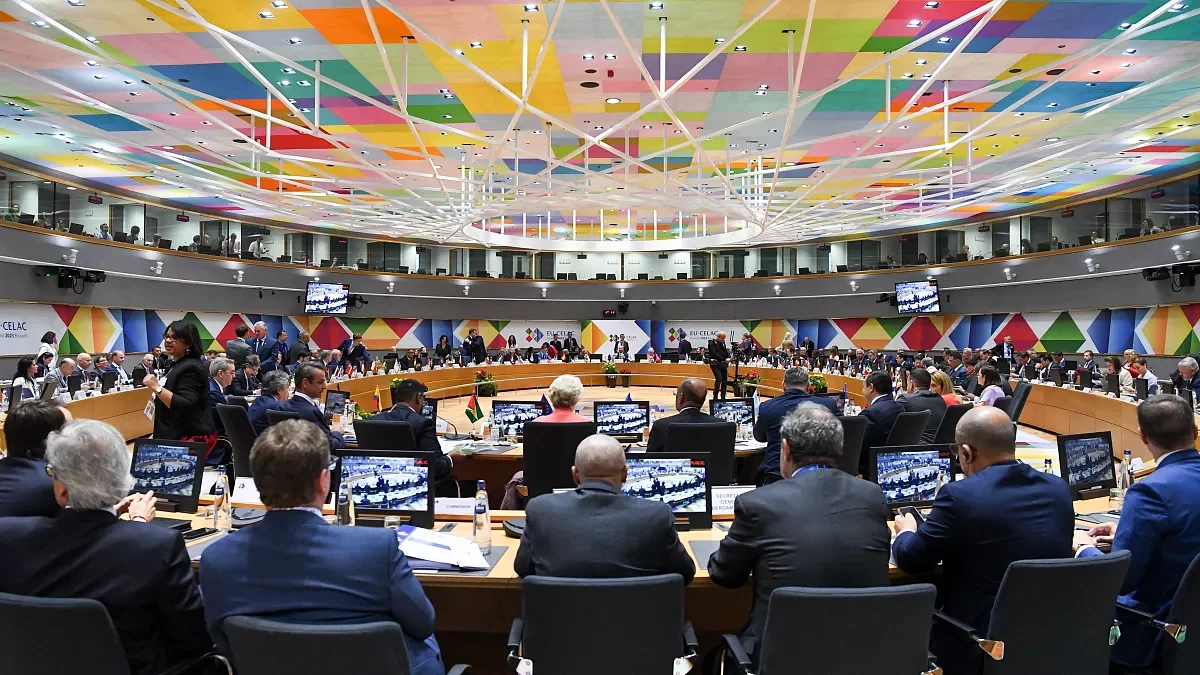
November 10, 2025 - The Social component of CELAC met over the last two days on November 8-9, 2025 in Santa Marta, Colombia with representation from social movements, mass based organizations and civil society coming together with the absolute clarity and necessity to make our region a Zone of Peace to combat and confront the US/NATO led aggressions in the Caribbean and Pacific against Venezuela, Colombia and the region at large. 

We had participants of the Popular Steering Committee for a Zone of Peace in Our Americas (PSC) in these meetings and participation at all levels amplifying the call from the masses to unify our struggles against our common enemy - the US/EU/NATO Axis of Domination. As the final declaration from the summit states, 

Latin America and the Caribbean play a decisive and strategic role in the struggle to consolidate a multipolar international system that successfully incorporates all states and peoples in full equality of conditions within the dynamics of world politics and economy. This breaks with the logic that normalizes the dominance of some states over others in the international system, making it possible to create conditions for Our America to become a significant center of power that could be decisive in the most complex decisions of international politics.

We have to unite to defeat the imperialist aggression against the Bolivarian people of Venezuela, poor fishermen off the coast of the Caribbean and Pacific from Ecuador, Mexico, Trinidad and Tobago or Venezuela, to the struggle for Haitian self determination against a new US led occupation force under the cover of the so called international community via the UN, to the struggle against ICE community raids in the streets of NY, LA and Chicago among others. 

To realize these objectives, the Popular Steering Committee is participating in the week of action Nov 15-23 in defense of Venezuelan sovereignty and calls for the organized masses of the region to also participate and amplify our collective voices on November 19th for a Regional Day of Action, and the continued development and expansion of the US/NATO Out of Our Americas Network as an organizational structure and platform from which to communicate, coordinate and successfully execute the expulsion of the US/NATO.

We call on the masses of Our Americas to unite to the Week of Action in Defense of Venezuelan Sovereignty with a key focus on:

1. Close the bases - Shut down the over 76 SOUTHCOM military bases throughout the Caribbean and Latin America. This includes the expansion into the Galapagos Islands, off the coast of Talara, Piura, and along the entire Pacific Coast, and others. 

2. Reaffirm Puerto Rican independence and Haitian sovereignty - Puerto Rican sovereignty and independence are a necessity to end current military expansion and aggression in the Caribbean against Venezuela as well as long-term guarantee of US/NATO forces out of Our Americas. The popular struggle for Haitian self-determination is key to the guarantee of a true Zone of Peace. The cradle of revolution in Our Americas has been and always will be Ayiti.

Image: Courtesy of Frederic Sierakowski/ European Union

International Organizations Condemn the Ecuadorian Government in the Guayaquil Four Case

International Organizations Condemn the Ecuadorian Government in the Guayaquil Four Case

La traducción al español está más abajo


International Organizations Condemn the Ecuadorian Government in the Guayaquil Four Case

Justice and Reparations for Steven, Josué, Ismael, and Nehemías“…We are like the straw on the moor that is pulled out and grows back.” Dolores Cacuango

The Solidarity Roundtable for the Guayaquil 4 (MSL4 GYE), is a space created by the National Ecuadorian Afro-descendant Movement (MANE), the Permanent Committee for the Defense of Human Rights (CDH), the Pueblo Negro organization, the Center for Rural Promotion (CPR), the Association of Popular Artists, and countless civil associations, community organizations, and individuals are the signatories of this international complaint.
The MSL4 GYE denounces before an international audience the arbitrary detention and then the subsequent extrajudicial execution of the 4 children from Malvinas, Guayaquil, on December 8, 2024.

The MSL4 GYE demands from the Ecuadorian State, before international opinion, total transparency in the handling of the case and of the 16 detained military personnel as the material authors of the detention and subsequent execution of the four children from Malvinas, Guayaquil, Ecuador - Steven, Josué, Ismael and Nehemías.

The MSL4 GYE demands justice, transparency, and a speedy trial that is being carried out, and demands that the intellectual authors of the detention and subsequent extrajudicial death of the four children from Malvinas, Guayaquil, Ecuador - Steven, Josué, Ismael and Nehemías be identified.

The signatories of this document fully support what is expressed, and adhere with their signature to this international denunciation and to the Manifesto for the four children of the Malvinas, Guayaquil, Ecuador.

[See those signed on below]


———————————————- En español ———————————————-

Organizaciones Internacionales Denuncian el Gobierno Ecuatoriano en el Caso de los Cuatro de Guayaquil

“Justicia y reparación para Steven, Josué, Ismael, y Nehemías.”

“… Somos como la paja del páramo que se arranca y vuelve a crecer.”  Dolores Cacuango.

 La Mesa de Solidaridad por los 4 de Guayaquil (MSL4 GYE), es un espacio creado por el Movimiento Afrodescendiente Nacional Ecuatoriano (MANE), el Comité Permanente por la Defensa de los Derechos Humanos (CDH), la organización Pueblo Negro, El Centro de Promoción Rural (CPR),  la Asociación de Artistas Populares, y un sinnúmero de asociaciones civiles, organizaciones comunitarias, y personas naturales son los firmantes de esta denuncia internacional.

La MSL4 GYE denuncia ante la opinión internacional la detención arbitraria y luego la posterior ejecución extrajudicial de los 4 niños de las Malvinas, Guayaquil, el 8 de diciembre del 2024.

La MSL4 GYE exige al Estado Ecuatoriano, ante la opinión internacional, total transparencia en el manejo del caso y de los 16 militares detenidos como los autores materiales de la detención y posterior ejecución de los cuatro niños de la Malvinas, Guayaquil, Ecuador, Steven, Josue, Ismael y Nehemias.

La MSL4 GYE demanda justicia, transparencia, y celeridad, en el juicio que se está llevando a cabo, y exige que se identifique a los autores intelectuales de la detención y posterior muerte extrajudicial de los de los cuatro niños de la Malvinas, Guayaquil, Ecuador, Steven, Josue, Ismael y Nehemias.

Los firmantes de este documento están en total apoyo de lo expresado, y se adhieren con su firma a esta denuncia internacional y al Manifiesto por los cuatro niños de las Malvinas, Guayaquil, Ecuador.  


Firmado | Signed on

Black Alliance for Peace / La Alianza Negra por La Paz

Diáspora Pa’lante Collective - Puerto Rico, EEUU

Movimiento Evita - Argentina

AfroResistance - Panama, EEUU

Red de Organizaciones AfroVenezolana - Venezuela

Caribbean Movement for Peace and Integration - Barbados, Caribe

Assembly of Caribbean Peoples - Trinidad & Tobago, Caribbean

Oilfields Workers Trade Union - Trinidad & Tobago

Kallpawan - EEUU, Perú

Observatorio de Derechos Humanos de los Pueblos - México, regional

Acción Afro-Dominicana - Dominican Republic, regional

Red Barrial Afrodescendiente - Cuba

Alliance for Global Justice

Organization for Caribbean Empowerment

World Beyond War/Un Mundo Más Allá de la Guerra - regional

Proceso de Comunidades Negras (PCN) - Colombia

Coordinadora Política de Mujeres Cotopaxi - Ecuador

Frente de Migrantes Organizados de la Republica de Argentina - Argentina

Mujeres Luminosa de Napo - Ecuador

SOS Violencia Loja - Ecuador

Red de Guardianes del Patrimonio Cultural y Natural de Manabí - Ecuador

Asamblea de los Pueblos - Argentina, regional

Federación de Estudiantes Secundarios del Ecuador - Ecuador

Fundación Rehabilitación Desde El Corazón - Ecuador

Comuna Rio Santiago Cayapas - Ecuador

Colectivo Entretejidas - Ecuador

Fundación Servicios Integrados para el Desarrollo SIDE - Ecuador

Asociación Madre Sabia - Ecuador

Esmeraldas Libre - Ecuador

Fundación Semillas hacia el Futuro - Ecuador

grupo cultural ORISHA la bomba - Ecuador

Equipo Docentes, Capitulo Ecuador - Ecuador

Junta Patriótica del Ecuador - Ecuador

La Cubeta Batucada Feminista - Ecuador

Fundación Chapil - Ecuador

Centro de Documentación en Derechos Humanos "Segundo Montes Mozo S.J." (CSMM) - Ecuador

Nina sonkoy musica andina - Argentina

Comuna Ancestral Afrodescendientes e Indígena de Tapiapamba  - Ecuador

Colectivo Mujeres de Asfalto  - Ecuador

Observatorio Ciudadano de Servicios Públicos - Ecuador

Red Nacional de Feministas por kos derechos Humanos, Ecuador - Ecuador

Asociación de Artistas de la Economía Popular y Solidaria - Ecuador

Fundación Educativa Ecuador Sisakuna - Ecuador

Tejido Violeta Galápagos  - Ecuador

Acción Antiprohibicionista Ecuador  - Ecuador

Batuka Candelabras Galápagos  - Ecuador

La María Verde - Ecuador

Coordinadora Política de Mujeres Ecuatorianas de Chimborazo - Ecuador

FUNTUVRISA Ecuador F.Talentos Unidos por la Vida y la Familia RISA - Ecuador

Transformar Argentina - Argentina

Maestros por la Revolución - Ecuador

Movimiento de Mujeres de El Oro - Ecuador

Hood Conmunist Blog - United States

Asamblea Nacional Ciudadana-Guayas-Ecuador - Ecuador

ANC Santa Elena - Ecuador

Red de Maestros y Maestras por la Revolución Educativa  - Ecuador

Fundación Ali Primera por la Patria Buena - Venezuela

Bolivarianos Alfaristas de la RC5 - Ecuador

Frente de Defensa Petrolero Ecuatoriano - Ecuador

Partido Comunista del Ecuador - Ecuador

Instituto Cultural Nuestra América - Ecuador

Centro de Promoción Rural  - Ecuador

Unión Nacional de Periodistas Núcleo del Guayas  - Ecuador

Observatorio Sociolaboral y del Diálogo Social en el Ecuador OSLADE  - Ecuador

Foro del agua Santa Elena - Ecuador

La Esquina de la Resistencia - Ecuador

Arte Por La Vida - Ecuador

Casa de la Abuela Jaguar - Ecuador

Comité Proparroquialización de Monte Sinahí  - Ecuador

Colectiva de Mujeres Tejedora Manabita  - Ecuador

Mujeres Luna Creciente Ecuador - Ecuador

Fundación e-comunicar - Ecuador

Consejo Consultivo de Diversidades Sexo-genéricas del DMQ - Ecuador

Mesa Autónoma Representativa MAR LGBTIQ sede Quito DM  - Ecuador

Revolución Cultural - Ecuador

Centro Cultural Café Galeria Barricaña - Ecuador

Colectivo de Unidad Democrática  - Ecuador

Fundación Derecho al Buen Vivir - Ecuador

Danza Zoomorfa Ancestral - Ecuador

Colectivo Cultural la Vereda - Ecuador

Consejo Nacional de Derechos Humanos y de la Naturaleza del Ecuador - Ecuador

Colectiva de Antropólogas del Ecuador  - Ecuador

MUCT - Ecuador

Colectiva de Antropólogas del Ecuador - Ecuador

Confederación Comarca Afro ecuatoriana del Norte de Esmeraldas - Ecuador

Fundación Semillas hacia el Futuro (ORISHA)

Firmantes individuales

Marjorie Lopez Merchan - Ecuador

Marco Vargas - Ecuador

Gloria Zabala - Ecuador

Piedad Ortiz - Ecuador

Dr. Cinthia M. Campos-Hernandez - EEUU

Luis Vicente Pachacama Guallichico - Ecuador

Dolores Bolaños - Ecuador

Isabel Iturralde - Ecuador

Janneth Moreano - Ecuador

Byron Joel Castillo Tenorio  - Ecuador

An Open Letter to His Excellency, Mr. Andrés Manuel López Obrador (AMLO), President of Mexico, on the Renewal of the UN Occupation of Haiti

An Open Letter to His Excellency, Mr. Andrés Manuel López Obrador (AMLO), President of Mexico, on the Renewal of the UN Occupation of Haiti

Español abajo
Kreyol anba

NO TO OCCUPATION! YES TO SELF-DETERMINATION!

An Open Letter to His Excellency, Mr. Andrés Manuel López Obrador (AMLO), President of Mexico, on the Renewal of the UN Occupation of Haiti

Dear President López Obrador,

We, the undersigned, condemn in the strongest possible terms Mexico’s spearheading of the renewal of the mandate of the United Nations Integrated Office (BINUH) in Haiti. The Haitian people view BINUH’s presence as a foreign occupation that, since 2004, has suppressed Haiti’s independence and sovereignty. We agree. We want you, President AMLO, to seriously consider your role and the role of the Mexican Republic in extending the UN’s mission and continuing the repression of the Haitian people. 

Over the years, we have seen you emerge as one of the more progressive voices in the hemisphere. We have applauded your commitments to forging new, more equitable, relations between the nations and peoples of the Americas, especially against western and northern bullying and dominance. For this reason, we believe you should not allow yourself to carry out US and Western neo-colonial policies in Haiti. Since you support self-determination for the region, all countries must be allowed to assert their independence, including Haiti. The renewal of the UN mandate is against Haitian sovereignty. We do not want you to end up on the wrong side of history.

The UN Mission to Haiti Is Foreign Occupation and Denial of Sovereignty

As you surely know, the United Nations became an occupying force in Haiti after the U.S.-France-Canada-led 2004 coup d’état against Haiti’s democratically elected president, Jean-Bertrand Aristide. Following the coup, the UN took over from U.S. forces. Under Chapter VII of the UN charter, the UN established the United Nations Stabilization Mission in Haiti (or MINUSTAH), for the tasks of military occupation under the guise of establishing peace and security. The Workers Party-led Brazilian government of Luiz Inácio Lula da Silva then betrayed the Haitian people and undercut Haiti’s sovereignty by agreeing to lead the military wing of the UN mission in Haiti. 

The history of the UN in Haiti has been a history of violence. An expensive, multi-billion dollar operation, MINUSTAH had between 6,000 and 12,000 military troops and police stationed in Haiti alongside thousands of civilian personnel. Like the first U.S. occupation (1915-1934), the UN occupation under MINUSTAH was marked by its brutality and racism towards the Haitian people. Civilians were brutally attacked and assassinated. “Peace-keepers” committed sexual crimes. UN soldiers dumped human waste into rivers used for drinking water, unleashing a cholera epidemic that killed between 10,000 and 50,000 people – and to which the UN has still not been held accountable.

The Core Group — an international coalition of self-proclaimed “friends” of Haiti — came together  during the MINUSTAH occupation. Non-Black, un-elected, and anti-democratic, the goal of the Core Group is to oversee Haiti’s governance. Meanwhile, as with the first occupation, the United States and MINUSTAH trained and militarized Haiti’s police and security forces, often rehabilitating and reintegrating rogue members. The United States, in collusion with MINUSTAH and the Core Group, also over-rode Haitian democracy, installing both neo-Duvalierist Michel Martelly and his Haitian Tèt Kale Party (PHTK), alongside Martelly’s protege and successor, the late Jovenel Moïse.

It is claimed that this occupation officially ended in 2017 with the dissolution of MINUSTAH. But the UN has remained in Haiti under a new acronym: BINUH, the United Nations Integrated Office in Haiti. BINUH has had an outsized role in Haitian internal political affairs. For example, soon after Moïse was assassinated, its representative, Helen La Lime, asserted that Claude Joseph would be installed as Haiti’s leader. Later, the “Core Group” switched gears and demanded that Ariel Henry should be president. And this is exactly what happened when a “new” Haitian government was announced on July 20, 2021, with Henry as leader. This, without any say from the Haitian people, without any pretense of a democratic process, without any concern for Haiti’s sovereignty.

UN Occupation Increases Violence and Instability

Haiti currently has an unelected, unpopular, unaccountable, and illegitimate prime minister, propped up by the United States and the western nations. Meanwhile, Haiti’s security situation has deteriorated considerably as groups, armed by the transnational Haitian and Levantine elite, continue their attacks on the Haitian people. We must emphasize that, in the eighteen years that the United Nations mission has participated in the occupation of Haiti, the Haitian people have only experienced violence and political instability. You must recognize the foreign occupation of Haiti has left it in a state of disarray and violence. 

For this reason, we have also been disappointed in your government’s participation in the U.S. government’s racist migration policies. While we are alarmed by the stories of the poor living conditions and the violent treatment of the growing population of Haitian migrants within Mexico, Mexico has also colluded with the United States — and against the people of the Americas — by accepting payment to militarize its northern and southern borders on behalf of the United States. This has led to the further criminalization and violent treatment of all migrants, but especially Black migrants. Your government has also agreed to the United States’ “Remain in Mexico” policy, which flagrantly violates international law. 

Summit of the Americas 

We were heartened when you called for fair representation and recognition of sovereignty of all nations at the 2022 Summit of the Americas. In May, the Black Alliance for Peace called for a boycott of the Summit to protest U.S. power and policy in the hemisphere. The people of our Americas declared their opposition to it, stating clearly that one cannot be a partner and a hegemon at the same time. The United States excluded nations that they claimed were not democratic. Yet, Ariel Henry was invited, even though he was placed in power at the behest of the United States and CORE Group, and without any democratic input from the Haitian people.

In boycotting the Summit of the Americas you, Mr. President, declared:

“I believe in the need to change the policy that has been imposed for centuries, the exclusion, the desire to dominate, the lack of respect for the sovereignty of the countries and the independence of every country.”

We ask, Mr. President, what about respect for the sovereignty and independence of Haiti? Does that country not count? How do you justify your actions towards Haiti and its people, including migrants, that express the opposite?

No to Occupation. Yes to Self-Determination.

The United Nations has not respected the sovereignty of the Haitian people. The Haitian Parliament has never ratified the UN occupations. After multiple failed missions, a renewal of the BINUH mandate represents a direct attack on the Haitian people’s right to self-determination.

We ask that you think with all seriousness about the relationships among nations in our region. All nations should be able to chart their own destiny, not just some. You must know the history of the proud Haitian people whose Revolution changed the course of world history and material aid helped the liberation of the Americas from colonial rule and enslavement. Despite the continued affront to its self-determination, the people of Haiti will continue to fight for its liberation.

Mexico should contribute to the end of the occupation of Haiti, not its extension. The Americas cannot be free and sovereign unless all countries are free and sovereign. 

Signed,

Black Alliance for Peace Haiti/Americas Team
Caribbean Solidarity Network
U.S. Peace Council
MOLEGHAF
Family Action Network Movement (FANM)
Spirit of Mandela
KOMOKODA (Committee to Mobilize Against Dictatorship in Haiti)
Foundation Frantz Fanon
United National Anti-War Coalition
Friends of Latin America
Alliance for Global Justice
Community Movement Builders
Global Network Against Weapons & Nuclear Power in Space
Lowcountry Action Committee
Mapinduzi
Pan-African Community Action (PACA)
Harriet Tubman Center for Social Justice
Socialist Unity Party
Struggle La Lucha newspaper
ANTICONQUISTA
Workers Voice Socialist Movement
Latin America Solidarity Coalition of Western Massachusetts
Massachusetts Peace Action
Troika Kollective
Peace Action Wisconsin
G-REBLS
Milwaukee Fair Trade Coalition
Fondasyon Mapou
Seattle Anti-War Coalition
Claudia Jones School for Political Education
Los Angeles Movement for Advancing Socialism
Party of Communists USA
Red Banner Anti-Imperialist Collective
Luqman Nation Media
Plymouth Congregational UCC Board of Social Action
Malcolm X Center for Human Rights & Self Determination
Ujima People's Progress Party
Council on Hemispheric Affairs (COHA)
All-African People’s Revolutionary Party
#NoMore Global Movement
Ethio-American Development Council
NY NJ Hope for Ethiopia
Unión del Barrio

¡NO A LA OCUPACIÓN! ¡SÍ A LA AUTODETERMINACIÓN!

Una Carta Abierta a Su Excelencia, el Sr. Andrés Manuel López Obrador (AMLO), Presidente de México, sobre la Renovación de la Ocupación de la ONU en Haití

Estimado Presidente López Obrador,

Nosotros, los abajo firmantes, condenamos en los términos más enérgicos el liderazgo de México en la renovación del mandato de la Oficina Integrada de las Naciones Unidas (BINUH) en Haití. El pueblo haitiano ve la presencia de la BINUH como una ocupación extranjera que, desde 2004, ha reprimido la independencia y la soberanía de Haití. Estamos de acuerdo. Queremos que usted, presidente AMLO, considere seriamente su papel y el papel de la República Mexicana en la extensión de la misión de la ONU y la continuación de la represión del pueblo haitiano.

A lo largo de los años, lo hemos visto emerger como una de las voces más progresistas del hemisferio. Hemos aplaudido sus compromisos de forjar relaciones nuevas y más equitativas entre las naciones y los pueblos de las Américas, especialmente contra la intimidación y el dominio de occidente y el norte. Por esta razón, creemos que no debe permitirse llevar a cabo políticas neocoloniales estadounidenses y occidentales en Haití. Dado que usted apoya la autodeterminación de la región, se debe permitir que todos los países afirmen su independencia, incluido Haití. La renovación del mandato de la ONU atenta contra la soberanía haitiana. No queremos que usted termine en el lado equivocado de la historia.

La misión de la ONU en Haití Es Ocupación Extranjera y Negación de la Soberanía

Como seguramente sabrá, las Naciones Unidas se convirtieron en una fuerza de ocupación en Haití después del golpe de Estado de 2004 liderado por los Estados Unidos, Francia y Canadá contra el presidente democráticamente electo de Haití, Jean-Bertrand Aristide. Después del golpe, la ONU reemplazó a las fuerzas estadounidenses. Bajo el Capítulo VII de la carta de la ONU, la ONU estableció la Misión de Estabilización de las Naciones Unidas en Haití (o MINUSTAH), para las tareas de ocupación militar bajo el pretexto de establecer la paz y la seguridad. El gobierno brasileño de Luiz Inácio Lula da Silva, encabezado por el Partido de los Trabajadores, traicionó al pueblo haitiano y socavó la soberanía de Haití al aceptar encabezar el ala militar de la misión de la ONU en Haití.

La historia de la ONU en Haití ha sido una historia de violencia. Una operación costosa y multimillonaria, la MINUSTAH tenía entre 6.000 y 12.000 soldados y policías militares estacionados en Haití junto a miles de personal civil. Al igual que la primera ocupación estadounidense (1915-1934), la ocupación de la ONU bajo la MINUSTAH estuvo marcada por su brutalidad y racismo hacia el pueblo haitiano. Los civiles fueron brutalmente atacados y asesinados. Los “mantenedores de la paz” cometieron delitos sexuales. Los soldados de la ONU vertieron desechos humanos en los ríos que se utilizan para el agua potable, lo que desató una epidemia de cólera que mató a entre 10.000 y 50.000 personas, y de la que la ONU todavía no ha rendido cuentas.

El Core Group, una coalición internacional de autoproclamados “amigos” de Haití, se reunió durante la ocupación de la MINUSTAH. No negro, no electo y antidemocrático, el objetivo de The Core Group es supervisar el gobierno de Haití. Mientras tanto, al igual que con la primera ocupación, Estados Unidos y la MINUSTAH entrenaron y militarizaron a la policía y las fuerzas de seguridad de Haití, a menudo rehabilitando y reintegrando a miembros rebeldes. Los Estados Unidos, en connivencia con la MINUSTAH y el Core Group, también anuló la democracia haitiana, instalando tanto al neoduvalierista Michel Martelly como a su Partido Haitiano Tèt Kale (PHTK), junto al protegido y sucesor de Martelly, el difunto Jovenel Moïse.

Se afirma que esta ocupación terminó oficialmente en 2017 con la disolución de la MINUSTAH. Pero la ONU se ha quedado en Haití bajo un nuevo acrónimo: BINUH, la Oficina Integrada de las Naciones Unidas en Haití. BINUH ha tenido un papel descomunal en los asuntos políticos internos de Haití. Por ejemplo, poco después del asesinato de Moïse, su representante, Helen La Lime, afirmó que Claude Joseph sería instalado como líder de Haití. Más tarde, el “Grupo Central” cambió de marcha y exigió que Ariel Henry fuera presidente. Y esto es exactamente lo que sucedió cuando se anunció un “nuevo” gobierno haitiano el 20 de julio de 2021, con Henry como líder. Esto, sin ningún poder de decisión del pueblo haitiano, sin ninguna pretensión de un proceso democrático, sin ninguna preocupación por la soberanía de Haití.

La ocupación de la ONU aumenta la violencia y la inestabilidad

Haití tiene actualmente un primer ministro no electo, impopular, ilegítimo, que no rinde cuentas apoyado por los Estados Unidos y las naciones occidentales. 

Mientras tanto, la situación de seguridad de Haití se ha deteriorado considerablemente a medida que grupos, armados por la élite transnacional haitiana y levantina, continúan sus ataques contra el pueblo haitiano. Debemos enfatizar que, en los dieciocho años que la misión de las Naciones Unidas ha participado en la ocupación de Haití, el pueblo haitiano sólo ha experimentado violencia e inestabilidad política. Debe usted reconocer que la ocupación extranjera de Haití lo ha dejado en un estado de desorden y violencia.

Por esta razón, también nos ha decepcionado la participación de su gobierno en las políticas migratorias racistas del gobierno de los Estados Unidos. Si bien estamos alarmados por las historias de las malas condiciones de vida y el trato violento de la creciente población de inmigrantes haitianos en de México, México también se ha confabulado con Estados Unidos—y contra los pueblos de las Américas—al aceptar pagos para militarizar sus fronteras del norte y el sur en nombre de los Estados Unidos. Esto ha llevado a una mayor criminalización y trato violento de todos los migrantes, pero especialmente de los migrantes negros. Su gobierno también ha aceptado la política estadounidense de “Permanecer en México”, que viola flagrantemente el derecho internacional.

Cumbre de las Americas

Nos sentimos alentamos cuando usted pidió una representación justa y el reconocimiento de la soberanía de todas las naciones en la Cumbre de las Américas de 2022. En mayo, la Alianza Negra por la Paz llamó a boicotear la Cumbre para protestar contra el poder y la política de los Estados Unidos en el hemisferio. Los pueblos de nuestra América se declararon en contra, dejando claro que no se puede ser socio y hegemónico al mismo tiempo. Los Estados Unidos excluyó a las naciones que, según ellos, no eran democráticas. Sin embargo, se invitó a Ariel Henry, a pesar de que fue puesto en el poder a instancias de los Estados Unidos y del Grupo CORE, y sin ninguna aportación democrática del pueblo haitiano.

Al boicotear la Cumbre de las Américas usted, señor Presidente, declaró:

“Creo en la necesidad de cambiar la política que se ha impuesto durante siglos, la exclusión, el afán de dominación, la falta de respeto a la soberanía de los países y la independencia de cada país.”

Le preguntamos, señor Presidente, ¿qué pasa con el respeto a la soberanía e independencia de Haití? ¿Ese país no cuenta? ¿Cómo justifica sus acciones hacia Haití y su gente, incluidos los migrantes, que expresan lo contrario?

No a la Ocupación. Sí a la Autodeterminación.

Las Naciones Unidas no han respetado la soberanía del pueblo haitiano. El parlamento haitiano nunca ha ratificado las ocupaciones de la ONU. Después de múltiples misiones fallidas, la renovación del mandato de la BINUH representa un ataque directo al derecho del pueblo haitiano a la autodeterminación.

Les pedimo que piensen con toda seriedad en las relaciones entre las naciones de nuestra región. Todas las naciones deberían poder trazar su propio destino, no solo algunas. Debes conocer la historia del orgulloso pueblo haitiano cuya Revolución cambió el curso de la historia mundial y la ayuda material ayudó a la liberación de las Américas del dominio colonial y la esclavitud. A pesar de la continua afrenta a su autodeterminación, el pueblo de Haití seguirá luchando por su liberación. México debe contribuir al fin de la ocupación de Haití, no a su extensión. Las Américas no pueden ser libres y soberanas a menos que todos los países sean libres y soberanos.

Firmado,

Black Alliance for Peace Haiti/Americas Team
Caribbean Solidarity Network
U.S. Peace Council
MOLEGHAF
Family Action Network Movement (FANM)
Spirit of Mandela
KOMOKODA (Committee to Mobilize Against Dictatorship in Haiti)
Foundation Frantz Fanon
United National Anti-War Coalition
Friends of Latin America
Alliance for Global Justice
Community Movement Builders
Global Network Against Weapons & Nuclear Power in Space
Lowcountry Action Committee
Mapinduzi
Pan-African Community Action (PACA)
Harriet Tubman Center for Social Justice
Socialist Unity Party
Struggle La Lucha newspaper
ANTICONQUISTA
Workers Voice Socialist Movement
Latin America Solidarity Coalition of Western Massachusetts
Massachusetts Peace Action
Troika Kollective
Peace Action Wisconsin
G-REBLS
Milwaukee Fair Trade Coalition
Fondasyon Mapou
Seattle Anti-War Coalition
Claudia Jones School for Political Education
Los Angeles Movement for Advancing Socialism
Party of Communists USA
Red Banner Anti-Imperialist Collective
Luqman Nation Media
Plymouth Congregational UCC Board of Social Action
Malcolm X Center for Human Rights & Self Determination
Ujima People's Progress Party
Council on Hemispheric Affairs (COHA)
All-African People’s Revolutionary Party
#NoMore Global Movement
Ethio-American Development Council
NY NJ Hope for Ethiopia
Unión del Barrio

Non Pou Okipasyon!  Wi Pou Otodetèminasyon!

Yon lèt ouvè pou Andres Manuel López Obrador (AMLO) Sou renouvèlman Misyon Okipasyon Nasyonzini an Ayiti


Chè Prezidan López Obrador,

Nou menm, siyatè ki anba yo, nou kondane nan pi fò tèm posib ke Meksik ap dirije renouvèlman manda Biwo entegre Nasyonzini an (BINUH) ann Ayiti. Pèp ayisyen konsidere prezans BINUH kòm yon okipasyon etranje ki, depi 2004, te siprime endepandans ak souverènte Ayiti. Nou dakò. Nou vle ou, Prezidan AMLO, konsidere seryezman wòl ou ak wòl Repiblik Meksiken an nan pwolonje misyon Nasyonzini an ak kontinye represyon pèp ayisyen an.

Pandan ane yo, nou te wè ou parèt kòm youn nan vwa ki pi pwogresis nan emisfè a. Nou bat bravo pou angajman w yo pou nou tabli nouvo relasyon ki pi ekitab ant nasyon yo ak pèp Amerik yo, espesyalman kont entimidasyon ak dominasyon lwès ak nò yo. Pou rezon sa a, nou kwè ou pa ta dwe pèmèt tèt ou fè politik neokolonyal Etazini ak Lwès ann Ayiti. Paske ou sipòte otodetèminasyon pou rejyon an, tout peyi yo dwe gen dwa revandike endepandans yo, menm Ayiti. Renouvèlman manda Nasyonzini an se kont souverènte ayisyen an. Nou pa vle ou fini sou move bò listwa.

Misyon Nasyonzini an Ayiti se Okipasyon Etranjè ak refi souverènte

Kòm ou konnen siman, Nasyonzini te vin tounen yon fòs okipasyon ann Ayiti apre koudeta 2004 Etazini-Frans-Kanada te dirije kont prezidan Ayiti ki te eli demokratikman, Jean-Bertrand Aristide. Apre koudeta a, Nasyonzini te pran pouvwa nan men fòs ameriken yo. Dapre Chapit VII konstitisyon Nasyonzini an, Nasyonzini te etabli Misyon Estabilizasyon Nasyonzini an Ayiti (MINUSTAH), pou okipasyon militè anba laparans tabli lapè ak sekirite. Gouvènman Pati Travayè Brezil la ki te dirije pa Luiz Inácio Lula da Silva answit te trayi pèp ayisyen an e li te febli souverènte Ayiti lè li te dakò pou dirije zèl militè misyon Nasyonzini an ann Ayiti. 

Istwa Nasyonzini ann Ayiti se yon istwa vyolans. Yon operasyon chè, plizyè milya dola, MINUSTAH te gen ant 6,000 ak 12,000 twoup militè ak lapolis estasyone an Ayiti ansanm ak plizyè milye pèsonèl sivil. Menm jan ak premye okipasyon ameriken an (1915-1934), okipasyon Nasyonzini an anba MINUSTAH te make pa britalite ak rasis anvè pèp ayisyen an. Sivil yo te atake ak asasinen brital. Sòlda Nasyonzini yo te komèt krim seksyèl. Sòlda Nasyonzini yo jete dlo egou nan rivyè ayisyen yo itilize pou bwè, sa ki te deklanche yon epidemi kolera ki te touye ant 10,000 ak 50,000 moun - e pou sa Nasyonzini poko responsab.

CORE Gwoup - yon kowalisyon entènasyonal ki te pwoklame "zanmi" Ayiti - te reyini pandan okipasyon MINUSTAH. Ki pa nwa, ki pa eli, ak anti-demokratik, objektif CORE Gwoup se sipèvize gouvènans Ayiti. Pandansetan, menm jan ak premye okipasyon an, Lèzetazini ak MINUSTAH te fòme e militarize lapolis ak fòs sekirite Ayiti yo, souvan reyabilite ak reentegre manm koken yo. Lèzetazini, nan konplisite ak MINUSTAH ak CORE Gwoup a, te tou pase sou demokrasi ayisyen an, enstale tou de neo-Duvalieris Michel Martelly ak Pati Ayisyen Tèt Kale li a (PHTK), ansanm ak pwoteje Martelly a ak siksesè, Jovenel Moïse.

Yo fè konnen okipasyon sa a te fini ofisyèlman an 2017 ak disolisyon MINUSTAH. Men Nasyonzini rete ann Ayiti anba yon nouvo akwonim: BINUH, Biwo entegre Nasyonzini ann Ayiti. BINUH te gen yon gwo wòl nan zafè politik entèn ayisyen an. Pa egzanp, tousuit apre yo te touye Moïse, reprezantan li a, Helen La Lime, te deklare ke Claude Joseph ta dwe enstale kòm lidè Ayiti. Apre sa, "Core Group" te mande pou Ariel Henry vin prezidan. E se egzakteman sa ki te pase lè yon "nouvo" gouvènman ayisyen te anonse nan dat 20 jiyè 2021, ak Henry kòm lidè. Sa a, san okenn di nan men pèp ayisyen an, san okenn pwosesis demokratik, san okenn enkyetid pou souverènte Ayiti. 

Okipasyon Nasyonzini Ogmante Vyolans ak Enstabilite

Kounye a, Ayiti gen yon premye minis ki pa eli, ki pa popilè, ki pa responsab e ki pa lejitim, ki te sipòte pa Etazini ak nasyon lwès yo. Pandan se tan, sitiyasyon sekirite Ayiti a vin deteryore konsiderableman pandan gwoup yo, ame pa elit transnasyonal ayisyen ak Levantin, kontinye atak yo sou pèp ayisyen an. Fòk nou di, nan dizwitan ke misyon Nasyon Zini te patisipe nan okipasyon Ayiti a, pèp ayisyen an sèlman fè eksperyans vyolans ak enstabilite politik. Ou dwe rekonèt okipasyon etranje peyi Dayiti kite l nan yon eta de dezòd ak vyolans. 

Pou rezon sa a, nou te tou desi nan patisipasyon gouvènman ou a nan politik migrasyon rasis gouvènman ameriken an. Pandan ke nou te alame pa istwa de move kondisyon lavi ak tretman vyolan imigran ayisyen yo nan peyi Meksik. Meksik te fè konplisite ak Etazini—kont pèp Amerik yo—lè li te aksepte peman pou militarize fwontyè nò ak sid li yo pou Etazini. Sa a te mennen nan plis kriminalize ak tretman vyolan pou tout imigran, men sitou imigran Nwa yo. Gouvènman w la te dakò tou ak politik "Rete nan Meksik" Etazini, ki vyole lwa entènasyonal. 

Somè Amerik yo 

Nou te ankouraje lè ou te mande pou reprezante jis ak rekonesans souverènte tout nasyon yo nan Somè Amerik yo 2022. Nan mwa me, Black Alliance for Peace te mande yon bòykote nan Somè a pou pwoteste kont pouvwa ak politik Etazini nan emisfè a. Moun ki nan Amerik nou yo te deklare opozisyon yo ak li, ki deklare klèman ke yon moun pa ka yon patnè ak yon ejemon an menm tan. Etazini te ekskli nasyon yo ke yo te deklare ke yo pa demokratik. Poutan, Ariel Henry te envite, menmsi yo te mete l sou pouvwa sou demann Etazini ak CORE Group, e san okenn opinyon demokratik pèp ayisyen an. 

Nan bòykote Somè Amerik yo, ou menm, Mesye Prezidan, te deklare: 

"Mwen kwè nan nesesite pou chanje politik ki te enpoze depi plizyè syèk, esklizyon an, dezi a domine, mank de respè pou souverènte peyi yo ak endepandans chak peyi."

Nou mande, Mesye Prezidan, e respè pou souverènte ak endepandans Ayiti? Eske peyi sa pa konte? Ki jan ou jistifye aksyon ou anvè Ayiti ak pèp li a, enkli imigran, ki eksprime opoze a? 

Non nan Okipasyon. Wi pou Otodetèminasyon

Nasyonzini pa respekte souverènte pèp ayisyen an. Palman ayisyen an pa janm ratifye okipasyon Nasyonzini yo. Apre plizyè misyon echwe, yon renouvèlman manda BINUH reprezante yon atak dirèk sou dwa pèp ayisyen an pou otodetèminasyon.

Nou mande pou w reflechi sou relasyon ki genyen ant nasyon nan rejyon nou an. Tout nasyon ta dwe kapab trase pwòp desten yo, pa sèlman kèk. Ou dwe konnen istwa pèp ayisyen fyè ki gen Revolisyon ki te chanje kou istwa lemonn ak èd materyèl ki te ede libere Amerik yo anba dominasyon kolonyal ak esklavaj. Malgre afwon kontinyèl sou otodetèminasyon li, pèp Ayiti a ap kontinye goumen pou liberasyon li.

Meksik ta dwe kontribye nan fen okipasyon Ayiti a, pa nan ekstansyon li. Amerik yo pa kapab lib e souveren sof si tout peyi yo lib e souveren.


siyen,

Black Alliance for Peace Haiti/Americas Team (Ekip Ayiti/Amerik)
Caribbean Solidarity Network
U.S. Peace Council
MOLEGHAF
Family Action Network Movement (FANM)
Spirit of Mandela
KOMOKODA (Committee to Mobilize Against Dictatorship in Haiti)
Foundation Frantz Fanon
United National Anti-War Coalition
Friends of Latin America
Alliance for Global Justice
Community Movement Builders
Global Network Against Weapons & Nuclear Power in Space
Lowcountry Action Committee
Mapinduzi
Pan-African Community Action (PACA)
Harriet Tubman Center for Social Justice
Socialist Unity Party
Struggle La Lucha newspaper
ANTICONQUISTA
Workers Voice Socialist Movement
Latin America Solidarity Coalition of Western Massachusetts
Massachusetts Peace Action
Troika Kollective
Peace Action Wisconsin
G-REBLS
Milwaukee Fair Trade Coalition
Fondasyon Mapou
Seattle Anti-War Coalition
Claudia Jones School for Political Education
Los Angeles Movement for Advancing Socialism
Party of Communists USA
Red Banner Anti-Imperialist Collective
Luqman Nation Media
Plymouth Congregational UCC Board of Social Action
Malcolm X Center for Human Rights & Self Determination
Ujima People's Progress Party
Council on Hemispheric Affairs (COHA)
All-African People’s Revolutionary Party
#NoMore Global Movement
Ethio-American Development Council
NY NJ Hope for Ethiopia
Unión del Barrio

Photo credit: Photographer Lev Radin | Credit: Sipa USA via AP