Viewing entries in
zone of peace

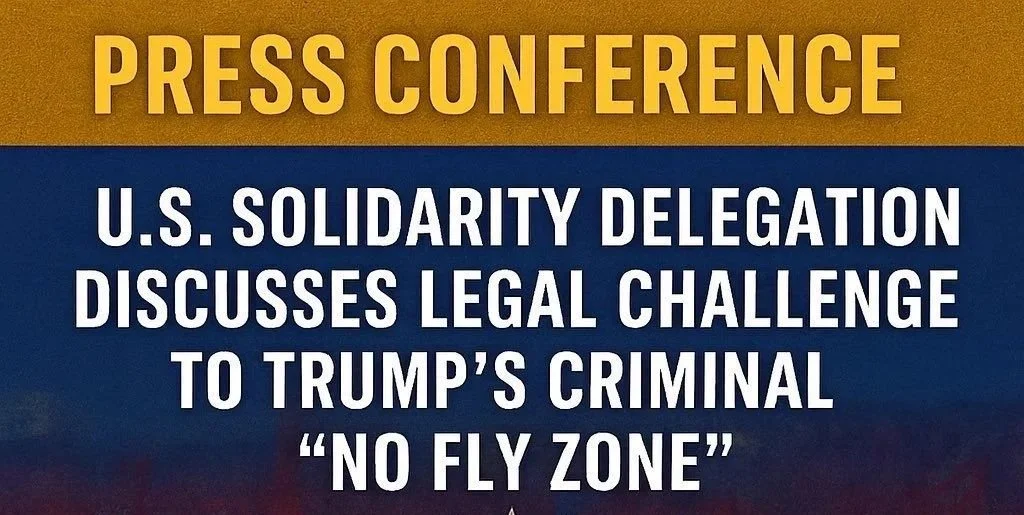
Press Release: U.S. Solidarity Delegation Blocked From Traveling to Venezuela

Press Release: U.S. Solidarity Delegation Blocked From Traveling to Venezuela

U.S. Solidarity Delegation Blocked From Traveling to Venezuela by Illegal Trump “No-Fly Zone” to Discuss Legal and Political Response 

Date: Wednesday, December 10
Press Conference: 2:00 PM
Location: Solidarity Center, 121 West 27th, Suite 404, 4th Floor, NY, NY, 10001
Contact: Suzanne Adely, Tel. (773) 510-7446; Corinna Mullin, Tel. (929) 342-8139

New York, NY — A coalition of peace, justice, and antiwar organizers inside the United States announced that they are joining forces with lawyers to explore potential legal challenges after being illegally prevented from traveling to Venezuela to attend the People’s Assembly for Peace and Sovereignty in Our Americas, held December 8–9 and organized by the Simón Bolívar Institute in Caracas. Their travel was obstructed due to Trump’s criminal blockade and illegal GPS interference in Venezuelan airspace. The organizers who were blocked will hold a press conference in New York City on Wednesday, December 9, at 2:00 PM.

Representatives had planned to travel on behalf of a broad coalition of organizations, including Workers World Party, Freedom Road Socialist Organization, the International Action Center, National Lawyers Guild- International Committee, International Association of Democratic Lawyers (IADL), Asociación Americana de Juristas (AAJ), the National Anti-War Action Network, the Black Alliance for Peace, Resist US-Led War, the U.S. Peace Council, Mutual Aid Scientific Socialism (MASS), Veterans for Peace, the Palaver Collective, Crown Heights Bites Back, the December 12th Movement, the Struggle for Socialism Party, Students for a Democratic Society, CODEPINK, International League of Peace and Struggle, 

Venezuela Solidarity Network, and the Bolivarian Circle—reflecting the depth and diversity of grassroots, anti-imperialist, and working-class forces committed to international solidarity with Venezuela. 

The Assembly brings together over 2,000 delegates from social movements, labor organizations, women’s and youth networks, Indigenous and Afro-descendant movements, and peace organizations across Latin America, the Caribbean, Africa, Asia, and North America. Its purpose is to build coordinated strategies for defending peace, sovereignty, and self-determination in the hemisphere—a gathering more urgent than ever amid escalating U.S. military aggression. Yet U.S.-based delegates—operating inside “the Belly of the Beast”—were barred from participating after the Trump administration attempted to impose a de facto no-fly zone over Venezuelan airspace.

On November 29, President Trump declared—without Congressional approval, UN authorization, or legal authority—that Venezuelan airspace should be considered “closed in its entirety.” Almost immediately, pilots began reporting GPS interference and “navigation signal disruptions” while approaching Caracas International Airport. Aviation analysts note that such disruptions mirror electronic warfare tactics the United States has deployed in advance of military operations in other regions. The resulting climate of uncertainty triggered cascading flight suspensions and widespread anxiety among travelers, with 75% of international flights to Venezuela cancelled as a result. 

For thousands of Venezuelans abroad, these disruptions have produced a humanitarian crisis for families attempting to return home for Christmas, stranded in airports from Madrid to Panama City. Elderly passengers have gone days without assistance, and many travelers have been forced to reroute through Bogotá and cross into Cúcuta on foot just to reach Venezuelan territory. In response, the Venezuelan government has mobilized state-owned aircraft to assist stranded citizens and ensure reunification during the holiday season.

Against this backdrop, the US peace delegation sees these travel restrictions as a deliberate attempt to disrupt international solidarity. “This is an attempt to blockade solidarity and to isolate Venezuela from the global peace movement,” said coalition spokesperson Sara Flounders. “We were invited to Venezuela to build working-class unity, strengthen international anti-imperialist coordination, and deepen our collective struggle for peace. The U.S. government sought to stop us from even showing up,” said Roger Wareham from the December 12th Movement. 

Delegates emphasize that this no-fly zone attempt is not an isolated incident, but part of a decades-long U.S. campaign of imperialist aggression—from multiple failed coup attempts, including the 2002 U.S.-backed coup against President Hugo Chávez; to the backing of astroturfed opposition figures such as Juan Guaidó and María Corina Machado; to the 2020 CIA-linked “Operation Gideon” plot to kidnap President Maduro; to ongoing economic warfare, illegal sanctions, and political destabilization. Despite these escalations, recent polling shows that 70 percent of U.S. residents oppose a war on Venezuela.

“We refuse to accept the lies used to justify regime change and resource theft,” said William Camacaro. “The real threat to peace in the hemisphere is US imperialism—not the Bolivarian Revolution,” added Corinna Mullin, of the U.S. Peace Council.

Though physically blocked, the coalition states that their commitment has only grown stronger. “Our bodies were blocked from traveling, but our solidarity was not,” said Suzanne Adely, of the National Lawyers Guild. Ajamu Baraka, National Organizer for Black Alliance for Peace, noted, “Washington’s greatest fear is not a plane landing in Caracas—it is that people’s movements across the Americas are learning from each other, deepening unity, and organizing together against imperialism.”

The coalition affirmed its determination to expand the antiwar movement inside the United States and strengthen global struggles against capitalism, militarism, and imperialism.

No War on Venezuela.

Venceremos.

The Popular Steering Committee Stands in Solidarity with the People of Honduras Against US Interventionism

The Popular Steering Committee Stands in Solidarity with the People of Honduras Against US Interventionism

The Popular Steering Committee Stands in Solidarity with the People of Honduras Against US Interventionism

On November 30, 2025, the people of Honduras took to the polls to vote in the Presidential election to replace current President Xiomara Castro of the Libre Party and other positions across the Honduran government. In recent history, Honduras has endured endless amounts of violence due to US interference in the form of coups, the backing of narcotraffickers, and neoliberalism. Over the years since the 2009 coup, Castro, the Libre Party, and the people of Honduras have worked to create a new nation, one that serves the interests of the people. The Libre candidate Rixi Moncada promised to continue those reforms. However, a plot had been revealed that caused chaos on election day. President Donald Trump openly called for people to vote for the right-wing opposition and pardoned convicted drug trafficker, Juan Orlando Hernandez, the former dictator of Honduras and staunch US ally. All while the US ended TPS protections for different migrant groups including Hondurans, [1] while domestically using ICE to kidnap and deport them. Honduras continues to be of strategic importance to the US to further control Central America and stop the resurgence of leftist politics in the region and to maintain their neoliberal policies, one of the main reasons they are attacking Moncada and the attacks over the years against Castro.

This comes at a time when the US is militarizing the Caribbean and Latin America to attack Venezuela, having killed over 80 people in the Caribbean and in the Pacific under the farce of combating “drug trafficking” (a narrative disproven by the pardoning of Hernandez in Honduras). Not only is the US attempting to gain control of Venezuela’s oil, they are also seeking to destabilize the socialist project that is the Bolivarian Revolution which will ultimately have a ripple effect across the region.

At the same time, the US-backed Israeli genocide continues in Palestine with the increasing Zionist expansion across the region. Recently, Argentina signed a deal with Israel to strengthen relationships between the region and the Zionist entity. US-based weapons contractors like Palantir and Israel’s Cellebrite are used not only to support the Zionist entity in their genocide against Palestinians, but also against the people of Honduras and of course, the rest of the region. US imperialism and Zionism continue to be the biggest threat to our sovereignty across Latin America, the Caribbean, and the entire world. The US seeks to take the entire world to war if that means it could reestablish its dominance. We cannot allow this to happen and must continue to fight for a Zone of Peace and an end to US militarism and imperialism/capitalism.

We stand unequivocally against US interference in Honduras’ elections and we stand in full support of Rixi Moncada and the people of Honduras who voted for dignity and for a country that serves the people, and not the elite. We call on the masses of people in Honduras and across the region to struggle against the forces of US militarism, including all US military installations and US embassies. We deserve a Zone of Peace and we will continue to fight outside of the electoral arena to make this a reality.

In Joint Struggle and Revolution,

Popular Steering Committee for a Zone of Peace in Our Americas


El Comité Popular de Dirección se solidariza con el pueblo de Honduras contra el intervencionismo estadounidense

El 30 de noviembre de 2025, el pueblo de Honduras acudió a las urnas para votar en las elecciones presidenciales para reemplazar al actual presidente Xiomara Castro del Partido Libre y otros cargos en el gobierno hondureño. En la historia reciente, Honduras ha soportado cantidades interminables de violencia debido a la interferencia de Estados Unidos en forma de golpes de estado, el respaldo de narcotraficantes y el neoliberalismo. A lo largo de los años desde el golpe de estado de 2009, Castro, el Partido Libre y el pueblo de Honduras han trabajado para crear una nueva nación, una que sirva a los intereses del pueblo. El candidato Libre Rixi Moncada prometió continuar con esas reformas. Sin embargo, se había revelado un complot que causó caos el día de las elecciones. El presidente Donald Trump pidió abiertamente que la gente votara por la oposición derechista y indultó al narcotraficante condenado, Juan Orlando Hernández, el ex dictador de Honduras y aliado acérrimo de Estados Unidos. Todo mientras Estados Unidos puso fin a las protecciones del TPS para diferentes grupos de migrantes, incluidos los hondureños, mientras que a nivel nacional usaba ICE para secuestrarlos y deportarlos. Honduras sigue siendo de importancia estratégica para EE.UU. Para controlar aún más Centroamérica y detener el resurgimiento de la política de izquierda en la región y mantener sus políticas neoliberales, una de las principales razones por las que están atacando a Moncada y los ataques a lo largo de los años contra Castro.

Esto ocurre en un momento en que Estados Unidos está militarizando el Caribe y América Latina para atacar a Venezuela, habiendo matado a más de 80 personas en el Caribe y en el Pacífico bajo la farsa de combatir el “narcotráfico” (una narrativa refutada por el indulto de Hernández en Honduras). Estados Unidos no solo está tratando de obtener el control del petróleo de Venezuela, sino que también está tratando de desestabilizar el proyecto socialista que es la Revolución Bolivariana, que en última instancia tendrá un efecto dominó en toda la región.

Al mismo tiempo, el genocidio israelí respaldado por Estados Unidos continúa en Palestina con la creciente expansión sionista en toda la región. Recientemente, Argentina firmó un acuerdo con Israel para fortalecer las relaciones entre la región y la entidad sionista. Contratistas de armas con sede en Estados Unidos como Palantir y Cellebrite de Israel se utilizan no solo para apoyar a la entidad sionista en su genocidio contra los palestinos, sino también contra el pueblo de Honduras y, por supuesto, el resto de la región. El imperialismo yanqui y el sionismo continúan siendo la mayor amenaza a nuestra soberanía en América Latina, el Caribe y el mundo entero. Estados Unidos busca llevar al mundo entero a la guerra si eso significa que podría restablecer su dominio. No podemos permitir que esto suceda y debemos continuar luchando por una Zona de Paz y el fin del militarismo y el imperialismo/capitalismo estadounidense.

Nos oponemos inequívocamente a la injerencia de Estados Unidos en las elecciones de Honduras y apoyamos plenamente a Rixi Moncada y al pueblo de Honduras que votó por la dignidad y por un país que sirve al pueblo, y no a la élite. Hacemos un llamado a las masas populares en Honduras y en toda la región a luchar contra las fuerzas del militarismo estadounidense, incluyendo todas las instalaciones militares y embajadas estadounidenses. Merecemos una Zona de Paz y seguiremos luchando fuera de la arena electoral para hacer esto una realidad.

En Lucha Conjunta y Revolución,

Comité Directivo Popular para una Zona de Paz en Nuestra América


O Comitê Popular de Direção solidariza-se com o povo de Honduras contra o intervencionismo estadunidense

Em 30 de novembro de 2025, o povo hondurenho foi às urnas para votar na eleição presidencial que substituirá a atual presidente Xiomara Castro do Partido Libre, além de outros cargos no governo hondurenho. Na história recente, Honduras tem suportado violência incessante devido à interferência dos EUA, sob a forma de golpes, apoio a narcotraficantes e neoliberalismo. Ao longo dos anos desde o golpe de 2009, Castro, o Partido Libre e o povo hondurenho trabalharam para criar uma nova nação, que sirva aos interesses do povo. A candidata do Libre, Rixi Moncada, prometeu dar continuidade a essas reformas. No entanto, um complô foi revelado, causando caos no dia da eleição. O ex-presidente Donald Trump defendeu abertamente o voto na oposição de direita e perdoou o condenado narcotraficante Juan Orlando Hernández, ex-ditador de Honduras e aliado firme dos EUA. Paralelamente, os EUA encerraram as proteções do TPS para diversos grupos de migrantes, incluindo hondurenhos, enquanto internamente usavam a ICE para sequestrá-los e deportá-los. Honduras continua sendo de importância estratégica para os EUA, visando maior controle sobre a América Central, impedir o ressurgimento da política de esquerda na região e manter suas políticas neoliberais — um dos principais motivos pelos quais atacam Moncada e promoveram os ataques ao longo dos anos contra Castro.

Isso acontece num momento em que os EUA estão militarizando o Caribe e a América Latina para atacar a Venezuela, matando mais de 80 pessoas no Caribe e no Pacífico sob a farsa de combater o “narcotráfico” (narrativa desmentida pelo perdão a Hernández em Honduras). Os EUA não apenas tentam controlar o petróleo venezuelano, mas também buscam desestabilizar o projeto socialista da Revolução Bolivariana, o que terá efeito cascata em toda a região.

Ao mesmo tempo, continua o genocídio israelense apoiado pelos EUA na Palestina, com a expansão sionista crescendo pela região. Recentemente, a Argentina firmou um acordo com Israel para fortalecer laços entre a região e a entidade sionista. Empresas de armas sediadas nos EUA, como a Palantir, e a israelense Cellebrite são usadas não apenas para apoiar a entidade sionista em seu genocídio contra palestinos, mas também contra o povo de Honduras e, claro, o restante da região. O imperialismo norte-americano e o sionismo continuam sendo as maiores ameaças à nossa soberania em toda a América Latina, Caribe e mundo inteiro. Os EUA buscam levar o mundo inteiro à guerra se isso significar reestabelecer sua dominação. Não podemos permitir que isso aconteça e devemos continuar lutando por uma Zona de Paz e pelo fim do militarismo e do imperialismo/capitalismo norte-americano.

Posicionamo-nos inequivocamente contra a interferência dos EUA nas eleições de Honduras e apoiamos integralmente Rixi Moncada e o povo hondurenho, que votou pela dignidade e por um país que sirva ao povo, e não à elite. Conclamamos as massas populares em Honduras e em toda a região a lutarem contra as forças do militarismo norte-americano, incluindo todas as instalações militares e embaixadas dos EUA. Merecemos uma Zona de Paz e continuaremos lutando fora da arena eleitoral para tornar isso realidade.

Em Luta Conjunta e Revolução,

Comitê Popular de Direção por uma Zona de Paz na Nossa América


Komite Popilè Direksyon an solidarize ak pèp Ondiras kont entèvansyonis amerikèn nan

Nan dat 30 novanm 2025, pèp Ondiras te ale nan biwo vòt pou vote nan eleksyon prezidansyèl la pou ranplase prezidan aktyèl Xiomara Castro nan Pati Libre, ansanm ak lòt pozisyon nan tout gouvènman ondiren nan. Nan istwa resan, Ondiras te sipòte yon kantite vyolans ki pa janm fini akòz entèvansyon Etazini an nan fòm koudeta, sipò trafikan dwòg, ak neoliberalis. Pandan ane yo depi koudeta 2009, Castro, Pati Libre, ak pèp ondiren an te travay pou kreye yon nasyon nouvo, youn ki sèvi enterè pèp la. Kandida Libre Rixi Moncada te pwomèt pou kontinye refòm sa yo. Sepandan, yo te revele yon konplo ki te lakòz dezakò jou eleksyon an. Ansyen Prezidan Donald Trump te ouvètman mande moun pou yo vote pou opozisyon dwa ekstrèm lan e te padonnen trafikan dwòg kondane, Juan Orlando Hernández, ansyen diktatè Ondiras ak alye fèm Etazini. Pandan ke Etazini te mete fen nan pwoteksyon TPS pou divès gwoup imigran, ki gen ladan Ondirans, pandan ke yo te itilize ICE pou kidnape ak depòte yo. Ondiras kontinye gen enpòtans estratejik pou Etazini pou kontwole pi plis Amerik Santral epi anpeche politik gòch yo monte ankò nan rejyon an epi pou kenbe politik neoliberal yo, youn nan rezon prensipal yo ap atake Moncada ak atak yo pandan ane yo kont Castro.

Sa rive nan yon moman kote Etazini ap militarize Karayib la ak Amerik Latin pou atake Venezyela, yo touye plis pase 80 moun nan Karayib la ak nan Pasifik la anba komedi pou "konbat trafik dwòg" (yon naratif ki demanti pa padon pou Hernández nan Ondiras). Se pa sèlman Etazini ap eseye pran kontwòl petwòl Venezyela, yo ap chèche dezetabize pwojè sosyalis Revolisyon Bolivaryen an ki pral finalman gen yon efè ondulasyon nan tout rejyon an.

An menm tan, jenosid Izrayelyen ki sipòte pa Etazini la kontinye nan Palestin ak ekspansyon Sionis k ap ogmante nan tout rejyon an. Dènyèman, Ajantin te siyen yon akò ak Izrayèl pou ranfòse relasyon ant rejyon an ak antite Sionis la. Kontraktè zam ki baze nan Etazini tankou Palantir ak Cellebrite Izrayèl la yo itilize pa sèlman pou sipòte antite Sionis la nan jenosid yo kont Palestinyen, men tou kont pèp Ondiras ak, byen klou, rès rejyon an. Enperyalis Ameriken ak Sionis kontinye pi gwo menas sou souverènte nou nan tout Amerik Latin, Karayib, ak tout mond lan. Etazini ap chèche mennen tout mond lan nan lagè si sa vle di li ta kapab etabli dominasyon li ankò. Nou pa ka pèmèt sa rive epi nou dwe kontinye goumen pou yon Zòn Lapè ak yon fen nan militaris Ameriken ak enperyalis/kapitalis.

Nou kanpe san limit kont entèvansyon Etazini nan eleksyon Ondiras e nou kanpe an sipò total pou Rixi Moncada ak pèp ondiren ki te vote pou diyite ak pou yon peyi ki sèvi pèp la, epi pa elit la. Nou rele mas pèp Ondiras ak tout rejyon an pou yo lite kont fòs militaris Ameriken, ki gen ladan tout enstalasyon militè Ameriken ak anbasad Etazini. Nou merite yon Zòn Lapè epi nou pral kontinye goumen andeyò arèn eleksyon an pou fè sa yon reyalite.

Nan Lit Konjwen ak Revolisyon,

Komite Popilè Dirijan pou yon Zòn Lapè nan Amerik Nou an

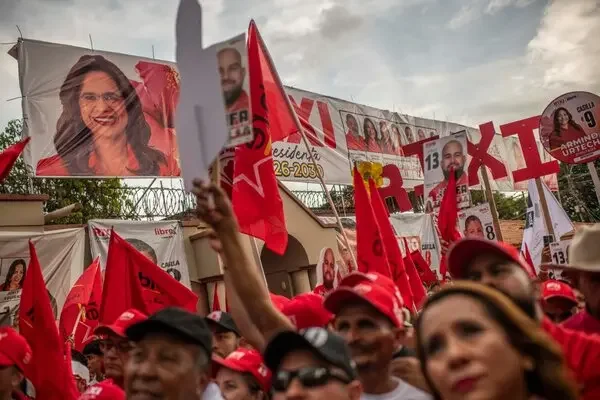
Image: LIBRE candidate Rixi Moncada at a June 28 rally in Honduras ahead of the party primaries. Photo: X

Media Release: Deeper into the Orbit of the US: the Visit by the Chairman of the US Joint Chiefs of Staff

Media Release: Deeper into the Orbit of the US: the Visit by the Chairman of the US Joint Chiefs of Staff

Media Release

Deeper into the Orbit of the US: the Visit by the Chairman of the US Joint Chiefs of Staff

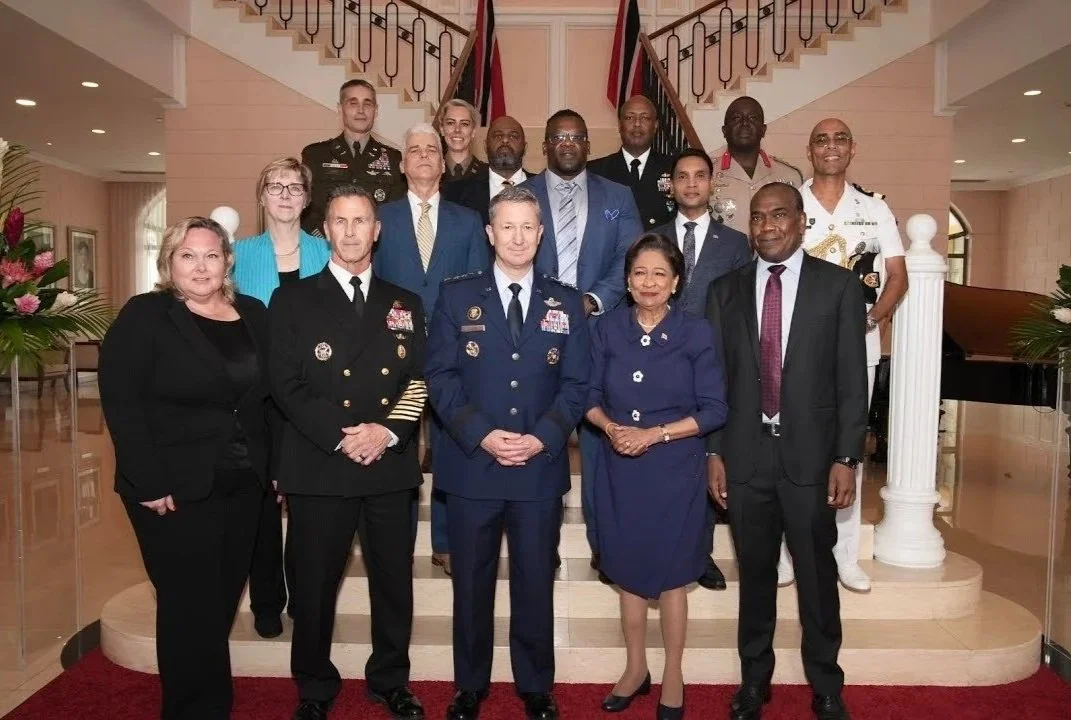
Today Trinidad and Tobago was taken deeper into the orbit of Washington’s imperial and colonial agenda with the visit of the Chairman of the US Joint Chiefs of Staff, General Dan Caine. He met with the Prime Minister of Trinidad and Tobago who is also the Chair of this country’s National Security Council. This is not an accidental occurrence. Nor is it normal. One will be hard pressed to find that any previous sitting Chair of the Joint Chiefs of Staff visited this country.

General Caine is on a swing through the Caribbean. On this visit he is to visit US troops on some of the US naval ships located in the Caribbean and is to visit Puerto Rico where the US has recently stationed many fighter jets and bombers. He is not on a tourist trip. The Chair of the Joint Chiefs has as one of his responsibilities to advise the US President, Secretary of Defence and the National Security Council. He assesses the preparation of US troops for missions and combat; he does strategic planning which includes scenario planning for military actions and in the process conducts risk assessments.

So, in keeping with his duties and responsibilities he is in this region to assess the state of the US assets and the position of any US allies so as to properly advise the President of what to do with respect to Venezuela. Remember Trump believes that the recent designation of the (fictitious) Cartel of the Suns as a Foreign Terrorist Organisation gives him the authority to attack Venezuela. He said as much last week. In the words of Trump himself “it allows us to do that…”

The people of Trinidad and Tobago are due a proper explanation by the Prime Minister on this visit. We do not want to hear some rehashed story about mutual collaboration in the fight against narco-traffickers. That is not what the Chairman of the Joint Chiefs of Staff deals with. He deals with war and preparations for war. He deals with militarily securing the US from attack by a foreign state. We must be told what commitments were made by the Prime Minister to General Caine and what was promised in return?

And we are being treated like fools by this government by being told that all this US military activity in Trinidad and Tobago is normal, when there is an unprecedented 10% of the US Navy in the Caribbean and the US leadership tells the world that they have sent in CIA operatives to Venezuela and are considering a military strike against that country and even the mainstream media in the US are clear that this is about regime change in Venezuela.

With every passing day we are positioning ourselves as the willing partner for the imperialist agenda of a hegemonic power – the USA. If the US attacks Venezuela and/or engages in actions that result in regime change or internal conflict and a possible civil war, then Trinidad and Tobago’s government will be a complicit partner. It will stain our international standing as we will cease to be nonaligned or respected for taking an independent position. Instead we will be viewed as a lackey of Washington at a time when the majority of American citizens – according to recent polls – do not wish the US to go to war with Venezuela and do not have a favourable view of President Trump.

That is a bad place indeed for this country to find itself in.

Movement for Social Justice

David Abdulah

Political Leader

Image: DoD Photo by Benjamin Applebaum

The Popular Steering Committee for a Zone of Peace in Our Americas Welcomes the Reaffirmation of Our Region as a Zone of Peace

The Popular Steering Committee for a Zone of Peace in Our Americas Welcomes the Reaffirmation of Our Region as a Zone of Peace

Calls on the Grassroots Organization of the Masses of the Peoples of Our America to Unify Our Struggles Against the Common Enemy

español
portuguese
Kreyol

PRESS RELEASE

Media Contact
zonadepaz@protonmail.com 

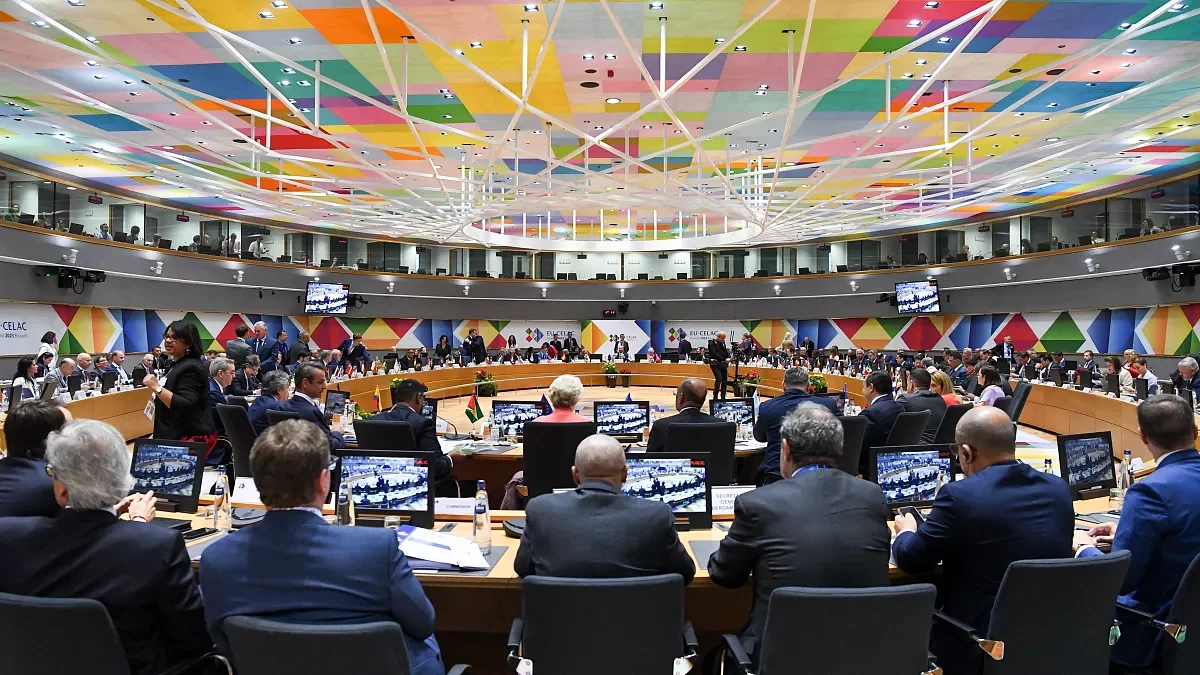
November 10, 2025 - The Social component of CELAC met over the last two days on November 8-9, 2025 in Santa Marta, Colombia with representation from social movements, mass based organizations and civil society coming together with the absolute clarity and necessity to make our region a Zone of Peace to combat and confront the US/NATO led aggressions in the Caribbean and Pacific against Venezuela, Colombia and the region at large. 

We had participants of the Popular Steering Committee for a Zone of Peace in Our Americas (PSC) in these meetings and participation at all levels amplifying the call from the masses to unify our struggles against our common enemy - the US/EU/NATO Axis of Domination. As the final declaration from the summit states, 

Latin America and the Caribbean play a decisive and strategic role in the struggle to consolidate a multipolar international system that successfully incorporates all states and peoples in full equality of conditions within the dynamics of world politics and economy. This breaks with the logic that normalizes the dominance of some states over others in the international system, making it possible to create conditions for Our America to become a significant center of power that could be decisive in the most complex decisions of international politics.

We have to unite to defeat the imperialist aggression against the Bolivarian people of Venezuela, poor fishermen off the coast of the Caribbean and Pacific from Ecuador, Mexico, Trinidad and Tobago or Venezuela, to the struggle for Haitian self determination against a new US led occupation force under the cover of the so called international community via the UN, to the struggle against ICE community raids in the streets of NY, LA and Chicago among others. 

To realize these objectives, the Popular Steering Committee is participating in the week of action Nov 15-23 in defense of Venezuelan sovereignty and calls for the organized masses of the region to also participate and amplify our collective voices on November 19th for a Regional Day of Action, and the continued development and expansion of the US/NATO Out of Our Americas Network as an organizational structure and platform from which to communicate, coordinate and successfully execute the expulsion of the US/NATO.

We call on the masses of Our Americas to unite to the Week of Action in Defense of Venezuelan Sovereignty with a key focus on:

1. Close the bases - Shut down the over 76 SOUTHCOM military bases throughout the Caribbean and Latin America. This includes the expansion into the Galapagos Islands, off the coast of Talara, Piura, and along the entire Pacific Coast, and others. 

2. Reaffirm Puerto Rican independence and Haitian sovereignty - Puerto Rican sovereignty and independence are a necessity to end current military expansion and aggression in the Caribbean against Venezuela as well as long-term guarantee of US/NATO forces out of Our Americas. The popular struggle for Haitian self-determination is key to the guarantee of a true Zone of Peace. The cradle of revolution in Our Americas has been and always will be Ayiti.

Image: Courtesy of Frederic Sierakowski/ European Union

The Struggle for a Zone of Peace Continues!: A Conversation with Austin Cole

The Struggle for a Zone of Peace Continues!: A Conversation with Austin Cole

The Struggle for a Zone of Peace Continues!: A Conversation with Austin Cole

The US/NATO Out of Our Americas Network officially launched on February 21, the anniversary of the assassinations of two legends in Nuestra América, Malcolm X (El Hajj Malik El-Shabazz) and Augusto C Sandino. An auspicious date, one that marks the next bold, action-oriented and mass-based phase of the Zone of Peace campaign. Black Agenda Report contributor Clau O’Brien Moscoso spoke to Austin Cole, Black Alliance for Peace (BAP) National Co-Coordinator and Haiti/Americas Team Co-Coordinator on the recently launched network, the machinations of the US/EU/NATO Axis of Domination,  and what the masses must do to “avenge Nuestra América.”

Clau O’Brien Moscoso: So, to start us off, can you introduce yourself  and touch base on what happened this weekend?

Austin Cole: My name is Austin. I am a co-coordinator of Black Alliance for Peace, and one of the co-coordinators of BAP’s Haiti/Americas Team, and I’m based in the Boston area. 

Back in April of 2023, we launched the Zone of Peace campaign, which calls for and takes up the 2014 Community for Latin America and Caribbean States (CELAC) call for a zone of peace in The Americas. And our focus in that campaign is really to activate the grassroots aspects of that call, towards popular struggle and popular sovereignty and self-determination for the peoples of The Americas, to expel capitalism, imperialism, patriarchy, and colonialism from the region. 

This call for a zone of peace in our Americas is really a call for the peoples to come together under our different and unified struggles to guarantee peace. i. And by peace, we don't mean the absence of conflict but the presence of liberation. 

And so in that vein, on Friday, February 21, which was also the commemoration of the assassination of Augusto Sandino, the Nicaraguan revolutionary, and the sixtieth anniversary in commemoration of the assassination of Malcolm X, El Hajj Malik Al-Shabbaz. And so that really important date marks the various aspects of the struggle in our Americas, from Latin America and The Caribbean and also with African/black peoples in The United States. We launched, not just BAP, but the collective organizations of the Zone of Peace campaign and what we call the Popular Steering Committee for a Zone of Peace in Our Americas. We also launched the US/NATO Out of Our Americas Network.

CO: Can you talk a little bit more about how we connect that struggle in the local context? How do we talk about what's happening, whether it's here in Lima, Peru, in Guayaquil, in Haiti? 

AC: A few of the really critical aspects of the campaign in terms of how we do this, that we're focused on is, really, one, building deeper coordination among our anti-imperialist organizations, political parties, labor and social justice organizations and movements throughout The Americas. 

Another one is really connecting the shared struggles across our different regions and across the different nations of the region and peoples and communities to really build power and internationalize those local struggles. And then, finally, the third focus is really around developing popular education, advocacy, grassroots organizing campaigns, and things like that.

Nuestra América goes back to 1891 to Jose Marti, the Cuban revolutionary, who fought for the independence of Cuba and also the anti-colonial unity of Latin America and The Caribbean. And so he published a piece in 1891 called, Nuestra América, or Our America. And so that really focused on conquering colonialism not only from Spain but also the impending kind of neocolonialism from the Monroe Doctrine of the US in the region.

So in terms of how we think about that with the Black radical peace tradition, which understands this idea that peace is not the absence of conflict, but it is the overcoming or the defeat of the forces of imperialism, white supremacy, colonialism, capitalism, patriarchy that destroy our people, that destroy our communities, that wage war against us. 

We achieve that by popular struggle, self-defense and resistance. That is not only for black or African people. But it is a struggle for black and African liberation as part of the struggle for the liberation of all peoples. So when we're talking about the black radical peace tradition when we talk about folks like Malcolm X or Franz Fanon or Patrice Lumumba, all of whom it's the centennial of their birthdays this year. And we talk about others in the tradition, at least that I come from in terms of the US, we talk about Fannie Lou Hamer. We talk about Assata Shakur. We talk about Jalil Muntaqim. We talk about many, many other people who have fought, and struggled, for liberation of African peoples here.

And we see that as the same form and certainly the same enemy that is destroying the lands, the peoples, the cultures of North America, of Latin America, and the Caribbean, as well as on the African continent, in Asia, in Palestine, throughout the world. And so when we think about connecting these things, it's about understanding, as Malcolm X said, that we have a common enemy.

We can understand that those are the same structures, systems, and interests that marginalize and oppress and maintain domination over black and African peoples within the US. And while that may be a different form because we who are in the US are inside the belly of the beast, it does not change the fact that we are fighting the same enemy just because the conditions are different.

And the fact that we all speak different languages also doesn't help. The fact that many times, Haiti is left out of the discussion of Latin America and The Caribbean, partially because of white supremacy, partially because of language, and for many other reasons as well, and for convenience oftentimes. And so we also say while we're talking about Marti, while we talk about Malcolm, while we talk about others, we have to talk specifically as well about this idea of avenging our Americas and understanding that the Haitian Revolution offered an alternative whereby the enslaved Haitians who fought for thirteen years to free themselves from one of the most brutal and depraved regimes of colonialism and slavery that the world has ever seen, where enslaved people in Haiti had a life expectancy of three years. 

That when the Haitian Revolution overtook not just France, but Britain and Spain, and in certain instances, aspects in the US of economic isolation, they offered a different path to understand not only are we talking about a liberal form of freedom, which is the freedom to own property and the freedom for capital to move beyond borders. But we're talking about actual human freedom. 

Dessalines said, “Let us walk down a different path, let us not have a missionary spirit to overtake our neighbors, but let them live in peace.” So while Dessalines was living in a very different time, and the Haitian people were living in a very different time in 1804, he was at that time, before Marx, before others had theorized around socialism, was talking specifically about peace and about having self-determination and sovereignty in a peaceful and harmonious, and fraternal community.

CO: How do you see the struggle that's happening in Haiti since 2004 and predating that, but definitely since the overthrow of Aristide and the formation of The United Nations Stabilization Mission in Haiti (MINUSTAH) and The United Nations Integrated Office in Haiti (BINUH). One of the core demands of the campaign is opposing intervention into Haiti. Why is it important for us to be talking about Haiti, to study Haiti, to advocate around this? 

AC: There are clear, material interests that the US, NATO, EU - these architects of world imperialism have in maintaining a Haiti that is subservient, that does not have self-determination, and that cannot be an example of what black or African liberation looks like in the world. In addition to a very strong material interest in exploiting Haiti as a source of human labor, as a source of minerals, and as a geographical strategic location within the Caribbean in the middle of the Caribbean. So why should someone in the US care about Haiti? When the Clintons through the Clinton Global Health Foundation helped to, and even before then, Bill Clinton as president helped to destroy the Haitian rice industry by flooding the Haitian market with US rice. One of the main reasons to do this is to open up new markets for capital. In this case, for rice farmers in the US.

And these are large rice farmers. We're not talking about the small rice farmers in Louisiana who are black, who are themselves struggling to survive. We're talking about these large companies, many of whom are sending their lowest quality rice to Haiti, which has been shown recently to include arsenic and other toxic chemicals.

They did so because it helps to create a new market for cheap goods that are subsidized by the US so that farmers in the US can have a place to sell their goods that basically has to accept it because they now have the rice industry in Haiti that did exist has been destroyed. And so when things like that happen, it provides no incentive for US capital to try to renegotiate its relationship with labor, with communities in the US and to do anything about the crisis of capitalism.

Instead of them having to potentially reshape relationships between labor and capital here in the US, they get government subsidies, and they push their products out to other markets that can't complain about the quality because they have no place for recourse to take any action. And then those farmers are gonna do whatever they can to hold on to those subsidies. They become completely intertwined with the politicians at the US level who are then very incentivized to make sure that the Haitian rice industry does not pick back up. 

And how are they getting subsidized? Because of US imperialism in Haiti and because of the destruction of infrastructure in Haiti. So all of these things are connected as well when it comes to the export of labor in Haiti. When Obama was president, I believe in 2009, Hillary Clinton was the Secretary of State. There were protests in Haiti over garment manufacturers wanting higher wages in the country. And the government in Haiti was considering increasing the minimum wage because it was so low. The Clinton State Department said no.

“Under no circumstances will you increase the minimum wage.” Why is that? Because companies like Levi's and others that have factories in Haiti don't want to pay their workers more. And in Haiti, just like in many other countries, those factories have been offshored.. Because they can suppress wages very easily, there's going to be no pushback in the US because people don't even know about it. And then, even if they do know about it, they consider it as “Well, it’s Haiti, they should be lucky to have to get $2 an hour. That’s a good job at least.”

They don't have to consider that because the US government is helping to protect their corporate interests in these other countries. And Haiti is so close that it is very attractive to the US. People might not know that Haiti has the largest population of any island in The Caribbean. There's over 11 million in Haiti. It has a greater population than the entire English-speaking Caribbean combined. And it is very strategically placed.

And so those are kind of really small examples. Another one I'll just mention as our comrade, Dr. Jemima Pierre, has mentioned many times, Haiti is a laboratory. In the same way that Palestine and Gaza in particular, but Palestine as a whole is a laboratory for Zionist occupation and settler colonialism in modern settler colonialism, with weapons manufacturing and surveillance and forms of social and physical confinement and all of these things.

Haiti has also been a laboratory for exercises in neocolonialism but also with other forms of aid and disaster capitalism, as I already mentioned, with the Clinton Health Foundation, the UN, many NGOs, the USAID all of these organizations have basically tried out many, many different tactics of control and of a form of humanitarianism that is a liberal humanitarianism.

So, barely any of the money is actually getting to the people of Haiti, and they are being blamed for the lack of “progress and development of infrastructure”. Not only that, Haiti has been a pilot country for neocolonialism- in the 1915 occupation of Haiti by US marines that lasted for nineteen years. They were a pilot in many ways throughout the Duvalier dictatorship and in many different forms.

Also, in the post-earthquake disaster relief and the disaster capitalism surrounding that event. And then, since 2004, this operation of the Core Group, which is an unelected, unaccountable group of countries and institutions that basically make the decisions behind the scenes in Haiti as well as the Global Fragility Act that the US has recently piloted in Haiti and in some African countries, in Papua New Guinea, and then the Multinational Security Support mission that is currently in Haiti that is a non-UN mission, that they are trying to convert to a UN peacekeeping commission, which will be a unique UN peacekeeping commission like the one in Somalia. If it happens, it will be funded out of a trust. And that will be like a UN peacekeeping mission previously, but even less accountable, under the guise of “financial feasibility”.

The US required any person who's going to take over in the transitional presidency in Haiti to accept an intervention and to accept whatever the US and the Core Group say will be the direction of Haiti. So this pseudo-democratic guise of this transition process is all of a laboratory, not only for Haiti and not only for The Americas but also for the entire world.

The exact same thing like Cop City, where there are corporate entities helping to support the Police Foundation in Atlanta to basically say we need to combat the violence that is rising in this city. And what violence were they trying to combat? The uprisings in 2020 against police brutality.

They basically flipped the defund police “demand” on its head and said, no we're actually going to fund police even more. We're going to “train them better,” and we're going to build these massive cop cities.

And this is not new. Folks have talked about this have noted this. Kenneth Clark talked about this with the Metropolitan Apolied Research Center, MARC, back in 1969 and understanding that organization was taking learnings from Vietnam and counterinsurgency and applying them back during the sixties and then would apply them even more in the seventies and eighties and even to this day.

CO: Well said. You mentioned Haiti, obviously, but I would like to speak more about its geostrategic location and how that relates to militarization in the region, whether it's through U.S. Southern Command (SOUTHCOM) bases expanding but also joint military exercises in that area. Particularly if you can speak more about Operation Tradewinds and what does that mean for what seems to be an eventual war with China? 

AC: So geostrategically, Haiti is relatively central within the Caribbean. If you just look at a map - Haiti is just east of Cuba. So when you're thinking about The Caribbean, that is almost directly Southeast of Florida. It is above Venezuela and Colombia. Folks might have seen the Colombian president Gustavo Petro visit Haiti about a month ago or so and pointed out how, you know, the lines for drug trafficking from Colombia to Florida to Miami, and all these areas, passed directly through Haiti. That is a critical drug smuggling route. But it's not just that, it's a critical route in general for any sea-based trade.

And it's actually where in 1492, the island where Columbus landed to begin the genocide and and the colonization of The Americas. So, in that area, the US has actually, in the past, wanted to purchase Mole Saint Nicolas, which is an area in Haiti, like an island just off of Haiti. They've wanted to purchase many other parts of Haiti or wanted to use Tortuga, the island right by Haiti, and that is a place which was a really important place for piracy and shipping during colonial and precolonial times.

 Those sea lanes are not less important than they were back in the 1700s when piracy and these wars were happening. They're still critical. There is a reason Trump, in one of his first announcements, was so strong about the US wanting to retake the Panama Canal.

So, shipping lanes are really critical. And then another aspect of what you mentioned is Operation Tradewinds. Another aspect of this pivot to focus really strongly on SOUTHCOM, which Trump in 2017 started to focus more on SOUTHCOM. And then particularly towards the end of his presidency, really made that an emphasis, and then Biden deepened that even more.

Trump has now come on to build off of what the Biden administration did and the Biden/Blinken State Department. Now the Trump/Rubio State Department is really intensifying its focus on The Americas and on SOUTHCOM. And one of the critical aspects of that is these training exercises.

They do these training exercises like Operation Trade Winds, which many of them are nominally training exercises for environmental disasters. But, obviously, they're all through military agreements.

And all of this is to really merge the military processes of all of the countries of the Caribbean in in terms of Trade Winds, not just the islands of the Caribbean, but all the countries in the Caribbean Sea, as well as other operations that happen throughout Central And South America with the US/EU/NATO axis of domination. They bring in EU countries, NATO countries to come to the Caribbean and to take part in these exercises along with the US military.

And they even bring in the National Guard, especially from the South and all across the US. They train with folks in Costa Rica and Panama and Colombia and Chile and Barbados and all in The Bahamas and all of these countries. And so that is under the guise of “climate change is happening, disasters are happening more frequently, so we need to be prepared.”

But they're also creating this military infrastructure that serves US imperialism and US domination 100%. They are building coordination to be able to do that and to be able to do things like threaten Venezuela with this “border dispute” with Guyana and threaten Nicaragua.

Like they attempted a coup in Nicaragua in 2018 or threatened Cuba and intensified the blockade. And so not only are they sanctioning those countries already economically, not only are they trying to politically subvert them right into causing coups, but they're also encircling them militarily and building more coordination with these various countries. I think it was just in the news recently in Trinidad and Tobago, as well as in Guyana, how close those countries' militaries have become in the last few years with the US military.

This broader push for all the solutions runs through the US military. All the solutions run through the Department of Defense. There is a reason that Laura Richardson, the former General Commander of SOUTHCOM, was the one throughout the Biden administration visiting all of these countries in South and Central America and The Caribbean. Not the diplomats, not Blinken even. Although he visited obviously for certain things, it was Laura Richardson that did tours around the region, meeting with presidents, ministers, and other military leaders. This is happening right now, this militarization of our region, and it's not subtle.

It's really critical in this battle when we think about Haiti, when we think about Cuba, Nicaragua, Venezuela, Honduras, countries that are really in the eye of the storm of US imperialism; all of these other things that are happening in the region are a critical part of the US encircling them and putting pressure on them and trying to really lock down complete control of this hemisphere in preparation for, like you said, potential war with China. That's why things like the Special Economic Zone in Honduras when Hillary Clinton and Barack Obama's State Department in 2009 helped perpetuate a coup in Honduras and overthrew Manuel Zelaya (current Hondurand President Xiomara Castro’s husband).

The right wing narco government that came in created agreements with the US and corporations to build these special economic zones to do all of this stuff where the US and these corporate entities could use part of Honduras as more than a free trade zone. It's like an entire land that they own, like a tech park that they could literally build up. Part of that strategy is to build up these areas of the Western Hemisphere to not have to rely on China. That's why it's such a big deal, when Xiomara Castro, the now president of Honduras, said no. That's why Biden said Latin America and The Caribbean are no longer our backyard. It's our front yard. We see Trump is very dedicated to it being the backyard. But it is still the same. It is the yard.

Whether it's physical, a hot war, or a cold war, they are gearing up for it. So we have to understand that it is our role as people in this hemisphere, and particularly as people in the US to defeat imperialism from the inside, to defeat it in this hemisphere, to build a zone of peace, to create a zone of peace, built through popular struggle in our region because that is the only way that we will survive.

CO: Is there anything else you wanna leave the audience with? 

AC: How are we going to organize, to coordinate, to communicate among the progressive, radical, and revolutionary movements and formations around our region to expel those forces of domination from our Americas. We’ll have an orientation webinar thinking about this, but this is something that we are not building only as Black Alliance for Peace or even the Popular Steering Committee for a Zone of Peace in Our Americas. This is something all of the forces that are aligned to do this are building, and that we want to include all of those forces and to build this truly from the bottom up through popular struggle understanding that we have to be coordinated in those actions. To quote Dessalines’ independence speech because this really sums up the goal:

Let us walk down another path. Let us imitate those people who, extending their concern into the future and dreading to leave an example of cowardice for posterity, prefer to be exterminated rather than lose their place as one of the world's free people. 

Let's avenge our Americas. The time is now. We must make our Americas a zone of peace.

The Struggle for a Zone of Peace Continues: US/NATO Out of Our Americas Network Launches

The Struggle for a Zone of Peace Continues: US/NATO Out of Our Americas Network Launches


The Struggle for a Zone of Peace Continues: US/NATO Out of Our Americas Network Launches

For Immediate Release     

Media Contact

press@blackallianceforpeace.com

(202) 643-1136

February 21, 2025 - Today, the US/NATO Out of Our Americas Network officially launches, marking a bold and action-oriented next phase in the Zone of Peace campaign. This date, commemorating the assassinations of Malcolm X and Augusto C. Sandino, serves as a powerful reminder of the enduring struggle for sovereignty, self-determination, and liberation from colonialism, imperialism and all nefarious forces that impede peace. The Network is dedicated to building a coordinated, internationalist struggle to expel the U.S./EU/NATO Axis of Domination from the Americas and beyond.

The Zone of Peace campaign has been building and coordinating resistance…

…continued

International Organizations Condemn the Ecuadorian Government in the Guayaquil Four Case

International Organizations Condemn the Ecuadorian Government in the Guayaquil Four Case

La traducción al español está más abajo


International Organizations Condemn the Ecuadorian Government in the Guayaquil Four Case

Justice and Reparations for Steven, Josué, Ismael, and Nehemías“…We are like the straw on the moor that is pulled out and grows back.” Dolores Cacuango

The Solidarity Roundtable for the Guayaquil 4 (MSL4 GYE), is a space created by the National Ecuadorian Afro-descendant Movement (MANE), the Permanent Committee for the Defense of Human Rights (CDH), the Pueblo Negro organization, the Center for Rural Promotion (CPR), the Association of Popular Artists, and countless civil associations, community organizations, and individuals are the signatories of this international complaint.
The MSL4 GYE denounces before an international audience the arbitrary detention and then the subsequent extrajudicial execution of the 4 children from Malvinas, Guayaquil, on December 8, 2024.

The MSL4 GYE demands from the Ecuadorian State, before international opinion, total transparency in the handling of the case and of the 16 detained military personnel as the material authors of the detention and subsequent execution of the four children from Malvinas, Guayaquil, Ecuador - Steven, Josué, Ismael and Nehemías.

The MSL4 GYE demands justice, transparency, and a speedy trial that is being carried out, and demands that the intellectual authors of the detention and subsequent extrajudicial death of the four children from Malvinas, Guayaquil, Ecuador - Steven, Josué, Ismael and Nehemías be identified.

The signatories of this document fully support what is expressed, and adhere with their signature to this international denunciation and to the Manifesto for the four children of the Malvinas, Guayaquil, Ecuador.

[See those signed on below]

SIGN ON YOUR ORGANIZATION HERE


———————————————- En español ———————————————-

Organizaciones Internacionales Denuncian el Gobierno Ecuatoriano en el Caso de los Cuatro de Guayaquil

“Justicia y reparación para Steven, Josué, Ismael, y Nehemías.”

“… Somos como la paja del páramo que se arranca y vuelve a crecer.”  Dolores Cacuango.

 La Mesa de Solidaridad por los 4 de Guayaquil (MSL4 GYE), es un espacio creado por el Movimiento Afrodescendiente Nacional Ecuatoriano (MANE), el Comité Permanente por la Defensa de los Derechos Humanos (CDH), la organización Pueblo Negro, El Centro de Promoción Rural (CPR),  la Asociación de Artistas Populares, y un sinnúmero de asociaciones civiles, organizaciones comunitarias, y personas naturales son los firmantes de esta denuncia internacional.

La MSL4 GYE denuncia ante la opinión internacional la detención arbitraria y luego la posterior ejecución extrajudicial de los 4 niños de las Malvinas, Guayaquil, el 8 de diciembre del 2024.

La MSL4 GYE exige al Estado Ecuatoriano, ante la opinión internacional, total transparencia en el manejo del caso y de los 16 militares detenidos como los autores materiales de la detención y posterior ejecución de los cuatro niños de la Malvinas, Guayaquil, Ecuador, Steven, Josue, Ismael y Nehemias.

La MSL4 GYE demanda justicia, transparencia, y celeridad, en el juicio que se está llevando a cabo, y exige que se identifique a los autores intelectuales de la detención y posterior muerte extrajudicial de los de los cuatro niños de la Malvinas, Guayaquil, Ecuador, Steven, Josue, Ismael y Nehemias.

Los firmantes de este documento están en total apoyo de lo expresado, y se adhieren con su firma a esta denuncia internacional y al Manifiesto por los cuatro niños de las Malvinas, Guayaquil, Ecuador.  

INSCRIBA AQUÍ A SU ORGANIZACIÓN


Firmado | Signed on

Black Alliance for Peace / La Alianza Negra por La Paz

Diáspora Pa’lante Collective - Puerto Rico, EEUU

Movimiento Evita - Argentina

AfroResistance - Panama, EEUU

Red de Organizaciones AfroVenezolana - Venezuela

Caribbean Movement for Peace and Integration - Barbados, Caribe

Assembly of Caribbean Peoples - Trinidad & Tobago, Caribbean

Oilfields Workers Trade Union - Trinidad & Tobago

Kallpawan - EEUU, Perú

Observatorio de Derechos Humanos de los Pueblos - México, regional

Acción Afro-Dominicana - Dominican Republic, regional

Red Barrial Afrodescendiente - Cuba

Alliance for Global Justice

Organization for Caribbean Empowerment

World Beyond War/Un Mundo Más Allá de la Guerra - regional

Proceso de Comunidades Negras (PCN) - Colombia

Coordinadora Política de Mujeres Cotopaxi - Ecuador

Frente de Migrantes Organizados de la Republica de Argentina - Argentina

Mujeres Luminosa de Napo - Ecuador

SOS Violencia Loja - Ecuador

Red de Guardianes del Patrimonio Cultural y Natural de Manabí - Ecuador

Asamblea de los Pueblos - Argentina, regional

Federación de Estudiantes Secundarios del Ecuador - Ecuador

Fundación Rehabilitación Desde El Corazón - Ecuador

Comuna Rio Santiago Cayapas - Ecuador

Colectivo Entretejidas - Ecuador

Fundación Servicios Integrados para el Desarrollo SIDE - Ecuador

Asociación Madre Sabia - Ecuador

Esmeraldas Libre - Ecuador

Fundación Semillas hacia el Futuro - Ecuador

grupo cultural ORISHA la bomba - Ecuador

Equipo Docentes, Capitulo Ecuador - Ecuador

Junta Patriótica del Ecuador - Ecuador

La Cubeta Batucada Feminista - Ecuador

Fundación Chapil - Ecuador

Centro de Documentación en Derechos Humanos "Segundo Montes Mozo S.J." (CSMM) - Ecuador

Nina sonkoy musica andina - Argentina

Comuna Ancestral Afrodescendientes e Indígena de Tapiapamba  - Ecuador

Colectivo Mujeres de Asfalto  - Ecuador

Observatorio Ciudadano de Servicios Públicos - Ecuador

Red Nacional de Feministas por kos derechos Humanos, Ecuador - Ecuador

Asociación de Artistas de la Economía Popular y Solidaria - Ecuador

Fundación Educativa Ecuador Sisakuna - Ecuador

Tejido Violeta Galápagos  - Ecuador

Acción Antiprohibicionista Ecuador  - Ecuador

Batuka Candelabras Galápagos  - Ecuador

La María Verde - Ecuador

Coordinadora Política de Mujeres Ecuatorianas de Chimborazo - Ecuador

FUNTUVRISA Ecuador F.Talentos Unidos por la Vida y la Familia RISA - Ecuador

Transformar Argentina - Argentina

Maestros por la Revolución - Ecuador

Movimiento de Mujeres de El Oro - Ecuador

Hood Conmunist Blog - United States

Asamblea Nacional Ciudadana-Guayas-Ecuador - Ecuador

ANC Santa Elena - Ecuador

Red de Maestros y Maestras por la Revolución Educativa  - Ecuador

Fundación Ali Primera por la Patria Buena - Venezuela

Bolivarianos Alfaristas de la RC5 - Ecuador

Frente de Defensa Petrolero Ecuatoriano - Ecuador

Partido Comunista del Ecuador - Ecuador

Instituto Cultural Nuestra América - Ecuador

Centro de Promoción Rural  - Ecuador

Unión Nacional de Periodistas Núcleo del Guayas  - Ecuador

Observatorio Sociolaboral y del Diálogo Social en el Ecuador OSLADE  - Ecuador

Foro del agua Santa Elena - Ecuador

La Esquina de la Resistencia - Ecuador

Arte Por La Vida - Ecuador

Casa de la Abuela Jaguar - Ecuador

Comité Proparroquialización de Monte Sinahí  - Ecuador

Colectiva de Mujeres Tejedora Manabita  - Ecuador

Mujeres Luna Creciente Ecuador - Ecuador

Fundación e-comunicar - Ecuador

Consejo Consultivo de Diversidades Sexo-genéricas del DMQ - Ecuador

Mesa Autónoma Representativa MAR LGBTIQ sede Quito DM  - Ecuador

Revolución Cultural - Ecuador

Centro Cultural Café Galeria Barricaña - Ecuador

Colectivo de Unidad Democrática  - Ecuador

Fundación Derecho al Buen Vivir - Ecuador

Danza Zoomorfa Ancestral - Ecuador

Colectivo Cultural la Vereda - Ecuador

Consejo Nacional de Derechos Humanos y de la Naturaleza del Ecuador - Ecuador

Colectiva de Antropólogas del Ecuador  - Ecuador

MUCT - Ecuador

Colectiva de Antropólogas del Ecuador - Ecuador

Confederación Comarca Afro ecuatoriana del Norte de Esmeraldas - Ecuador

Fundación Semillas hacia el Futuro (ORISHA)

Firmantes individuales

Marjorie Lopez Merchan - Ecuador

Marco Vargas - Ecuador

Gloria Zabala - Ecuador

Piedad Ortiz - Ecuador

Dr. Cinthia M. Campos-Hernandez - EEUU

Luis Vicente Pachacama Guallichico - Ecuador

Dolores Bolaños - Ecuador

Isabel Iturralde - Ecuador

Janneth Moreano - Ecuador

Byron Joel Castillo Tenorio  - Ecuador

Network of Afro-Venezuelan Organizations Reaffirm Sovereignty with President Nicolás Maduro

Network of Afro-Venezuelan Organizations Reaffirm Sovereignty with President Nicolás Maduro

Statement from the Network of Afro-Venezuelan Organizations (ROA)

Reaffirming Our Sovereignty with President Nicolás Maduro

Today, January 10, 2025, President Nicolás Maduro Moros is sworn in as the leader of all Venezuelans.

We denounce the climate of tension deliberately created by racist, Zionist, and fascist elements within the national and international opposition. These forces, acting against the will of the Venezuelan people, have sought to destabilize our nation since July 28, 2024, when President Maduro was democratically reelected in accordance with the Constitution of the Bolivarian Republic of Venezuela. His victory was legally reaffirmed by the Supreme Court of Justice, the same institution tasked with resolving electoral disputes in Venezuela and elsewhere, as recently demonstrated in Mexico.

Since its founding in June 2000, the Network of Afro-Venezuelan Organizations (ROA) has stood in steadfast support of the Bolivarian Process initiated by Commander Hugo Chávez Frías and continued by President Maduro. We remain unwavering in our commitment to defending Venezuela’s sovereignty.

Today, we confront the geopolitical ambitions of American imperialism, its complicit governments in Latin America and the Caribbean, and certain sectors of Europe. These entities seek to seize our nation’s resources and undermine the most sacred principles of any nation: sovereignty and dignity.

Our Call to Action:

We urge the Afro-Venezuelan people and our sister organizations to resist any attempt to delegitimize our sovereignty. At the same time, we encourage active participation in the Constitutional Reform process, as announced by President Maduro. This reform aims to ensure the inclusion of Afro-descendants for reparative justice, a historic step toward recognizing and addressing centuries of oppression.

We also raise awareness about Zionism, which we identify as a form of 21st-century colonialism, and call for vigilance against its influence.

Our Commitment:

ROA will continue its work across the regions of Caracas, Miranda, Yaracuy, Carabobo, Sucre, Vargas, Zulia, Guárico, Falcón, and Aragua, while maintaining strong ties with Afro-descendant organizations across Latin America and the Caribbean, including in the Dominican Republic, Curaçao, Colombia, the United States, Bolivia, Ecuador, Haiti, Argentina, Puerto Rico, Mexico, and Cuba.

Together, we stand firm in defense of our sovereignty, justice, and dignity.

ROA - Network of Afro-Venezuelan Organizations

Articulation of Afro-descendants of Latin America and the Caribbean