Federal Courts Uphold Occupation Forces: The Case for Community Control in DC
A Statement by Pan-African Community Action (PACA)
The partisan battle between the federal and local government on whether to keep National Guard forces in DC is a bipartisan legitimization of structural violence against non-white working class communities.
On December 17, 2025, The District Circuit Court of Appeals ruled unanimously to overturn a decision that would have expelled over 2,000 National Guard troops stationed in D.C. The National Guard’s occupation in D.C., which began with Trump’s executive order in August, will remain in place until the judiciary panel determines if the president is “improperly exercising federal control.” But, in the meantime, residents are forced to exist under conditions of war; no panel decision will fix elected officials' ability to deploy soldiers to DC neighborhoods. The fact that African communities in DC, and across urban centers of the U.S., are politically, economically, and culturally dominated territories defines them as internal or domestic colonies. Nearly six months into the occupation, the courts continue to debate legality while residents endure the consequences of domestic colonialism through heightened militarization.
The ruling is part of a growing number of legal disputes over National Guard deployments across the country. Yet these debates share a dangerous assumption: that a military presence in civilian communities is acceptable, and that the only issue is how it is administered. Across party lines, officials argue over procedure while agreeing on occupation. That consensus exposes the real contradiction—true safety and security for our communities is treated as secondary to maintaining control and occupation.
As political leadership in D.C. shifts, the public is being misdirected. Instead of addressing the urgent needs of long-time residents, elected officials lean on slogans like “law and order,” “states’ rights,” and bureaucratic process. The false choice presented—support or oppose presidential intervention—hides the reality that working-class African communities are facing a coordinated assault from both local and federal power.
This development in the ongoing war on working class DC mystifies the fundamental threats facing residents:
a bipartisan collaboration that supports the occupation
access to life-affirming resources being attacked at every level of government
domestic militarization; targeting immigrants, youth, and working-class Africans as enemy combatants
narrative warfare that decontextualizes the colonial relationship and struggle for power, in favor of political theater.
Nearly every step of the way, local Democratic Party leadership and the federal Trump administration have operated as co-conspirators and collaborators, rather than stark political opponents. The Democrat-led DC Council supports misguided notions of safety, expanding police power through blockbuster crime bills. The mayor’s office approves fiscal budgets that cut Medicaid access while The Big Beautiful Bill purged over 230,000 DC families from SNAP. In what was once a sanctuary city, ICE terrorizes working-class immigrants with expanded intimidation tactics and support from the MPD. National Guard troops harass African youth at the behest of Council-led legislation that expands youth curfews. All this while mass media syndications exploit discontent, promoting narratives that aim to justify more repression. Disputes over federal jurisdiction cannot address these ills. These developments have to be understood as modern features of settler-colonialism.
No matter how the judiciary panel rules, the central issue remains: the federal and local government do not answer to the people and refuse to address the root issues facing our community. Safety cannot come from institutions that operate without community governance or accountability.
This moment demands a sharpened call for Community Control. Community Control means the collective ability to wield power through informed consent, participatory decision-making, and accountability defined by those most affected. Working-class African people in D.C. need institutions that answer only to the people’s vision of safety—not to political careers, federal authority, or corporate interests. Any real solutions to concerns over public safety must begin with a community led democratic process, that allows working class African communities to shape and develop institutions that answer directly to the will of the people.
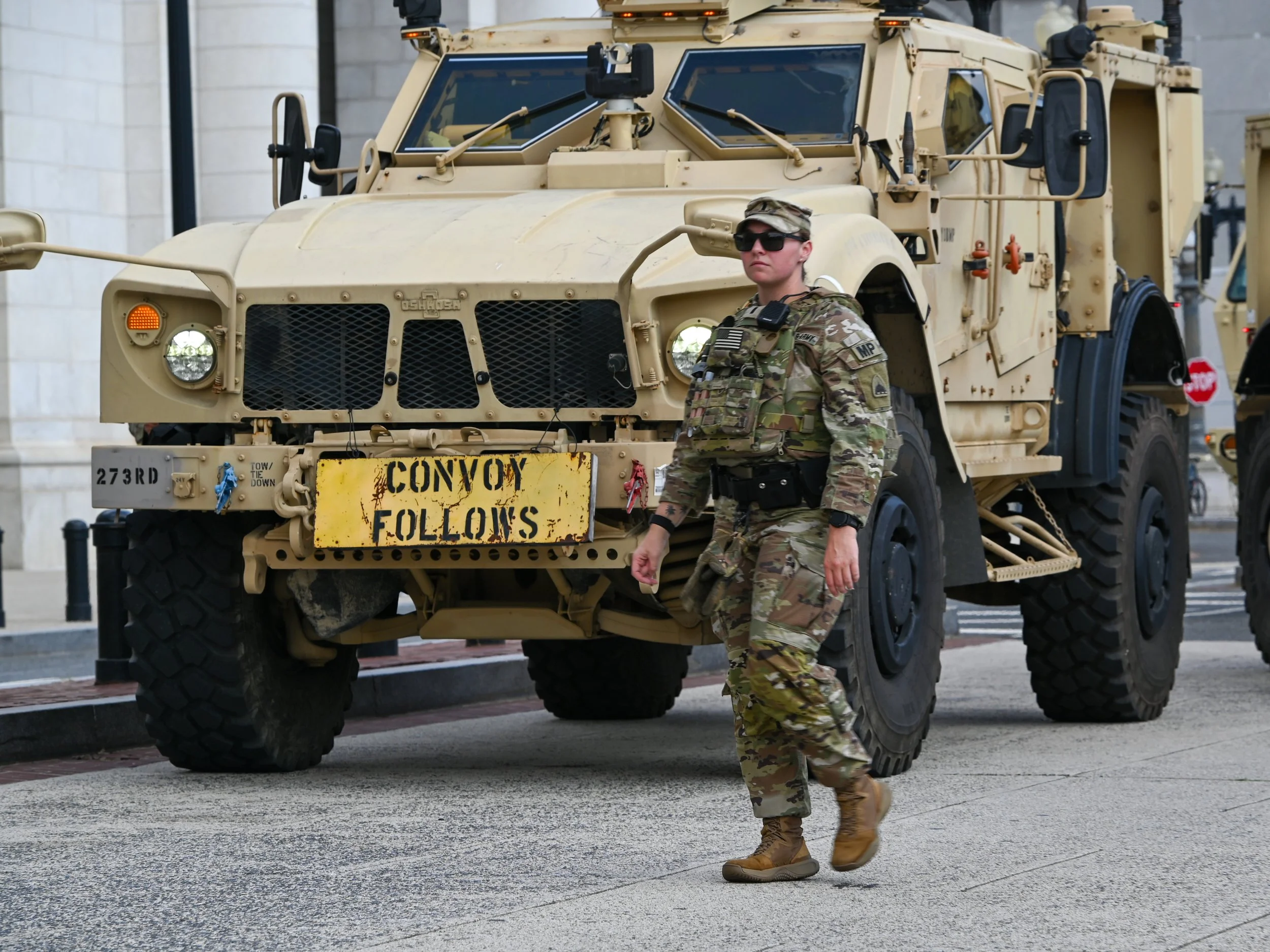
Banner photo: U.S. Army Soldiers from the District of Columbia National Guard position vehicles outside Union Station in D.C, courtesy commons.wikimedia.org.