Viewing entries tagged
Asia-Pacific

Asia-Pacific News Update #3

Asia-Pacific News Update #3

The Asia-Pacific News Update expands on the Afghanistan News Update, providing updates, resources, and analysis on U.S. imperialism across the regions—from the Philippines, Korea, Kanaky and Hawai’i to Palestine, Iran and Afghanistan. With each edition, we aim to strengthen the public’s awareness and understanding of U.S.-led militarization across Asia and the Pacific, while mobilizing support for regional struggles against the U.S./EU/NATO Axis of Domination.


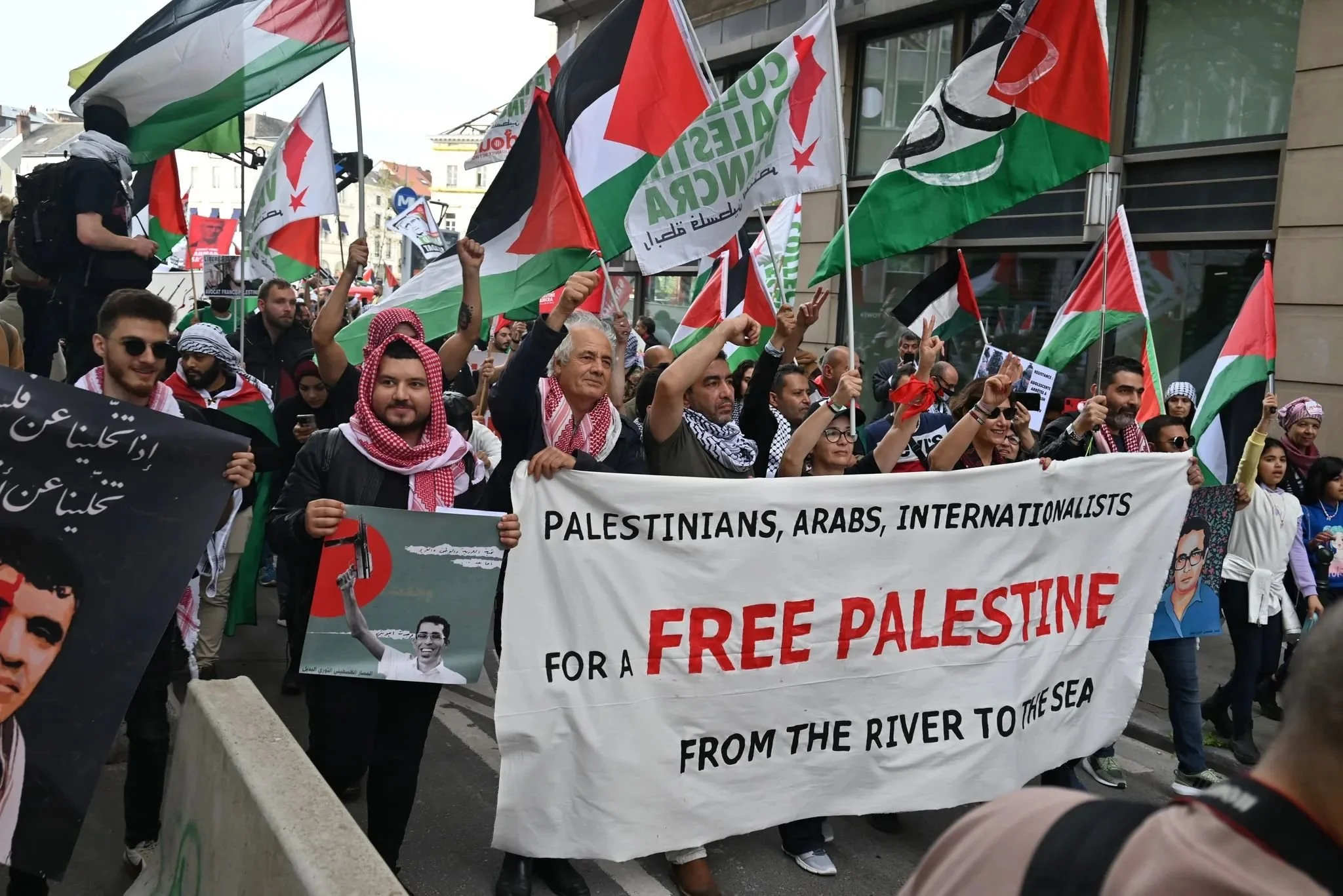
In this edition of the Asia-Pacific News Update, BAP’s Asia-Pacific team interviews members of Tariq el-Tahrir, an emerging international network of Palestinian, Arab, and internationalist youth, students, and organizations contributing to the movement for Palestinian liberation. We discuss Tariq el-Tahrir’s organizational activities, connections between the liberation of Palestine and the liberation of oppressed peoples within the U.S., and contradictions within the Palestine movement in the U.S.

Asia-Pacific News Update: What is Tariq el-Tahrir? Can you tell us about the motivation behind forming this new network, as well as its political outlook and some of the work you’re doing?

Tariq el-Tahrir: The Tariq el Tahrir Youth and Student Network was founded at the fourth annual conference of the Masar Badil (Palestinian Alternative Revolutionary Path Movement), which brought together activists from around the world, including youth and students, Palestinians, diaspora Arabs, and internationalists. Throughout the conference, we conducted several discussions on the diverse needs, challenges, and experiences specific to each of our local circumstances after the rise and repression of the first wave of the student intifada in the Spring and Summer of 2024. Through these discussions, we came to understand that the Palestinian Revolution today is at a critical juncture. Our motivation for forming this network stemmed from an understanding that the project of the Oslo Accords and its successive political implementations systematically dismantled the vital organizational structures of the Palestinian national movement and sidelined the Palestinian diaspora. In the years following Oslo, the institutions of the revolution that had once connected the homeland with our brothers and sisters in the diaspora were intentionally liquidated. We aim to rebuild those structures, to reconnect the forces of return, resistance, and exile, and to re-activate the Palestinian diaspora, formerly isolated by Oslo’s logic of confinement, so that they may assume once again their rightful place in the struggle for national liberation.

Our political outlook is rooted in the Palestinian cause for return and liberation, in the Arab dimension of that cause, and in a broader internationalist horizon. We affirm the centrality of Palestine, from the river to the sea, as an Arab question and as an emancipatory issue for humanity at large. We believe that the Palestinian people, the Arab people, and the international anti-colonial movement must stand together in solidarity and common purpose. The Tariq el Tahrir Network, therefore, seeks to link the Palestinians within occupied Palestine and those in exile so that the diaspora becomes an active force in the larger camp of resistance, not a passive bystander.

In this spirit, we reject the normalization, fragmentation, and compartmentalization imposed by the occupation and the traitorous Palestinian Authority protecting it. We commit ourselves to forging an alternative path towards liberation, an alternative not to the resistance, but to Oslo and its path of capitulation.

Asia-Pacific News Update: The Masar Badil has stated that the Al-Aqsa Flood “disrupted the calculations of the forces of normalization.” Within the imperial core of the United States and Western Europe, how can the fight for a liberated Palestine and an end to U.S. imperialism maintain and escalate this disruption in light of the “ceasefire” agreement that the zionist entity continues to violate?

Tariq el-Tahrir: The Palestinian revolution does not need sympathy; it needs comrades. Our task is to transform solidarity into organized struggle—reactivating the diaspora and all internationalist strugglers back into the Palestinian Revolution. As we have stated in our introduction co-written with BDS Providence to a republication of the Palestinian National Charter, we must meet the needs of this moment to escalate by not only "rhetorically supporting the resistance, but also developing a strategy – through trial and error – to escalate the struggle within imperialist countries to higher levels of militancy. Although peaceful protest and legislative work can play an important support role within such a strategy, excessive reliance on these tactics has failed to halt Zionism-imperialism’s genocide and cannot substitute for the more militant forms of action necessary to contribute meaningfully to the liberation of Palestine."

All of the acts of resistance in the diaspora of the last 2 years are justified and must continue if we are to meet our responsibilities to be true partners to the Palestinian and regional resistance, and begin to meet our own obligation to join them in a global camp of resistance. Everywhere, we must enable the masses to participate in their own liberation movement and in the defeat of both the zionist movement outside of Palestine and imperialism.

We must also continue to build Palestinian, Arab and Internationalist popular institutions and organizations that can concretely sustain our bridges to the resistance. This includes withstanding and pushing back against the countless racist, anti-migrant and counterinsurgency laws. This involves building together with, rather than in isolation from, the Palestinian, Arab-Iranian and international revolutionary forces outside of the imperial core; whether they be journalists affiliated with the factions or freed prisoners or resistance leaders. We can only work out an effective strategy together because we are ultimately one movement.

Asia-Pacific News Update: Despite the upsurge in the movement for a liberated Palestine in the imperialist countries, it’s also clear that this movement is weakened by internal contradictions. Demilitarize Brooklyn Navy Yard recently published an open letter with their own analysis of these contradictions; for example, the excessive focus on mass mobilizations at the expense of longer term organizing campaigns or the material disruption of military supply chains. To their list we could add the limited public support for political prisoners like Elias Rodriguezand Casey Goonan. What do you see as some of the principal contradictions within our movement today, and how can we struggle to overcome those contradictions?

Tariq el-Tahrir: The growing wave of solidarity for Palestine across the imperial centers and the world at large in light of the Al-Aqsa Flood Operation launched on 7 October reflects a deepening global crisis of legitimacy for imperialism—but from our position within the Palestinian revolutionary movement, it also reveals urgent contradictions that must be confronted.

The first contradiction is the dominance of symbolic activism over material confrontation. Marches and statements are useful tools, but they cannot dismantle imperialism’s infrastructure alone. Real solidarity must strike at the heart of the system—disrupting weapons production, Zionist capital, and normalization projects. Additionally there is the schism between Palestine organizations that distance themselves from the resistance in the region and those which see their role as being a popular cradle for the regional resistance.

The second contradiction is the isolation of Palestine from the wider anti-imperialist front. Many Palestine organizations in the imperial core speak of “human rights” while refusing to name U.S. militarism, NATO intervention, and the comprador regimes that sustain occupation. On the other hand, some anti-imperialist, migrant and left organizations use repression as an excuse to boycott Palestine organizations--splintering the forces against our shared enemy.

A third contradiction manifests in the neglect of political prisoners and revolutionary strugglers such as Elias Rodriguez and Casey Goonan. To abandon those who sacrifice for the cause is to abandon the cause itself. Likewise, NGO-ization was no accident, born from the Oslo process—it was engineered to strip the movement of its revolutionary teeth. Resistance became a buzzword, militants were turned into administrators, and the fight for liberation was transformed into a career path managed by the same powers that sustain colonialism. An important corrective to this trend was issued by Samidoun in its zine "What to do when you too become a terrorist."

We overcome these contradictions by re-centering the Palestinian revolution as the backbone of a renewed internationalist movement—by rebuilding the diaspora as an active revolutionary front, linking struggles from the Black and Indigenous liberation movements to Latin America and the Philippines, while standing in loyalty to our prisoners, martyrs, and fighters. The struggle for Palestine is not a moral appeal; it is our revolutionary duty. To stand with Palestine means to fight the empire that sustains its colonizer.

Asia-Pacific News Update: U.S. militarism in West Asia has cemented itself via U.S. Central Command (CENTCOM), which oversees an estimated 58 U.S. military bases and installations across 10 countries. Tariq el-Tahrir’s foundations of struggle make clear that the Palestinian peoples’ fight against zionism is inherently an anti-imperialist struggle. What role does the Palestinian liberation movement play in the global struggle against U.S.-led imperialism?

Tariq el-Tahrir: U.S. militarism in West Asia, entrenched through CENTCOM and its network of bases, represents the core of imperialist domination over the region. These bases secure reactionary regimes, enforce dependency, and protect Zionist colonization. Yet beyond these installations stands the most powerful and strategic U.S. military base of all: the Zionist entity itself, serving as an armed colonial fortress which was created on behalf of and continues to exist in service of the interests of Western capital - imposing imperial control, regional fragmentation, and the suppression of Arab liberation.

The Palestinian struggle, grounded in the liberation of all of Palestine, from the river to the sea, is a revolutionary struggle against this very system of imperialism. It directly confronts the nexus of U.S. military power, global capitalism, and settler-colonial Zionism. Each act of resistance—whether in Gaza, Jenin, or the refugee camps—shatters the illusion of imperial permanence and exposes the vulnerability of the empire’s project. The steadfastness of the Palestinian people demonstrates that liberation is not only possible but inevitable when rooted in popular struggle and revolutionary organization.

The Palestinian liberation movement occupies a vanguard position in the global anti-imperialist front. It is not an isolated cause but a unifying struggle that connects all peoples confronting domination—from Latin America to Africa, from the Philippines to the Arab homeland. To stand with Palestine is to stand against U.S. imperialism, against the comprador classes that serve it, and against the global system of exploitation that sustains it.

Asia-Pacific News Update:In the two years since the Al-Aqsa Flood, we’ve seen a massive rise in popular consciousness around the history and current realities of the Palestinian national liberation struggle. Are there any political education resources you’d recommend to strengthen our ideological clarity? Finally, how can individuals and organizations support, collaborate with, or join the work of your organization?

Tariq el-Tahrir: One of the blessings of the Flood is that the leadership of the Palestinian Revolution has never been clearer for the diaspora. It is the honorable and steadfast movements of Hamas, along with Palestinian Islamic Jihad and other forces of the Islamic national resistance in the region, such as AnsarAllah and Hezbollah, who are morally, politically, militarily, and ideologically leading the way. There are many exciting projects initiated primarily by unpaid volunteers on social media to translate the work of the media offices of these resistance movements into English and Spanish, including contributions by our comrades at Samidoun: Palestinian Prisoner Solidarity Network and the Dismantle Damon and free Palestinian Students campaigns.

The Masar Badil and Tariq El-Tahrir are also informed by the total historical experiences of the Palestinian and Arab people, including of course the nationalist and revolutionary left currents whose historical documents are readily available for study. In particular, the analysis of the friends and enemies of the Palestinian Revolution laid down by the Popular Front's Strategy for the Liberation of Palestine in 1969 and Ghassan Kanafani's writings are our faithful guides. Additionally, we recommend our series of media interviewswith resistance leaders directly involved in the liberation struggle. And of course alongside millions of others, we follow and eagerly await the speeches, or what we call the "weekly report", that Sayyed Abdul-Malik Badr Al-Din Al-Houthi presents to the free people of the world. We would love to connect with interested organizations and individuals. Please send us your links, news, and calls to action, proposals for events, and more. We welcome new folks who would like to work with us, invitations to speak, or ideas for new actions, delegations or events. Use the form on our website to contact us or email us at info@tariqeltahrir.org.


ADDITIONAL READINGS AND RESOURCES


New CENTCOM task force aims to equip deployed forces with drones, other tech in 60 days or less- September 23, 2025

U.S. Central Command is setting up a new team and innovation hub to help strategically fast-track the military’s adoption of drones and other cutting-edge combat capabilities… The command serves as a testbed for disruptive and emerging technologies — including unmanned platforms, AI and machine learning, 3D printing and counter-drone systems.

US Central Command opens Civil-Military Coordination Center in Israel to back Gaza deal - October 22, 2025

A Civil-Military Coordination Center (CMCC) has been opened by CENTCOM in Kiryat Gat, twenty miles from Gaza. Roughly 200 U.S. troops have arrived in Israel, along with a C-17 transport plane packed with command-and-control equipment and supplies, “to oversee the implementation of the Gaza ceasefire.”

CENTCOM opens new air defense post with Qatari partners at Al Udeid - November 4, 2025

 U.S. and Qatari forces at Al Udeid Air Base opened the region’s first bilateral combined command post for air defense. The post will allow for greater cooperation between the U.S. and Qatar in tracking and defending against air attacks, especially those coming from Iran and its allies.

US plans Damascus base amid Syria-Israel peace talks- November 6, 2025

The United States is preparing to establish a military presence at an airbase in Damascus to help enable a security pact that Washington is brokering between Syria and Israel.

Together, we must confront the U.S. – Zionist aggression against Lebanon- November 7, 2025, by Masar Badil, the Palestinian Alternative Revolutionary Path Movement

The Masar Badil movement calls on liberation movements and supporters of Palestine, Lebanon, Yemen and Iraq, and on Arab and Muslim communities in all countries of the world, to stand up and take to the streets, organize demonstrations and solidarity vigils in front of Zionist and American embassies and the headquarters of governments that support the entity, and to raise the voice of the peoples against war, occupation and aggression.

Six pro-Palestine prisoners are now on hunger strike in British jails - November 10, 2025, by Prisoners for Palestine

In Pentonville prison, London, 27-year-old Kamran Ahmed became the 6th prisoner to join the national Prisoners for Palestine hunger strike. The hunger protest began on the 2nd of November, with prisoners Qesser Zuhrah and Amu Gibb refusing food at Bronzefield prison in Kent. They were soon joined by Heba Muraisi, in New Hall prison, Jon Cink in Bronzefield, T Hoxha, at Peterborough prison, and now by Kamran Ahmed. The rolling hunger strike has been called by the prisoners to protest their continued incarceration without trial, and in support of a list of demands, which include the right to a fair trial, release on bail, and the de-proscription of Palestine Action.

Asia-Pacific News Update #2

Asia-Pacific News Update #2

The Asia-Pacific News Update expands on the Afghanistan News Update, providing updates, resources, and analysis on U.S. imperialism across the regions—from the Philippines, Korea and Hawai’i to Palestine, Iran and Afghanistan. With each edition, we aim to strengthen the public’s awareness and understanding of U.S.-led militarization across Asia and the Pacific, while mobilizing support for regional struggles against the U.S./EU/NATO Axis of Domination.


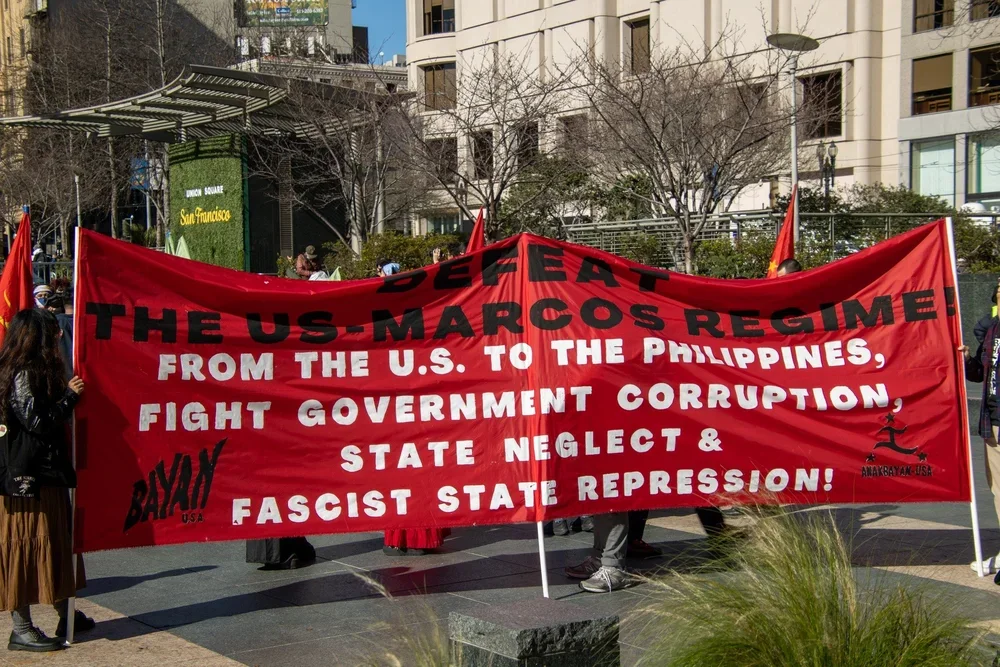
In this edition of the Asia-Pacific News Update, we speak with Ket Maarte, co-founder and chairperson of Anakbayan Philadelphia. Maarte helped start the chapter during her third year in college and has since then chosen to dedicate her time to serving the Filipino people, especially the Filipino youth in the city of Philadelphia. Anakbayan Philadelphia has grown throughout the years with integrated cultural events and educational studies that deepen members' and community members’ understandings of a genuinely free Philippines.

Asia-Pacific News Update: What is Anakbayan? How did you come to form as an international youth organization? What are your members united around?

Ket Maarte: Anakbayan is a youth and student-led mass organization fighting for the national sovereignty and genuine democracy of the Philippines. It was founded on the 134th birthday of Filipino revolutionary Andres Bonifacio on November 30, 1998, when young people in Tondo, Manila, recognized the historic role of the youth in advancing social change against the rotten system. Our commitment to youth-led revolutionary change motivated the emergence of our Philadelphia Chapter.

This was during the uprisings for George Floyd and Breonna Taylor, as well as the housing struggles in the summer of 2020, when students from Temple University in Philadelphia took action as young Filipinos in the United States. In solidarity with the Black liberation struggle, we founded the Philadelphia chapter and continue to recognize that the militarization of the Filipino people and the policing of African/Black people are intrinsically linked by the same problem of U.S. imperialism. Uniting our members, Anakbayan identifies three basic problems of the Philippines: U.S. imperialism, feudalism, and bureaucrat capitalism. It is important to end them in order to change the semi-colonial and semi-feudal nature of the Philippines. The issues of land, education, social services, and employment are the long-term and immediate problems of the Filipino people.

Asia-Pacific News Update: Can you give a brief overview of how U.S. imperialism targets the Philippines? And for those who may not know, what is the National Democratic Struggle in the Philippines, and how is it central to your work?

Ket Maarte: U.S. imperialism targets the Philippines through neoliberal tactics to keep the nation politically, culturally, militarily, and economically dependent on the United States. The reactionary U.S. government will propagate the narrative that the Philippines and the United States have been “allies” since the 1898 Spanish-American War. However, the U.S. purchased the Philippines – along with Puerto Rico, Guam, and Cuba – against the will of the masses of people. Even after “granting” the Philippines a faux independence in 1946, the Philippines maintains its feudal and colonial relationship with the United States, through the exportation of its raw materials and perpetual economic crisis. The United States is not afraid to use the Philippines as collateral damage in their conquest to strengthen their empire in the Asia-Pacific by making it into a military base and exploiting the Filipino people for labor.

Anakbayan’s fight for national democracy recognizes that the issues of the Philippines will change once we achieve national sovereignty, allowing us to practice genuine democracy that prioritizes meeting the needs of the Filipino masses. The class composition of the Philippines is 75% farmers/peasants and 15% workers. With the Philippine government failing to meet the needs of 90% of the population, it is our goal to end the government ruled by U.S. imperialists, bureaucrat capitalists, and big landlords who will throw the Filipino people under the bus for a few more dollars in their pockets. We want genuine development of the Philippines, economically, politically, and culturally, that does not come at the expense of Filipino livelihood and self-determination.

Asia-Pacific News Update: What are some key national or international campaigns of Anakbayan? What connections can you make to other anti-imperialist and national liberation struggles, especially those led by African people?

Ket Maarte: BAYAN USA, the multi-sectoral alliance for national democracy in the Philippines, of which we are a part, is waging the Defend Migrant Workers campaign – calling on the Philippine government to defend Filipino migrants targeted by U.S. state agencies like Immigration and Customs Enforcement (ICE) – and the U.S. Out of the Philippines campaign – aiming to end U.S. military occupation of our country. Both campaigns not only highlight the worsening conditions of Filipino people due to U.S. imperialism, but also connect it to the complacency and inaction of the Philippine government. The clear militarization and destruction of the Philippines’ land and people are connected to the neglect of the Filipino people by the Philippine government. The Philippine government is more focused on supporting the U.S. in pursuing a war with China rather than defending Filipino people.

During Philippine Secretary of Foreign Affairs Enrique Manalo’s visit to the United States, he did not take action to support and free the Filipino nationals wrongly detained in ICE facilities. Instead of actually providing solutions to help the Filipino people, he met with Marco Rubio in Washington, D.C. to continue their plans for war in the Asia-Pacific. It is also important to note that Ferdinand “Bongbong” Marcos Jr. also visited Washington D.C. in July 2025, where met with Donald Trump along with the U.S. Secretary of State Marco Rubio and Secretary of War Pete Hegseth, to discuss the increasing U.S. military presence in the Philippines. The meetings solidified the construction of the ammunition hub in Subic Bay and the Luzon Economic Corridor, both of which are promoted under the guise of protection and strengthening the supply chain of the Philippines. However, there is no coincidence that the Luzon Economic Corridor, an infrastructure meant to improve the transport of goods and people across the Philippines, is going to the places where there are bases the U.S. military is using. Marcos agreed to create the Philippines as a military outpost while neglecting the Filipino migrants that were wrongly detained and the Filipino people who were severely impacted by the typhoon in Bicol, Philippines.

We must wage these two campaigns to connect the suffering of Philippine society with the expansion of U.S. imperialism globally. As the local chapter in Philadelphia, we have pursued these campaigns through public exhibitions, mobilizations, and political education. We also aim to have Filipino students in institutions of higher education and, most importantly, the Filipino migrants and workers see themselves as a participating force in the movement for a liberated Philippines.

We connect the U.S. Out of the Philippines campaign with other national liberation struggles because it is easy to see how U.S. militarism has affected our homelands. We specifically work with Palestinian- and Korean-led organizations, like Philadelphia Students for Justice in Palestine, Koreans4Decolonization, and Korea Peace Committee, to further our analysis which connects our shared histories and current conditions under U.S. imperialism. We also want to make concrete connections to and work with more African liberation struggles, like those fighting for a free Haiti and Sahel.

The growing imperial power of the United States and the international fight against it is interrelated to the clear neglect of the Filipino people and the plunder of the nation. As we see the priority of war rising to meet the unending demand for U.S. imperialism to expand, the Filipino people have no infrastructure or plan to ensure their safety and security during floods and typhoons. Instead, the bureaucrat capitalists and landlords continue to exploit the people to fill up their pockets. Just this past month, it was revealed that there are over 60 flood control projects in the Philippines that are supposedly approved by the government and completed on paper that do not actually exist because the tycoons heading the projects pocketed the money. That is not an isolated issue unique to the Philippines. This is a symptom of the three basic problems of imperialism, feudalism, and bureaucrat capitalism.

The struggle for a liberated Philippines is a part of the internationalist movement. Anakbayan Philadelphia specifically organizes around the Philippines because the liberation of one of the semi-colonies will weaken the octopus that is the U.S. empire. Being in solidarity with other national liberation struggles ensures that the United States is losing its power everywhere. The Filipino people are the decisive factor to liberating their own homeland while working together with our Palestinian, African, and Korean comrades to achieve global liberation.

Asia-Pacific News Update: As the Philadelphia chapter of Anakbayan, what campaigns are you developing or carrying out locally? How do these campaigns connect to ongoing struggles in the Philippines or elsewhere?

Ket Maarte: Our chapter is working on developing programming to address the conditions of our people in Philadelphia and stand in solidarity with all workers, especially during the recent AFSCME D.C.33 union strikes, which is a majority Black union of public sanitation, maintenance, and other workers. The city of Philadelphia is dealing with the consequences of their actions as the municipal workers' union, with over 9,000 city employees, stands against their exploitation.

We recognize the right to unionize and be compensated for labor with a livable wage, which most Filipinos in the diaspora lack. Filipinos usually look for work outside of the Philippines because there are not enough financial opportunities or sustained industries for people to remain in the nation. One of the largest exports from the Philippines is labor, and there are so many Filipinos who have to go abroad to keep their families fed and housed. The traumatic separation of families is only one symptom of the state’s neglect and plunder. Once Filipinos are employed, they still face other forms of workplace negligence and exploitation, including unpaid overtime hours or no holiday pay, and no benefits while practically working full time hours and performing responsibilities beyond their job descriptions. It is also not uncommon for overseas Filipino workers to get trafficked by their employers and have their passports taken from them. This is prevalent with domestic workers, an industry that is predominately women.

Like the city of Philadelphia, the Philippine Consulate/Embassy is supposed to provide resources and make sure that their constituents are secure in their positions. Yet, that will never be the case when bureaucrat capitalists, like Philadelphia Mayor Cherrelle Parker and Philippine Secretary of Foreign Affairs Enrique Manalo, couldn’t care less about the working people. State violence and negligence will occur locally and internationally if politicians in power are willing to sell their people out for money and status.

Asia-Pacific News Update: What are some resources you recommend to people interested in learning more about the struggle for national liberation in the Philippines? And how can individuals and organizations support, collaborate, or join your work?

Ket Maarte: We study and conduct studies of Philippine Society and Revolution by Jose Maria Sison under his guerrilla pseudonym, Amada Guerrero. It touches on the historical and current context on why the Philippines is a semi-feudal and semi-colonial nation that has a liberation struggle fighting for national democracy. We highly recommend either reading or participating study with any BAYAN organization to deepen your understanding of the Philippine struggle. There is also an entire revolutionary curriculum that our members take as part of our organizational and educational development.

Anyone aged 13 to 35 years old and interested in the genuine liberation of the Philippines is eligible to join Anakbayan. We focus on organizing Filipino youth and students to care about the issues of the Philippines and how they relate to the local issues of Philadelphia. Other than studies and educational discussions, we make sure that we are rooted in our mass base and integrate with the Filipino communities we love to serve. For organizations, we would love to schedule bilateral meetings to better understand the common thread of our work and find ways to support each other with intention and within our capacities. One of the greatest contributions to our work is also making donations! This year is the five year anniversary of our chapter, and as a grassroots organization, we are raising $5,000 to celebrate and help sustain our work locally.

There are so many ways to get involved with us! If you are curious about what that entails, you can reach out to us nationally at our website or email here: anakbayanusa@gmail.com

ADDITIONAL READINGS AND RESOURCES

Araling Aktibista (Activist Study Guide)

2020 by Communist Party of the Philippines, National Education Department

The required reading for activists in the Filipino revolutionary movement with essential texts for studying and forming revolutionary practice.

Condemn and Counter U.S. Imperialist Aggression and War in the Philippines

February 25, 2025 by Robert Reid

February 2025 marked the 126th. anniversary of the Philippine-American war and the start of U.S. imperialist domination in the Philippines. The continued and expanded presence and operations of U.S. military forces in the Philippines, and their support and direction to the Marcos Jr. administration must be condemned and opposed as clear acts of U.S. imperialist aggression, military intervention and war.

Naval Drills near Guam and the Philippines Coincide with China’s Military Parade

September 5, 2025 by Stars and Stripes

In the Philippine Sea the United States conducted a joint naval exercise with Australia, Canada and the Philippines, and a separate exercise near Guam with Australia, Japan, New Zealand and South Korea. The destructive exercises were planned to coincide with a major international parade in Beijing that marked the 80th. anniversary of the end of World War II.

The Philippines: A Past Revisited

1975 by Renato Constatino

Chronicles the history of the Philippines from a nationalist perspective in the centuries of the Filipino masses' fight for freedom and independence during Spanish and U.S. colonial rule. Before this book, Philippine history was taught through the colonial U.S. lens which served as propaganda in support of U.S. militarization of the archipelago. As the Philippines is still under foreign influence, this history serves as a guide to the people of today on how to achieve liberation and sovereignty.  

Philippine Society and Revolution

July 30, 1970 by Amado Guerrero (Jose Maria Sison)

Sison’s landmark text played a pivotal role in revitalizing the Filipino Left, which had been weakened by the old Communist Party of the Philippines’s revisionism. Sison audaciously provides a bottom-up history of the Philippines, material analysis of the nation’s feudal and colonial basis, a description of the nation’s unique class structure, and a program for militant revolution. Philippine Society and Revolution is a pivotal text for understanding the history of the Filipino Left and for grasping a dialectical materialist account of the Philippines’ colonial history and socialist possibilities.

Youth on the March

November 2, 1968 by Amado Guerrero (Jose Maria Sison)

This brief article stresses the significance of the youth movement in the global 1968 revolutionary struggles for mobilizing the masses. Sison’s crucial insights resonate today with the student movement for Palestine and broader questions about the relationship between youth and the masses.

Exporting our People

Mar 13, 2024 by Boo Chanco for the Philippine Institute for Development Studies

Chanco summarizes the Philippine’s increasing reliance on overseas Filipino workers’ remittances, the “brain drain” from the high emigration rates, and problematic overreliance on remittances in place of national development. The article is essential for understanding the economic connection between the Filipino diaspora and nation.